
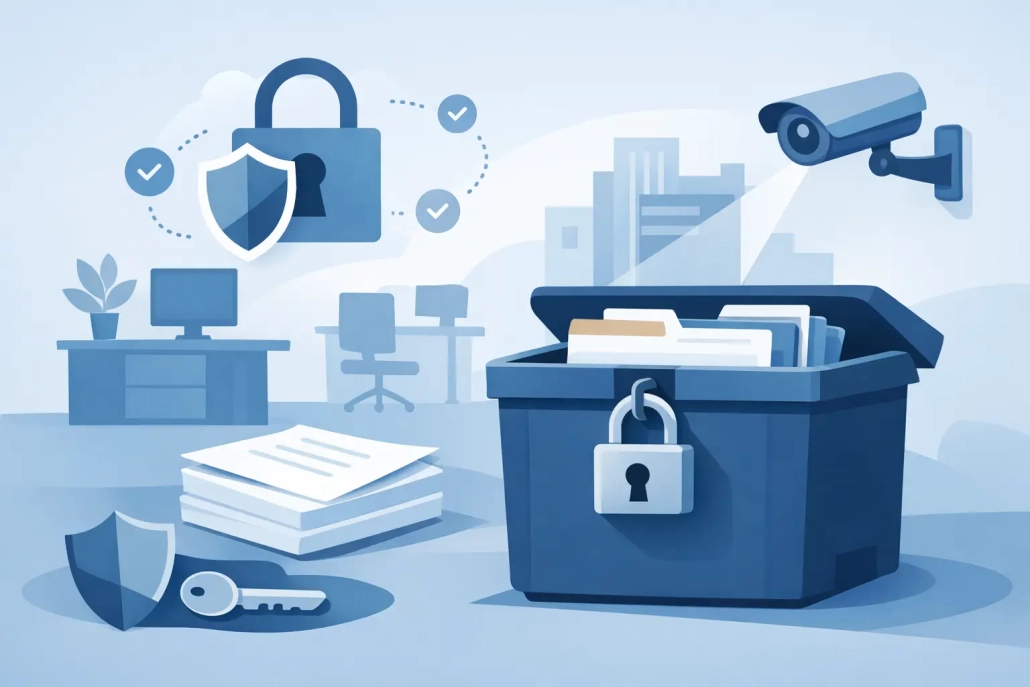
Locked Bins for Documents Keep Offices Secure
A client file left beside a shared printer, an old employee record in an open recycling box, or a stack of invoices waiting for someone to take them home can create a real security gap. Locked bins for documents give your business a controlled place to put confidential paper the moment it is no longer needed.
For offices handling personal details, financial records, medical information, legal documents, or internal business material, secure disposal should not depend on staff remembering to shred papers at the end of the day. A lockable collection bin keeps sensitive documents contained, reduces clutter, and supports a secure chain of custody from your workplace through to destruction.
Why open recycling bins are not enough
Paper recycling is suitable for ordinary office waste. It is not suitable for records containing names, addresses, account details, payroll information, health information, contracts, pricing, or internal correspondence. Once confidential documents are placed in an open recycling container, they can be viewed, removed, misplaced, or mixed with general waste.
Small office shredders are not always the answer either. They take staff time, jam regularly, require maintenance, and often leave shredded material sitting in bags or boxes before it is removed. For larger workplaces, the process quickly becomes inconsistent. One team may shred documents, another may throw them into a recycling bin, and archive boxes may sit in a storage room for years.
A locked bin creates one clear process: confidential paper goes into the secure bin, and authorized collection staff remove it for secure destruction. That simplicity is a major advantage for office managers and compliance teams.
How locked bins for documents protect your business
The main purpose of a locked document bin is to limit access. Staff can deposit documents through a secure slot, but cannot remove material once it is inside. This helps prevent accidental retrieval, unauthorized access, and the temptation to sort through paper after it has been discarded.
The bin also gives your workplace a practical collection point. Instead of leaving sensitive papers in desk drawers, printer trays, meeting rooms, or unsecured cartons, employees have a visible and convenient place to dispose of them. When the system is easy to use, staff are far more likely to follow it.
For many Melbourne businesses, a lockable 240-liter bin is a practical option for ongoing confidential waste. It holds a substantial volume of paper without taking over the office. The right number of bins depends on your document volume, office layout, and pickup schedule. A busy medical practice may need multiple bins positioned near administration areas, while a small professional office may only need one bin with periodic collection.
What should go into a secure document bin?
If a document could expose personal, commercial, employee, customer, or patient information, it belongs in the locked bin. This usually includes printed emails, invoices, reports, client files, application forms, payroll documents, bank statements, records with signatures, meeting notes, and outdated marketing lists.
The bin is also useful for documents that may not look sensitive on their own but become valuable when combined. A page containing a name and phone number may seem harmless. Paired with an address, account reference, date of birth, or internal note, it can create an avoidable privacy risk.
Paper clips, staples, and rubber bands can generally remain with the documents unless your provider gives different instructions. Staff should not be expected to spend time preparing every sheet for disposal. The goal is a secure process that works under normal office conditions.
Items such as binders, lever-arch files, large plastic folders, electronic media, uniforms, and archive cartons may require separate handling. A secure destruction provider can arrange services for archive box destruction, CD destruction, and confidential uniforms rather than forcing your team to manage those materials internally.
Choosing the right bin service
The best service is not always the one with the largest bin. It is the one that matches how your workplace actually generates confidential waste. A bin that is too small may overflow before collection. A bin that is too large can take up valuable floor space and may not be cost-effective for a low-volume office.
Start by considering where sensitive paper is created. Reception areas, finance departments, human resources teams, print stations, medical administration desks, and legal support areas are common locations. Bins should be placed close enough to be convenient but away from public access and high-traffic areas where possible.
Pickup frequency matters just as much as bin size. Scheduled pickups suit businesses with steady document volumes and provide a predictable routine for staff. On-call pickups can work well for smaller offices or workplaces with irregular disposal needs. A one-off cleanout may be the better option when you are clearing filing cabinets, storage rooms, or accumulated archive boxes.
There is no benefit in paying for frequent collection if your bin is rarely used. On the other hand, waiting too long can lead to overflowing bins, staff creating unsecured side piles, and unnecessary risk. A provider should be able to recommend a practical service schedule based on your actual volume.
Secure collection should include a clear chain of custody
A locked bin is only the first part of secure disposal. What happens after collection is equally important. Your provider should remove material using secure collection procedures and transport it for confidential destruction. The process should be designed to prevent sensitive documents from being exposed during handling or disposal.
Ask direct questions before choosing a provider. Who has access to the bin? How is the bin collected? Are documents securely transported? What destruction method is used? Will your business receive written confirmation after destruction?
A Certificate of Destruction is particularly valuable for organizations that need proof their records were disposed of correctly. It supports internal recordkeeping and gives compliance staff, management, and clients confidence that confidential material has been handled through a documented process. Metro Paper Destruction provides Certificates of Destruction free of charge after secure destruction services.
A simple process staff will actually follow
Even a well-designed policy fails if it makes everyday work harder. The strongest secure disposal systems are simple enough that employees can follow them without stopping to think. Place locked bins where documents are regularly discarded, explain what belongs inside, and make secure disposal part of onboarding for new staff.
It also helps to set clear expectations for documents left on desks or near printers. Confidential paper should not be placed in general recycling, taken home for shredding, or stored in personal drawers until someone has time to deal with it. Those workarounds create the gaps that locked bins are intended to remove.
For larger organizations, nominate a site contact who can report a full bin, arrange an additional collection, or coordinate a cleanout. This keeps the service responsive without asking every employee to manage disposal arrangements.
When bins are not the whole answer
Locked bins are ideal for day-to-day paper waste, but they are not intended to solve every records disposal issue. If your business has rows of archive boxes, old personnel files, closed client matters, or documents stored offsite, a dedicated archive removal and destruction service may be more efficient.
The same applies when moving offices, renovating, closing a department, or responding to a records retention review. Large volumes of material may need pallet-scale removal rather than months of bin collections. A good provider can combine regular locked-bin service with one-off destruction jobs so your business has one secure process for routine and bulk disposal.
Make secure disposal part of normal office operations
Confidential documents do not become less sensitive because they are outdated, duplicated, or headed for recycling. The period between use and destruction is where many avoidable mistakes occur. A locked bin gives staff a secure place to act immediately, without relying on personal judgment or an overloaded office shredder.
If your workplace is still using open recycling boxes, desk-side shredders, or unsecured storage piles for confidential paper, it is worth reviewing the process now. A properly placed locked bin, dependable collection schedule, and documented destruction service can remove a daily risk from your office while keeping your workspace cleaner and easier to manage.


Leave a Reply
Want to join the discussion?Feel free to contribute!