Recycling After Document Destruction Explained
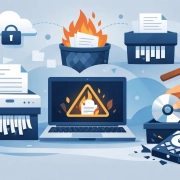
A locked bin full of old client files is not ordinary recycling. Those records may contain names, addresses, account details, health information, payroll data, or internal business plans. Recycling after document destruction is the process that ensures the paper is first rendered unreadable, then recovered as a recyclable material rather than sent to landfill.
For businesses, the order matters. Placing confidential documents straight into a recycling bin can expose information to staff, cleaners, visitors, or anyone handling the bin before collection. Secure destruction removes that risk. Recycling gives the paper a useful second life.
Why secure destruction must come before recycling
Office paper is highly recyclable, but it is also one of the most common carriers of sensitive information. A document does not need to be marked “confidential” to create a problem. An old invoice, a job application, a patient form, a customer email, or a printed spreadsheet can all expose personal or commercial data.
A standard recycling stream is designed for material recovery, not confidentiality. It may pass through open office collection points, loading areas, transport vehicles, and sorting facilities. That is suitable for ordinary paper, but it does not provide a controlled chain of custody for records your business is responsible for protecting.
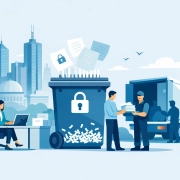
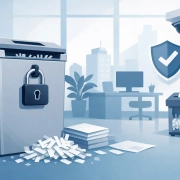
Secure document destruction changes the process. Records are placed in locked containers or security bags, collected by an authorized provider, and destroyed so the information cannot be reconstructed. Only after destruction is the paper directed into the recycling stream.
This approach supports two practical business goals at once: reducing the risk of an information breach and reducing the volume of paper waste sent to landfill. Neither goal should come at the expense of the other.
What happens to paper after document destruction?
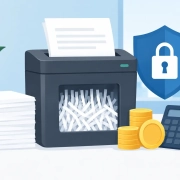
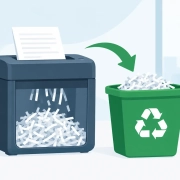
The exact process depends on the destruction provider and the recycling facility, but the principle is straightforward. Documents are securely collected, destroyed into small pieces, consolidated with other shredded paper, and prepared for paper recycling.
At a recycling facility, shredded paper is typically processed into pulp. The fibers may be cleaned and screened to remove contaminants such as plastic, metal, adhesives, or non-paper items. The recovered fibers can then be used to manufacture new paper-based products. Depending on the grade and local recycling process, this may include tissue products, cardboard, packaging, or recycled paper products.
Shredded office paper is not always turned back into printer paper. Paper fibers shorten each time they are recycled, so mills use recovered fibers for products that suit their quality and strength. That is still a valuable outcome. It keeps useful material in circulation and reduces demand for virgin fiber.
The security step remains central. Once paper has been properly destroyed, its value as information is gone. Its value as a recyclable resource remains.
Secure collection protects the paper before it is destroyed
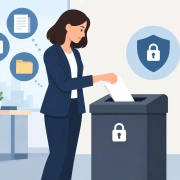
The most reliable process begins at your workplace. Lockable 240-liter bins are useful for offices that generate confidential paper regularly. Staff can place documents inside without needing to sort, store, or hand-shred them. When the bin is full, or on a scheduled service date, it is collected for secure destruction.
Security bags can suit smaller volumes, remote teams, or one-time clear-outs. For archive rooms and long-retained records, secure archive box collection or pallet-scale removal is often more efficient than asking staff to empty files into office bins one box at a time.
These service formats are not simply about convenience. They reduce the number of people handling sensitive information and help prevent confidential records from being left in unsecured recycling, trash, or storage areas.
Destruction should be documented
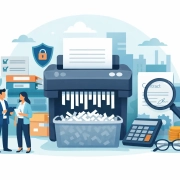
A business should be able to show that confidential material was destroyed through an accountable process. A Certificate of Destruction provides a record that materials were collected and destroyed. This can be useful for internal records management, compliance reviews, client assurance, and audit requirements.
A certificate does not replace sensible retention policies. Your organization still needs to determine what must be retained, for how long, and when it can be destroyed. But once records have reached their approved disposal date, documented destruction gives you evidence that the next step was handled correctly.
Which materials can be recycled after destruction?
Paper records are the clearest example, but an effective confidential waste program may include more than loose sheets. Archived files, folders, printed reports, and records stored in boxes can usually be assessed as part of a secure destruction job.
Some items need separate handling because they are not paper or because their components affect the recycling process. CDs, uniforms, ID cards, binders, and media may require a different destruction and recycling pathway. A uniform with a company logo, for example, can create brand and security concerns even when it contains no paper records. It should not be donated or discarded without considering whether it identifies your organization or allows someone to impersonate staff.
Before a large clean-out, separate items that are clearly unsuitable for paper recycling, such as batteries, food waste, liquids, or e-waste. There is no need to remove every paper clip or staple unless your destruction provider specifically requests it. Modern commercial shredding systems are designed to handle normal office paper fasteners, while larger metal items and hard plastics may need to be removed.
Common mistakes that weaken secure recycling
The most common mistake is treating recycling as the first step rather than the final destination. If confidential paper sits in an open recycling bin for days, the organization has already lost control of it. Even a well-intentioned employee may place the wrong file in the wrong bin during a busy period.
Another mistake is relying on small office shredders for large volumes. Desktop shredders can be useful for occasional low-volume material, but they are slow, noisy, and prone to jams. They also create bags of shredded paper that still need secure storage and recycling. For archive boxes, ongoing confidential waste, or a major office clean-out, commercial collection and destruction is normally safer and more cost-effective.
Businesses can also hold records for too long because disposal feels risky. Excess archives consume valuable space and make it harder to locate current files. Retaining documents beyond their required period can increase exposure in the event of theft, fire, water damage, or unauthorized access. A scheduled review and secure destruction process helps keep storage under control.
Choosing a service for recycling after document destruction
Look beyond a claim that paper is recycled. Ask how your documents are secured before collection, who handles them, whether the provider offers lockable containers or security bags, and whether a Certificate of Destruction is included. The answers show whether the service is built around confidentiality or simply waste removal.
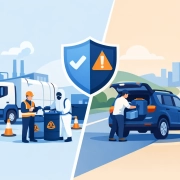
Pickup flexibility also matters. A legal office or medical practice may need scheduled collections to prevent bins from overflowing. A business relocating offices may need a one-off archive removal. A company with several years of boxed records may need pallet-scale collection. The right service should fit the volume and timing of your work rather than force your team into an inefficient process.
For Melbourne businesses, Metro Paper Destruction provides secure collection options for regular confidential waste, archive boxes, CDs, and uniforms, with Certificates of Destruction supplied at no charge. Secure bins, on-call pickups, and one-off clean-outs allow organizations to protect information without turning records disposal into an internal logistics project.
Make disposal part of your records routine
The strongest confidential recycling programs are routine, not reactive. Give staff a clear place for sensitive paper, use locked collection containers where needed, and arrange collection before paper begins piling up in cabinets, copier rooms, or storage areas. Keep approved retention schedules with the people who manage records, not buried in an old policy folder.
When documents have reached the end of their required life, they should leave your workplace through a secure, documented process. That simple decision protects the people whose information you hold, clears space for work that matters now, and ensures the paper can move on as a recovered resource rather than a security liability.