
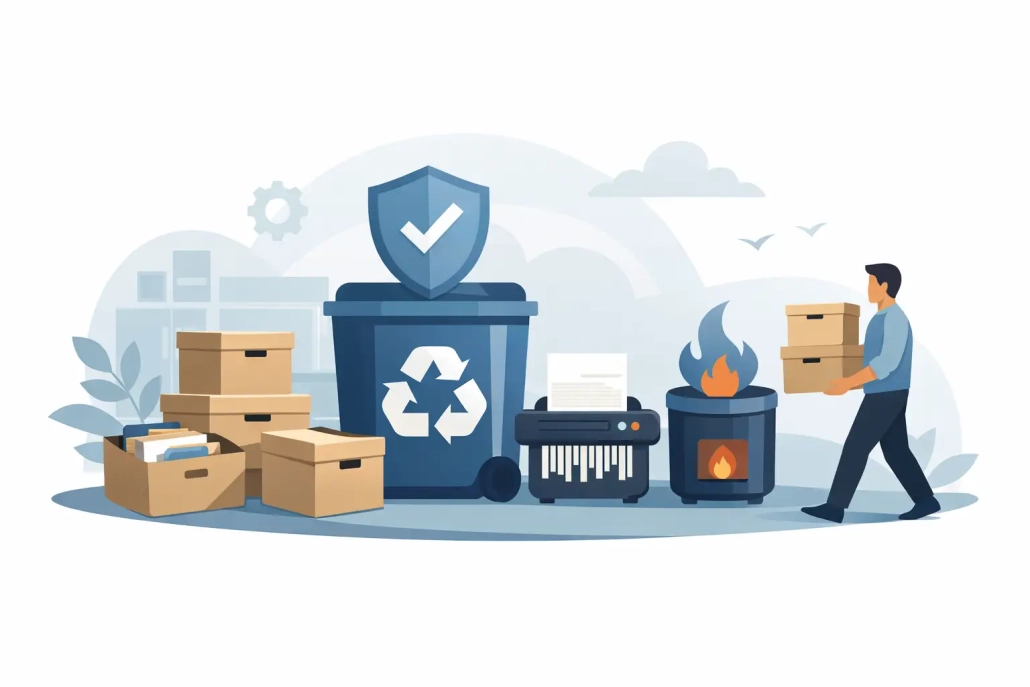
How to Dispose Archive Boxes Without Risk
An archive room can become a liability long before it runs out of space. Old personnel files, client records, financial paperwork, patient information, and internal documents may still be readable years after they are no longer needed. Knowing how to dispose archive boxes properly means protecting the information inside them, not simply getting cardboard out of the building.
For businesses, the safest approach is to separate records that can be securely destroyed from those that must be retained, then arrange documented collection and destruction. This reduces the risk of misplaced files, unauthorized access, and staff spending hours handling confidential waste themselves.
Start With a Retention Review
Do not clear archive boxes based on age alone. Retention requirements vary by record type, industry, contract terms, tax obligations, and internal policy. Legal files, employee records, health information, financial documents, and government-related paperwork may each have different retention periods.
Your records manager, compliance contact, accountant, or legal adviser should confirm what can be destroyed before a clean-out begins. A simple box inventory is often enough: label the department, record category, date range, and destruction approval status. You do not need to list every document, but you do need a clear decision trail.
Once a box is approved for destruction, treat it as confidential until the moment it is destroyed. Leaving it near a dumpster, in an unlocked loading area, or beside a regular recycling bin creates an unnecessary security gap.
Why Regular Recycling Is Not Enough
Cardboard archive boxes look recyclable, but the documents inside may contain names, addresses, account details, signatures, health information, salary records, commercial data, or other private material. Putting whole boxes into standard recycling can expose those records during collection, sorting, or storage.
Even a small number of files can create a serious privacy issue. A single personnel folder or customer record may contain enough information for fraud, identity theft, reputational damage, or a breach notification process.
General waste is no better. Waste contractors are not automatically confidential destruction providers, and staff should never assume bagged paper is unreadable or protected. If information is sensitive, it needs secure handling from your site through destruction and recycling.
How to Dispose of Archive Boxes Securely
A professional archive box destruction service removes the work from your team while maintaining control over the material. The process should be simple, documented, and designed around your site.
First, identify the approximate number of boxes, their location, and any access requirements. A ground-floor office clean-out is different from a storage room with stairs, restricted parking, or palletized records in a warehouse. Providing these details upfront helps the provider schedule the right collection method and quote accurately.
On collection day, authorized personnel should remove the boxes directly from your archive area, office, or storage location. For large clear-outs, boxes may be moved in secure containers or loaded for transport to a secure destruction facility. The key point is that the records remain controlled throughout the process.
The paper is then destroyed so it cannot be reconstructed, and the material is sent for recycling where appropriate. Ask for a Certificate of Destruction after the job. This gives your business formal evidence that the records were destroyed and supports your internal compliance file.
Choose the Right Collection Option
The best disposal method depends on whether you are clearing one room or managing confidential waste every week.
One-Time Archive Clean-Outs
A one-time collection suits businesses that are relocating, digitizing old files, closing a department, preparing for an audit, or reclaiming storage space. It is also practical after a retention review identifies years of records ready for destruction.
For this type of job, keep approved boxes sealed and grouped by collection area. There is no need for staff to open boxes and feed documents through an office shredder. That takes time, creates dust and noise, and can leave paper waiting in unsecured bags. Whole-box removal is faster and keeps handling to a minimum.
Scheduled Secure Collection
Organizations that regularly generate confidential paper should use scheduled service rather than allowing records to build up. Lockable secure bins provide a controlled place for day-to-day paperwork, while periodic pickups prevent documents from accumulating in desks, copy rooms, and storage areas.
Scheduled collection is particularly useful for medical practices, law firms, schools, financial offices, and businesses with ongoing customer or employee documentation. It creates a routine that staff can follow without deciding each time what belongs in recycling.
On-Call Pickups for Changing Needs
An on-call pickup is a practical middle ground for businesses that do not need a fixed schedule but occasionally have a large volume of confidential material. This can include an archive box purge, staff records clean-out, or removal of documents after a project is completed.
The trade-off is simple: scheduled service offers consistency, while on-call collection offers flexibility. Many businesses use both, with lockable bins for routine documents and a separate collection for archive boxes.
Keep Chain of Custody Clear
Chain of custody is the record of who controlled confidential material from collection to destruction. It should not be complicated, but it should be clear.
Before collection, restrict access to approved boxes. Avoid placing them in common corridors or unsecured loading docks. If several departments are involved, appoint one contact person to coordinate access, confirm quantities, and receive service documentation.
At collection, make sure the provider can identify the material as confidential and remove it under controlled conditions. After destruction, file the Certificate of Destruction with the box inventory or retention approval. This gives you a practical audit trail showing what was destroyed, when it was handled, and that the destruction was completed.
A certificate does not replace a sound retention policy, but it is valuable evidence that approved records were disposed of responsibly.
What About the Empty Cardboard Boxes?
Empty archive boxes can usually be flattened and placed in regular cardboard recycling, provided they contain no confidential papers, labels, sticky notes, or media. Remove labels that show customer names, file references, account numbers, or internal project information before recycling the cardboard.
If the boxes are damaged, wet, contaminated, or cannot be accepted by your recycling provider, dispose of them according to your local waste rules. The priority is always the records first. Do not delay secure paper destruction because you are trying to separate every box for recycling on site.
For large quantities, ask whether your destruction provider can manage both the confidential contents and the resulting cardboard waste. A single coordinated collection is often more efficient than arranging separate handling for paper, boxes, and office waste.
Avoid These Common Disposal Mistakes
Businesses often create risk through shortcuts that seem harmless at the time. Do not put intact archive boxes into a recycling dumpster, leave them outside for bulk trash pickup, or ask staff to take records home for shredding. These options remove visibility and control.
Avoid using small office shredders for a major archive purge. They are slow, require staff time, jam easily, and may not produce a destruction standard appropriate for sensitive records. They also encourage documents to sit in piles while employees work through boxes over days or weeks.
Do not assume scanned records can automatically be destroyed either. Check that the digital copies are complete, readable, securely stored, and accepted under your business and regulatory requirements before approving paper originals for destruction.
Plan Your Archive Disposal Before Space Becomes a Problem
Archive disposal works best as a controlled records process, not an emergency response to an overflowing storeroom. Set a review date, approve eligible records, arrange secure collection, and retain the destruction certificate. Your team gets usable space back, and confidential information does not end up in the wrong hands.
For Melbourne businesses managing a few boxes or a pallet-scale archive clean-out, Metro Paper Destruction can provide secure collection, documented destruction, and a free Certificate of Destruction. A clear quote before collection helps you plan the job without adding more work to your office.


Leave a Reply
Want to join the discussion?Feel free to contribute!