
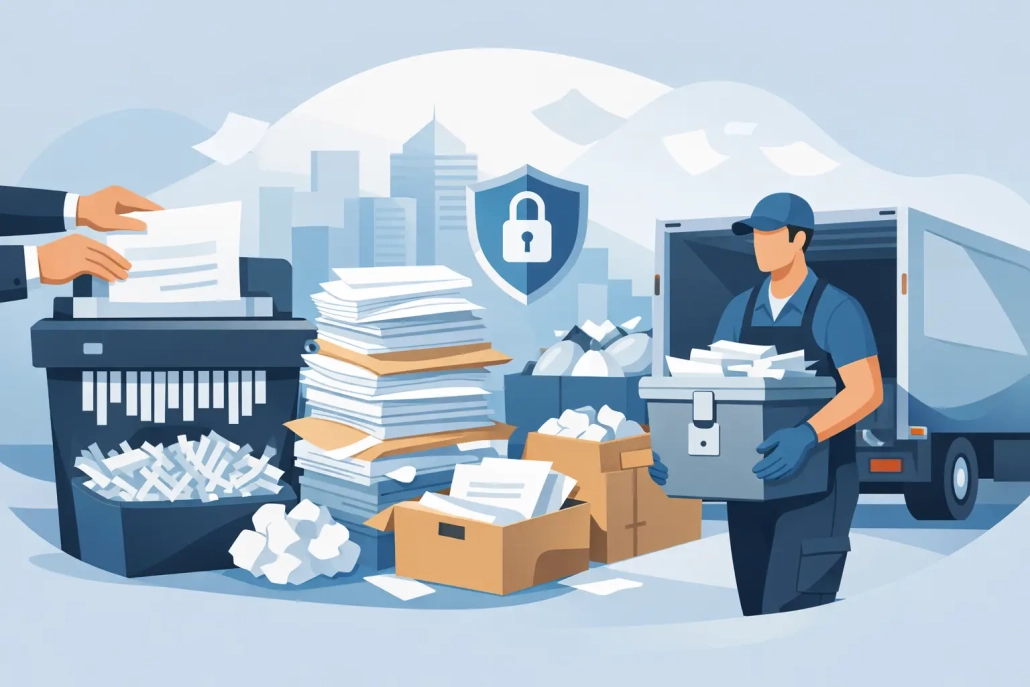
Bulk Paper Purge Service for Secure Cleanouts
Archive rooms have a way of filling up quietly. A few boxes from a closed matter become a wall of records, then old client files, payroll reports, invoices, medical forms, and outdated internal documents take over valuable workspace. A professional bulk paper purge service gives your business a controlled way to clear that material without placing confidential information in a dumpster, recycling bin, or employee car.
For Melbourne businesses, a large records cleanout should be simple: secure collection, accountable handling, certified destruction, and responsible recycling. The right provider removes the labor and uncertainty from the process while helping you regain space quickly.
When a Bulk Paper Purge Service Makes Sense
A bulk purge is designed for larger one-time disposal jobs rather than a few bags of everyday office shredding. It is a practical option when archive boxes have reached the end of their retention period, an office is relocating, a department is closing, or storage costs are becoming harder to justify.
It also suits businesses that have inherited records with no clear owner. This often happens after mergers, staff changes, property moves, or long-term off-site storage arrangements. If the files contain names, addresses, financial details, health information, employee records, account information, legal correspondence, or internal business data, they should be treated as confidential until they are securely destroyed.
The main risk is not only the paper itself. It is the gap between deciding to dispose of records and proving they were handled properly. Throwing documents into regular recycling may seem cheaper, but it creates an avoidable exposure. Sorting and feeding years of files through a small office shredder creates a different problem: staff time, equipment wear, incomplete destruction, and bags of material waiting around the office.
A managed purge service is built for volume. It lets your team focus on their work while trained collection staff remove archive boxes, loose paper, or palletized records for secure destruction.
What Secure Paper Purging Should Include
Not every cleanout has the same scope. A small professional office may have 20 archive boxes to remove, while a school, medical practice, law firm, or government-related organization may have hundreds of boxes across multiple storage areas. The service should be sized around the amount of material, access to the site, and how quickly you need the space cleared.
A dependable service begins with secure removal from your location. Collection staff should be able to work around loading docks, elevators, basements, storage rooms, and office access requirements. For larger jobs, pallet-scale archive removal may be the most efficient approach. For mixed paper piles or files stored throughout an office, a staged collection plan may be more practical.
Chain of custody matters throughout the job. Confidential documents should not be left unattended on a curb, in a public loading area, or in open recycling containers. The material should be collected for confidential destruction and processed through a controlled service operation.
Once destruction is complete, your business should receive a Certificate of Destruction at no extra charge. This provides a clear record that the material was securely destroyed and is useful for internal compliance files, audits, policy requirements, and management reporting.
Recycling should be part of the process as well. Secure destruction and environmental responsibility are not competing priorities. After confidential paper is destroyed, the material can be recycled rather than sent to landfill.
A Practical Process for a Large Archive Cleanout
The fastest purges are planned before the collection team arrives. Start by confirming what must be retained under your organization’s record-keeping policy, contractual obligations, and any relevant legal or regulatory requirements. Destruction is permanent, so the decision about retention should be made internally before records are removed.
Next, estimate the job. Count archive boxes where possible, identify loose paper, and note whether files are stored on shelves, pallets, or in hard-to-reach rooms. You do not need a perfect inventory for an initial quote, but a realistic picture helps the provider schedule the right vehicle, labor, and collection method.
Access details make a major difference to cost and timing. Let the collection team know about parking restrictions, stairs, security check-in procedures, dock booking times, elevators, and any building rules. If the job needs to happen outside business hours to avoid disrupting staff or customers, raise that early.
Before collection, separate materials that require a different destruction method. Paper files and archive boxes can be handled as confidential paper destruction, while CDs, branded uniforms, ID cards, and other sensitive items may need separate processing. Keeping these categories clear avoids delays and helps ensure every item receives the appropriate level of destruction.
Your staff do not need to remove staples, paper clips, or folders unless you have a specific internal reason to do so. The better approach is usually to keep preparation simple and let the service team handle the bulk work. However, large binders, lever-arch files, and unusual storage media should be mentioned when requesting a quote because they can affect handling requirements.
One-Off Purge or Ongoing Collection?
A one-off bulk purge is ideal when you need to clear a backlog immediately. It is a direct solution for archive rooms, relocation deadlines, end-of-year file disposal, and storage reduction projects. Once the old records are gone, your workplace is easier to organize and your storage footprint is reduced.
But a one-time cleanout does not always solve the underlying issue. If confidential waste continues to build up after the purge, an ongoing collection service can prevent the next backlog. Lockable 240-liter bins provide a secure place for daily confidential paper, while security bags can suit smaller volumes or teams with limited space.
Scheduled pickups work well for businesses with predictable volumes. On-call collections are more suitable when confidential waste varies from month to month. Many organizations use both: a large archive purge to reset the space, followed by lockable bins and regular service to keep disposal under control.
The right setup depends on your document flow. A busy accounting office may need regular collection during peak periods. A legal practice may produce lower volumes but need secure disposal on demand. A medical office may place a higher priority on locked containment and reliable pickup timing. A service provider should offer flexible options instead of forcing every customer into the same schedule.
Questions to Ask Before Booking
Price matters, but the cheapest quote is not always the lowest-cost outcome if collection is delayed, materials are mishandled, or extra charges appear after the work starts. Ask what is included in the quote and whether the provider can handle the actual volume and access conditions at your site.
Confirm that secure collection and confidential destruction are part of the service, and ask whether a Certificate of Destruction is included. Find out how the provider handles archive boxes, loose paper, palletized records, and mixed confidential materials. If you have a time-sensitive move or lease deadline, confirm the collection window rather than relying on a general estimate.
For Melbourne businesses, Metro Paper Destruction provides mobile collection across the city for one-off cleanouts, archive box destruction, pallet-scale removals, and ongoing confidential waste service. A free quote and quote-beating guarantee help businesses plan a secure purge without overpaying for it.
Make Room Without Creating Risk
Old records should not remain in storage simply because disposal feels complicated. The longer confidential files sit unused, the more space they consume and the more difficult they become to manage. A properly planned bulk paper purge gives you a clean break: records are securely removed, destruction is documented, and the paper is recycled responsibly.
If your archive room is full, start with a box count, an access check, and a clear retention decision. That small amount of preparation can turn years of accumulated paper into a straightforward, secure cleanout.

Leave a Reply
Want to join the discussion?Feel free to contribute!