
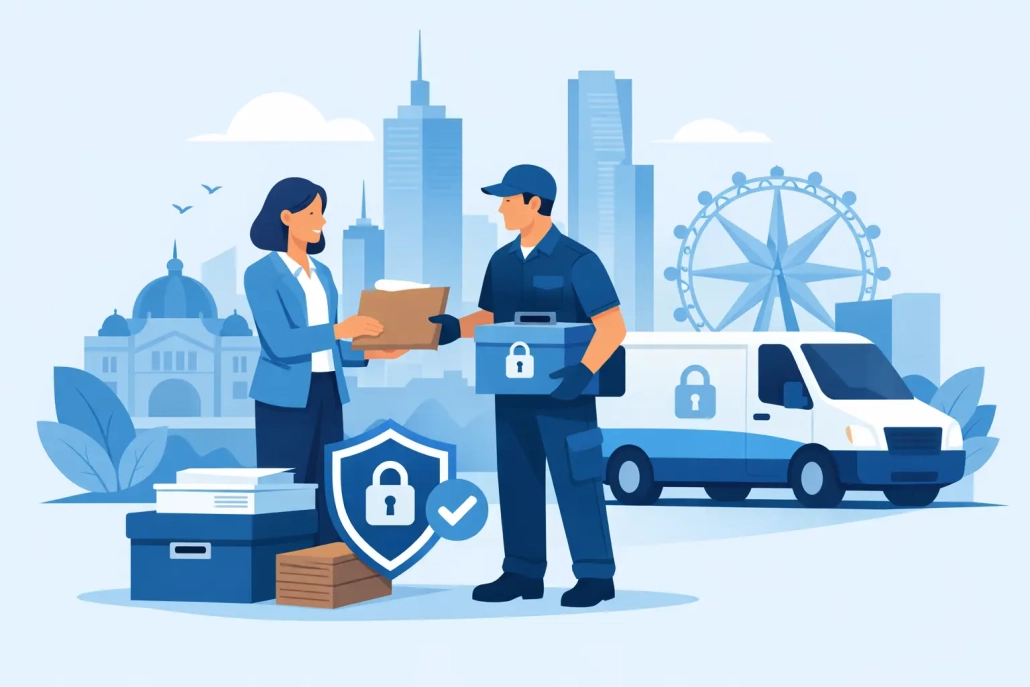
Secure Records Collection for Melbourne Businesses
A locked cabinet is only part of protecting confidential information. The risk often starts when old files leave that cabinet: archive boxes waiting in a hallway, staff carrying paperwork to a recycling bin, or documents sitting in an unsecured storeroom before disposal. Secure records collection gives Melbourne businesses a controlled way to remove sensitive material without creating a weak point in their privacy process.
For offices, medical practices, legal firms, schools, and government-related organizations, records can contain personal details, financial information, case notes, employee data, and commercially sensitive material. Once those records are no longer needed, they still require proper handling. Throwing them in general waste or ordinary recycling can expose the business, its clients, and its staff to avoidable risk.
What Secure Records Collection Should Include
Secure collection is more than a driver collecting boxes. It is a documented process that keeps confidential records protected from the moment they are placed aside for destruction through to final recycling.
The right service starts with a collection method suited to the volume and frequency of your confidential waste. A busy office may need lockable 240-liter security bins positioned near printers, mailrooms, or administration areas. Staff can dispose of paperwork as it is generated, rather than creating unsecured piles on desks or in cupboards.
For smaller volumes, tamper-resistant security bags can be a practical option. They are useful for offices that do not produce enough confidential paper to fill a bin regularly but still need a reliable way to manage documents between pickups. For archive clean-outs, boxed files can be collected directly from storage areas, saving your team from loading, transporting, or sorting old records themselves.
Collection should also be backed by a clear chain of custody. That means records are removed by trained personnel, placed into secure transport, and taken for confidential destruction. After the job is completed, your business should receive a Certificate of Destruction at no extra charge. This provides proof that the records were destroyed and helps support internal compliance records.
Why Internal Disposal Creates Unnecessary Risk
Many businesses hold onto expired records simply because disposal feels like a major task. Others assign the work to an employee, ask them to use a small office shredder, or arrange several trips to a recycling center. These approaches can appear inexpensive, but they often cost more in staff time and leave gaps in security.
Office shredders are slow, prone to jams, and unsuitable for archive-scale volumes. They also create a false sense of security when staff feed documents into the machine without first checking what should be retained. A small shredder does not solve the problem of bags of paperwork waiting beside it, nor does it provide independent proof of destruction.
Transporting files in a personal or company vehicle presents another avoidable exposure. Boxes can be misplaced, left unattended, or accessed during transit. When files include client information, patient records, payroll details, or legal documents, that is not a risk worth transferring to an employee.
A professional collection service keeps the process simple. Your staff place records in locked bins, security bags, or prepared archive boxes. The collection team handles the removal, secure transport, destruction, and recycling. Your business receives confirmation without losing productive hours to disposal work.
Secure Records Collection Options for Different Needs
There is no single collection schedule that suits every workplace. The best arrangement depends on how much confidential waste you generate, where it is produced, how much storage space you have, and whether records are being destroyed as part of a one-time project.
Scheduled secure bin pickups
Scheduled pickups suit businesses with steady volumes of confidential paper. Weekly, fortnightly, or monthly servicing can keep bins from overflowing and prevent documents from accumulating in unsecured areas. This is often the most efficient choice for professional offices, health providers, education facilities, and larger administration teams.
A lockable bin also gives staff a clear, consistent disposal point. Instead of deciding whether a document is safe for recycling, they can place it directly in the secure bin. That reduces handling, supports staff procedures, and keeps confidential material out of regular waste streams.
On-call collections
On-call collection works well for businesses with irregular document volumes. A small office may have occasional file clear-outs, end-of-financial-year paperwork, or confidential material generated during a particular project. Rather than paying for a fixed schedule that does not match the workload, the business can arrange collection when needed.
This option requires some internal discipline. Records should be stored securely until pickup, preferably in locked containers or a restricted-access room. If documents are building up quickly, a scheduled service may be safer and more cost-effective over time.
One-time archive box removal
Archive rooms can become expensive storage spaces for records that have passed their retention period. A one-time archive destruction service is designed for larger clean-outs, from several boxes to pallet-scale quantities. Collection staff can remove boxed records from your premises, reducing the manual work for your employees.
Before arranging destruction, check your retention requirements. Some documents must be kept for set periods due to legal, contractual, financial, or professional obligations. A destruction provider can securely destroy approved material, but the decision about what can be destroyed remains with your organization.
Records Are Not Only Paper
Paper files are a major source of confidential waste, but they are not the only one. Many organizations also need secure destruction for CDs, discs, branded uniforms, identification items, and other materials that could expose information or be misused if discarded carelessly.
Old uniforms can carry business logos, staff names, security markings, or access credentials. CDs and other physical media may contain backups, customer files, presentations, or internal data. These items should not be placed in ordinary trash simply because they are no longer useful.
When booking a collection, identify all material types in advance. This helps the provider arrange the correct destruction method and gives your team confidence that every item is handled appropriately.
Questions to Ask Before Choosing a Provider
Price matters, especially when managing regular services or a large archive project. But the lowest quote is not necessarily the lowest overall cost if it leaves your staff handling records, packing vehicles, or chasing proof of destruction afterward.
Ask how materials are secured at your site, who performs the collection, and what happens after records are loaded. Confirm whether the provider can service your location across Melbourne, whether it offers both scheduled and on-call pickups, and whether Certificates of Destruction are included.
It is also worth asking about recycling. Confidential destruction and environmental responsibility should work together. Once records have been securely destroyed, the paper can be directed into responsible recycling streams rather than landfill. This gives businesses a practical way to protect information while reducing waste.
Make Secure Disposal Part of Daily Operations
The most effective records disposal process is not the one created during a crisis clean-out. It is the one staff can follow every day without confusion. Put lockable bins where confidential documents are generated, explain what belongs in them, and make sure no one treats regular recycling as an alternative for sensitive paper.
For archives, set a regular review date rather than waiting until storage rooms are full. Records managers and office administrators can identify documents that have reached the end of their retention period, authorize destruction, and arrange collection before the backlog becomes disruptive.
Metro Paper Destruction provides secure collection options for Melbourne businesses, including lockable bins, security bags, scheduled pickups, on-call service, and archive box removal. A free Certificate of Destruction provides the proof your organization needs after confidential material has been destroyed.
If confidential records are taking up space in your office, do not wait for a move, an audit, or a storage-room clean-out to deal with them. Set up a collection process that fits your volume now, then let secure destruction become a routine part of running a well-managed business.


Leave a Reply
Want to join the discussion?Feel free to contribute!