
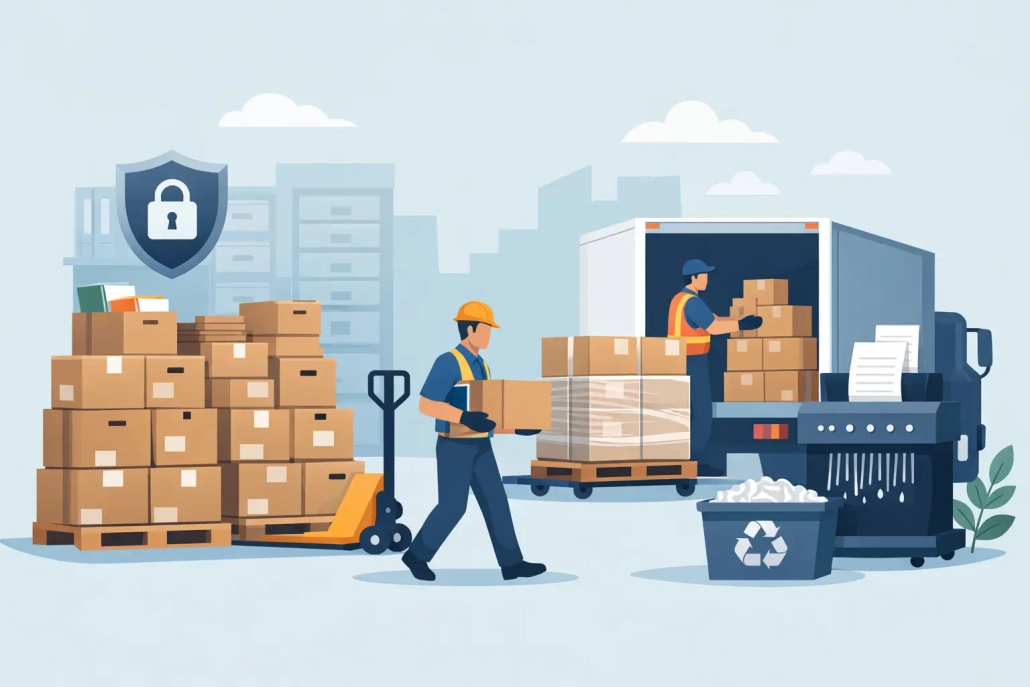
Pallet Archive Removal Process for Secure Cleanouts
A storeroom full of archive boxes can look like a space problem. For most businesses, it is also a confidentiality problem. A proper pallet archive removal process clears large volumes of outdated records without exposing employee, customer, financial, medical, or legal information during handling, transport, or disposal.
Whether you are clearing a records room, relocating offices, preparing for a lease handover, or finally disposing of boxes beyond their retention period, the objective is simple: remove the material efficiently while maintaining control from collection through destruction. That requires more than loading cartons into a truck.
When Pallet-Scale Archive Removal Makes Sense
Pallet archive removal is designed for businesses with a significant volume of boxed records, files, and confidential paper. It is generally the right option when archive boxes have accumulated across a storage room, warehouse, basement, off-site area, or multiple office locations.
A few boxes may be manageable through a secure bin or security bag service. Once the volume reaches dozens or hundreds of boxes, pallet-scale removal is usually more practical. It reduces repeated handling by your staff, avoids filling regular waste bins with confidential material, and allows the cleanout to be planned around your operational schedule.
The records involved are not always old client files. They may include payroll reports, invoices, tax documents, HR files, patient records, school administration paperwork, internal correspondence, tender documents, printed databases, and obsolete business records. If the information could identify a person, reveal commercial activity, or create a compliance issue if disclosed, it should be handled as confidential waste.
Start With Retention and Approval
Destruction should begin only after your business has confirmed the records are eligible for disposal. Archive boxes are often labeled by year, department, or client, but that does not automatically mean every document inside can be destroyed.
Your records manager, compliance contact, business owner, or department lead should confirm retention requirements before the removal date. The correct retention period depends on your industry, contractual obligations, legal requirements, tax needs, and any active or anticipated disputes. Legal, medical, financial, education, and government-related organizations may have stricter rules than a general office.
This review does not need to turn into a page-by-page audit. In many cases, a review of box labels, archive registers, and retention schedules is enough to identify what can go. If records are poorly labeled, separate uncertain boxes from approved material. Keeping those categories apart prevents a rushed cleanout from becoming an irreversible mistake.
Prepare the Archive Area for Collection
The best collection day starts with a clear picture of the job. Before booking removal, estimate the number of archive boxes, note whether they are already palletized, and identify the collection conditions. A ground-floor warehouse with loading dock access is different from a third-floor records room with a small elevator.
Tell the removal provider about stairs, parking restrictions, loading bays, elevator access, narrow corridors, building management requirements, and any time limits for collection. Accurate information helps the crew arrive with the right equipment and allows the job to be priced properly from the start.
Boxes do not need to be perfect, but they should be safe to move. Close loose lids, tape damaged cartons where necessary, and remove obvious trip hazards from access paths. Avoid overpacking boxes until they are too heavy to lift safely. If files are stored in shelving, cabinets, or compactus systems, confirm whether the service includes removal from those locations or whether your team will stage boxes in a collection area.
There is also a practical security benefit to staging approved archive boxes together. It limits staff access to material marked for destruction and makes it easier to confirm that only the intended records are collected.
The Secure Pallet Archive Removal Process
A secure removal process should provide a clear chain of custody. The exact workflow can vary based on site access and volume, but it should follow a controlled path from your premises to confidential destruction.
1. Quote and collection plan
The provider assesses the volume, access requirements, collection date, and service format. For a one-time archive clearout, the quote should cover the agreed removal scope rather than leaving your business with unexpected handling requirements on the day.
For very large cleanouts, it may make sense to schedule removal in stages. This can be useful where records need final approval, where office operations cannot be disrupted, or where a site has limited room to stage boxes.
2. Secure on-site pickup
On collection day, trained staff remove the approved archive material from the nominated location. Pallet jacks, trolleys, and suitable lifting methods help move high volumes safely and efficiently. Once boxes are loaded, they should not be left unattended in public areas, open loading docks, or standard waste zones.
A reputable service treats archive boxes as confidential material, not general recycling. That distinction matters. Paper may eventually be recycled, but it must first be destroyed in a way that makes the information unreadable and unrecoverable.
3. Controlled transport and destruction
The collected material is transported for secure destruction. The goal is to prevent unauthorized access while records are in transit and ensure paper is shredded before recycling.
Do not assume that a recycling collection provides confidential destruction. Recycling bins can be useful for non-sensitive office paper, but they are not a substitute for a documented secure destruction service when records contain private or commercially sensitive information.
4. Certificate of Destruction
After destruction, your business should receive a Certificate of Destruction. This document provides evidence that the confidential material was securely destroyed and is useful for internal records, audits, compliance files, and governance reporting.
Metro Paper Destruction provides Certificates of Destruction free of charge, so businesses have clear proof of service without adding an extra administrative cost to the cleanout.
What to Keep Out of the Archive Boxes
Most paper records can remain in their folders, binders, and envelopes unless your provider gives different instructions. Removing staples, paper clips, and small fasteners is often unnecessary and can waste staff time. The better approach is to confirm accepted materials before collection.
However, archive boxes should not become a catch-all disposal point. Separate items that need different destruction methods, such as hard drives, CDs, USB drives, uniforms, ID cards, large metal binders, batteries, and electronic devices. These materials may require separate handling to ensure information is destroyed properly and components are recycled or disposed of responsibly.
If you are unsure about an item, set it aside and ask before the pickup. That small step prevents delays and helps maintain an accurate destruction record.
Common Gaps That Create Risk
The most common archive disposal mistake is placing sensitive records in regular trash or cardboard recycling because the boxes are old. Age does not reduce confidentiality. A former employee file or expired client record can still cause reputational, legal, and financial damage if it reaches the wrong hands.
Another gap is leaving boxes in a hallway or loading area while waiting for collection. These areas are often accessible to contractors, visitors, delivery drivers, and other tenants. Keep records in a restricted location until the removal team arrives.
Businesses can also create risk by using unverified removal services that cannot explain where records go, how they are destroyed, or whether a Certificate of Destruction will be issued. Low-cost disposal is not necessarily cost-effective if there is no clear chain of custody or proof that the material was securely handled.
Make Large Cleanouts Easier to Manage
For ongoing archive management, do not wait until every storage area is full. Build disposal dates into your records retention schedule and arrange periodic secure destruction for material that has reached the end of its retention period. This spreads the work across the year and reduces the pressure of a major cleanout.
For a one-off project, assign one internal contact to approve boxes, coordinate building access, and answer collection-day questions. A simple archive register with box counts, departments, and destruction approval status can make the process easier to track without slowing down the removal.
If your business has a mixture of daily confidential waste and stored archive boxes, combine service formats where appropriate. Lockable bins or security bags can support regular office disposal, while pallet removal handles the backlog. The right arrangement depends on volume, site layout, and how frequently confidential paper is generated.
A well-planned archive cleanout gives your business more than reclaimed storage space. It removes a source of confidential risk, supports responsible recycling, and leaves you with documented evidence that sensitive records were handled properly. Before the boxes become another overdue project, arrange a clear quote, confirm what can be destroyed, and schedule secure collection around your business.


Leave a Reply
Want to join the discussion?Feel free to contribute!