
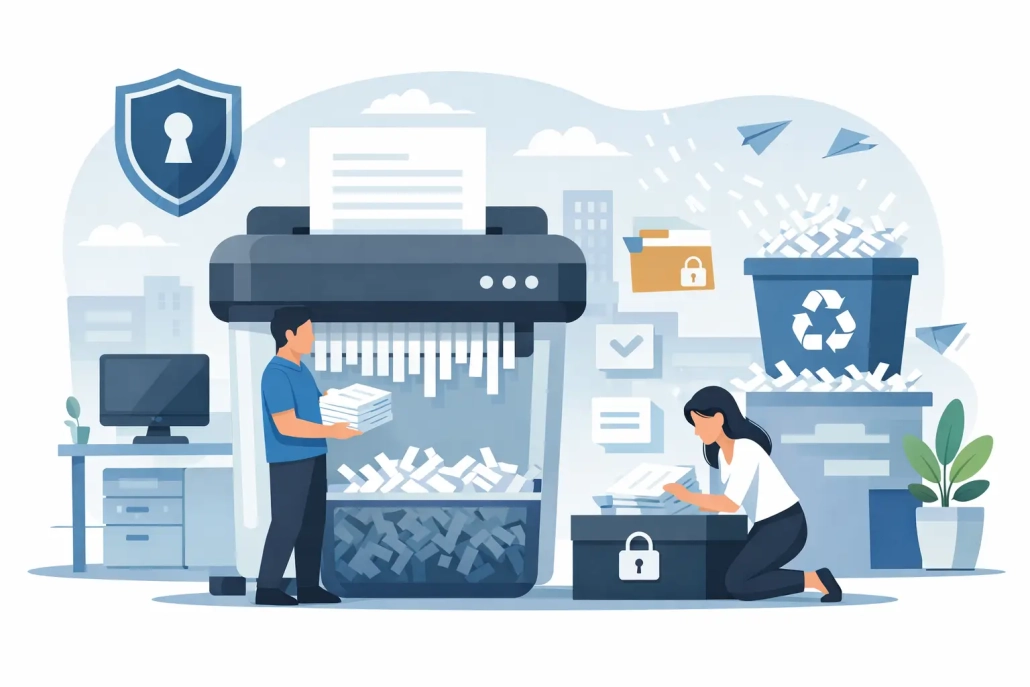
Best Secure Shredding Practices for Businesses
A file left beside the copier, an unlocked recycling bin, or a box of old client records in a hallway can create a serious confidentiality problem. The best secure shredding practices start well before destruction: they control who can access sensitive material, where it is stored, how it is collected, and how your business proves it was destroyed.
For offices, medical practices, legal firms, schools, and other organizations handling personal or commercial information, shredding is not simply a cleanup task. It is part of managing privacy, reducing fraud risk, and keeping the workplace organized.
Treat confidential waste as a controlled material
Paper does not stop being sensitive because it is no longer needed. Printed customer details, employee files, payroll reports, invoices, legal documents, medical records, internal strategy papers, and account information can all expose your organization if handled carelessly.
Set a clear internal rule: if a document contains information that should not be seen by an unauthorized person, it belongs in secure destruction, not general trash or standard recycling. This prevents staff from having to make uncertain decisions at the bin.
Your policy should also cover materials that are often overlooked. Branded uniforms, identification cards, CDs, DVDs, old backup media, and archive labels may reveal company information or create opportunities for misuse. A secure disposal process should account for these items rather than leaving them in storage indefinitely.
Use locked containers at the point of disposal
The most secure time to collect confidential material is when an employee first decides it is no longer required. Asking staff to hold papers at their desks until someone runs a shredding job creates gaps in the process. Papers can be misplaced, mixed with regular waste, or viewed by visitors and contractors.
Lockable consoles, secure bags, or lockable 240-liter bins provide a safer system. Place them near work areas where confidential paper is regularly generated, such as print stations, reception areas, records rooms, finance departments, and HR offices. The container should have a narrow deposit slot or controlled opening so documents can go in easily but cannot be removed by unauthorized people.
Location matters. A locked bin in a public lobby or an unattended loading area is less secure than one positioned within an access-controlled part of the workplace. For larger facilities, several smaller collection points may be safer and more practical than one overflowing bin at the other end of the building.
Limit access and maintain a clear chain of custody
A secure shredding process depends on accountability. Employees should know who is authorized to handle sealed bags, locked bins, archive boxes, and media awaiting destruction. Avoid leaving responsibility vague between departments, especially during office moves, clean-outs, or staff changes.
Chain of custody means being able to account for confidential material from collection through final destruction. At a minimum, your business should know when materials were collected, by whom, and where they were taken. When using an external destruction provider, choose one that removes material securely and provides formal proof after the job is complete.
A free Certificate of Destruction is more than a piece of paperwork. It gives your organization a record that confidential materials were destroyed through a documented process. Keep certificates with your compliance, records management, or vendor files, particularly for larger archive destruction projects and sensitive departmental clean-outs.
Match pickup frequency to your risk level
There is no single pickup schedule that suits every business. A small office with low volumes may need an on-call pickup or an occasional one-off clean-out. A medical office, legal practice, school, or busy administrative team may be better served by scheduled collection so secure bins do not become overloaded.
The right frequency depends on how quickly confidential waste builds up, the storage space available, and the sensitivity of the documents involved. If bins are routinely full before collection day, staff may start placing documents beside them or in regular recycling. That is a sign the service schedule needs to change.
Review your needs after major events, including tax season, an office relocation, a records retention review, or a system migration. These projects can create far more confidential waste than normal daily operations. Pallet-scale archive removal or bulk archive box destruction may be the safer option when there is a large backlog.
Apply retention rules before you shred
Secure shredding should not mean destroying documents too early. Your organization may need to retain certain financial, employment, contractual, health, or operational records for a defined period. Before arranging a large clean-out, confirm which files have met their retention requirements and whether any are subject to a legal hold, audit, claim, or investigation.
Create a simple retention schedule that identifies document categories, retention periods, and the person responsible for approving destruction. This does not need to be complicated to be effective. The goal is to prevent two common problems: storing unnecessary documents forever and destroying necessary records by mistake.
For archive boxes, label the destruction approval clearly before collection. Avoid sending mixed boxes containing records with different retention dates. A little sorting at the records stage makes secure destruction faster, more defensible, and easier to document.
Make staff training practical
Even the best locked bin system fails if employees do not know what belongs in it. Train new staff during onboarding, then provide short refreshers when procedures change or when you notice disposal errors.
Use real examples from your workplace. Explain that printed reports, spoiled print jobs, notes from meetings, customer forms, address labels, and documents with login details belong in secure shredding. Make clear that documents should never be torn in half and placed in a trash can, taken home for disposal, or placed in open recycling.
Training should also explain what to do with non-paper materials. CDs, old media, identification cards, and uniforms may require a dedicated destruction stream. When employees can identify the correct container or contact person quickly, compliance becomes routine rather than burdensome.
Choose destruction that is secure and verifiable
An office shredder may appear convenient, but it has limits. Small machines can jam, require staff time, produce bags of shredded material that still need secure handling, and are unsuitable for large archive projects. They can also encourage inconsistent behavior when staff are busy.
Professional destruction is often a better fit when your organization needs secure collection, regular servicing, bulk removal, or documented destruction. Ask practical questions about the process: Are containers locked? Is material removed by trained personnel? Can the provider handle archive boxes, media, or uniforms? Will you receive a Certificate of Destruction? What happens to the shredded material afterward?
Responsible recycling should follow secure destruction, not replace it. Recycling confidential paper without controlled destruction can expose information. Once material has been securely destroyed, recycling supports waste reduction while keeping confidentiality at the center of the process.
Review weak points before they become incidents
Walk through your workplace as if you were an unauthorized visitor. Look at printer areas, mailrooms, records storage, open recycling bins, loading docks, and desks at the end of the day. These are the places where confidential waste procedures most often break down.
Review your process at least annually and after any security incident, relocation, or major operational change. Check whether bins are positioned correctly, collections are frequent enough, employees understand the policy, and destruction certificates are being stored. A process that worked for a ten-person office may not work after growth, new departments, or a move to hybrid work.
Metro Paper Destruction helps businesses manage secure paper, archive boxes, CDs, and uniforms through locked collection options, flexible pickups, secure removal, and Certificates of Destruction. Whether you need ongoing service or a one-time archive clean-out, the goal is the same: keep sensitive materials protected until destruction is complete.
The strongest shredding program is the one employees can follow every day without shortcuts. Put secure containers where the work happens, schedule collection before waste piles up, and insist on documented destruction. That turns confidential disposal from a recurring risk into a controlled business process.


Leave a Reply
Want to join the discussion?Feel free to contribute!