
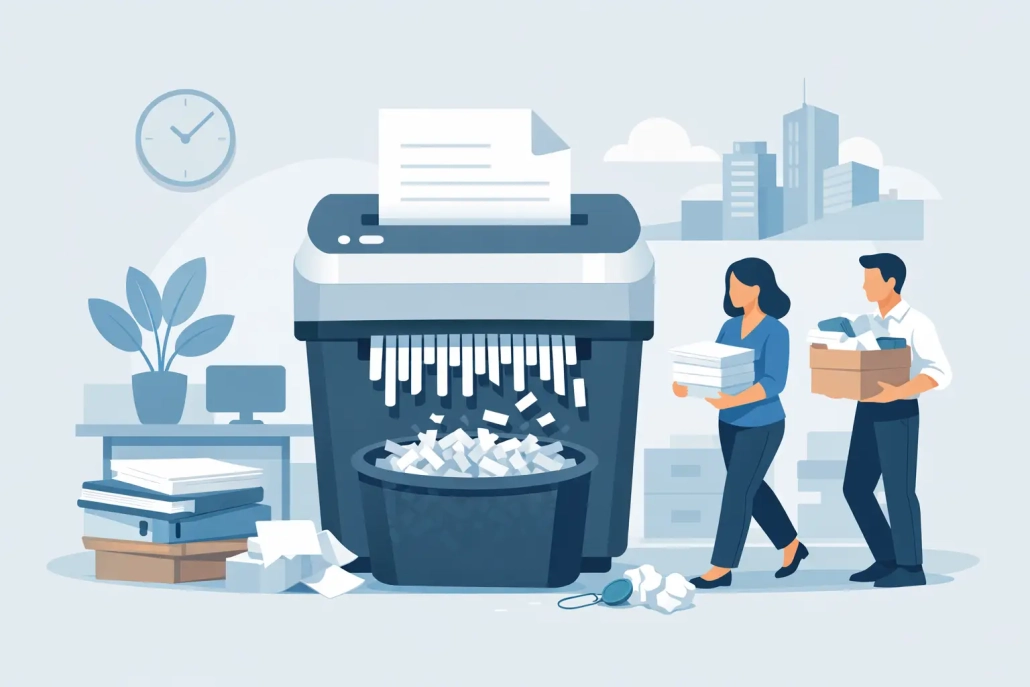
Ad Hoc Shredding for Offices When You Need It
A staff member leaves, an audit is scheduled, or a storage room finally needs to be cleared. These are the moments when confidential paperwork can become an immediate risk. Ad hoc shredding for offices gives Melbourne businesses a practical way to remove sensitive documents without committing to a regular collection schedule.
For many offices, secure disposal is not a weekly requirement. It is a job that appears after a records review, an office move, a clean-out, or a decision to reduce archive storage. The right service should make that job straightforward: secure collection at your site, controlled handling, documented destruction, and responsible recycling once the material has been destroyed.
When ad hoc shredding makes sense
On-call shredding is designed for businesses with a defined volume of confidential material that needs to be removed securely. It can be a few archive boxes, a large run of expired client files, or pallets of records from off-site storage. Rather than leaving documents in a general waste bin or asking staff to feed pages through an office shredder, the material is collected for secure destruction.
This approach is particularly useful after a retention review. Many organizations keep records longer than necessary because sorting and disposal feels time-consuming or risky. Over time, filing rooms, cabinets, and storage areas fill with documents containing names, addresses, account details, health information, employee records, legal correspondence, and internal financial information.
An ad hoc collection allows the business to act once the decision has been made. There is no need to wait for a standing service cycle when the documents are already taking up space and creating unnecessary exposure.
The risk is not limited to paper
Confidential waste often extends beyond everyday documents. Old archive boxes may contain client files, invoices, payroll records, contracts, and printed reports. A clean-out may also uncover CDs, branded uniforms, identification material, or other items that should not enter ordinary waste streams.
Throwing these materials into a dumpster is not a disposal process. It removes visibility over who can access them and what happens next. Even an office shredder has limits. It is slow for high volumes, creates work for employees, and leaves the business responsible for collecting, storing, and disposing of shredded material.
Professional collection shifts that burden away from your team. The priority is a secure chain of custody from removal through to destruction, with documentation that confirms the job has been completed.
What a secure one-off collection should include
A reliable ad hoc service starts at your premises. Material should be collected by a professional provider, not left outside for an unknown carrier or mixed with regular recycling. For smaller quantities, security bags can provide a contained collection method. Larger clean-outs may require archive box removal or pallet-scale collection.
The exact setup depends on the volume, access to the building, and how the records are stored. A ground-floor storage room with boxed files is different from a multi-level office with cabinets spread across departments. Clear pickup planning avoids delays and keeps disruption to staff to a minimum.
After collection, the business should receive a Certificate of Destruction. This is more than an administrative extra. It provides a clear record that the confidential material was handled and destroyed through the service. Metro Paper Destruction provides Certificates of Destruction free of charge, giving office managers and compliance teams proof for their internal records.
Once securely destroyed, paper can be directed into recycling. This supports a more responsible disposal process without asking your team to separate confidential documents or manage loose shredded paper.
Ad Hoc Shredding for Offices vs. Scheduled Service
The right choice depends on how often confidential waste is generated.
Ad hoc shredding is a good fit when disposal needs are occasional or project-based. Examples include an archive reduction project, a lease-end clean-out, a merger, a staff records review, or the disposal of old departmental files. It gives businesses the flexibility to arrange removal when there is enough material to justify collection.
Scheduled shredding is better for offices that generate confidential documents every day or every week. Lockable 240-liter bins can be placed on site so staff have a secure place to deposit paperwork as it is no longer needed. Regular pickups then prevent documents from accumulating in desks, cabinets, or open recycling containers.
Some businesses need both. A law firm, medical practice, school, or finance office may use lockable bins for routine paperwork while arranging an on-call service to clear years of archived files. The services are complementary. The key is matching the collection method to the actual volume and frequency of confidential waste.
Preparing your office for a one-off shredding pickup
A full document-by-document review is not always necessary, but preparation helps the collection run efficiently. Identify the records approved for destruction and keep any material subject to a legal hold, active audit, or current retention requirement separate. If you are unsure whether files can be destroyed, check your organization’s retention policy before booking removal.
It also helps to group material by location. Archive boxes can remain sealed if they are already clearly designated for disposal. Loose files should be placed in boxes or secure bags where practical. For a larger job, estimate the number of boxes, cabinets, or pallets involved. A provider can use this information to plan the right vehicle, staff, and collection method.
Do not spend hours removing staples, paper clips, or bindings unless specifically requested. The purpose of using a professional service is to avoid turning secure disposal into a staff-heavy project. Your team should focus on approving the records and keeping non-destruction materials aside.
If access is restricted, advise the provider in advance. Building loading rules, elevators, parking, security sign-in procedures, and collection time windows can all affect the job. Good information upfront helps keep the pickup prompt and controlled.
Questions to ask before booking
Price matters, but secure destruction should not be chosen on price alone. Ask how material is collected from your office, whether the provider can handle the quantity you have, and whether a Certificate of Destruction is included. Confirm whether the quote covers archive boxes, loose paper, pallets, CDs, or uniforms if those items are part of the job.
It is also sensible to ask about collection timing. Some offices need a quick pickup after an unexpected clean-out, while others need removal coordinated around staff availability or building access. An on-call service should be flexible enough to work around your operations rather than create more work for your office manager.
For large archive removals, request a clear quote based on the volume and handling required. This avoids uncertainty after collection and makes it easier to obtain internal approval. Competitive pricing is valuable, but the service should still provide secure handling and written proof of destruction.
Make the clear-out count
A one-off shredding job is a useful opportunity to improve how your office manages confidential information going forward. Once old records are removed, review where new paperwork is being placed. Files left in open recycling bins, desk drawers, or unlocked storage areas can quickly create the same problem again.
For offices with recurring paper waste, lockable bins and scheduled collections may be the next practical step. For businesses with occasional needs, keeping a trusted on-call provider ready means the next archive clean-out does not become a last-minute security concern.
Confidential documents should not remain in storage simply because disposal feels complicated. Request a free quote, arrange a secure pickup that suits your office, and clear the material with a documented destruction process you can stand behind.


Leave a Reply
Want to join the discussion?Feel free to contribute!