
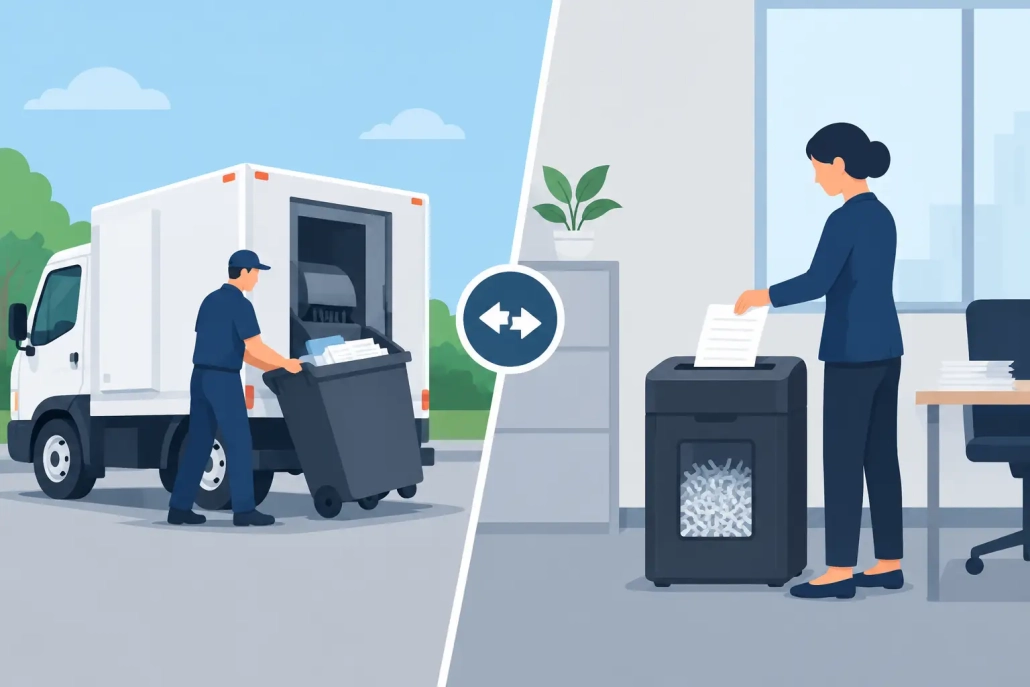
Mobile Versus Inhouse Shredding: Which Fits?
A locked filing cabinet does not protect a document once it is headed for the trash. Old client files, payroll reports, medical records, internal notes, and archived contracts can all create risk if they are handled casually at the end of their life. That is why the choice between mobile versus inhouse shredding deserves more attention than simply buying a larger office shredder.
For most businesses, the right approach comes down to volume, security requirements, staff time, and how consistently confidential materials are managed. Inhouse shredding can appear cheaper at first. Mobile shredding and secure collection services can remove much of the risk and administration that businesses often underestimate.
Mobile Versus Inhouse Shredding: The Core Difference
Inhouse shredding means your employees collect documents, remove staples or binders where required, feed paper through an office shredder, empty the machine, and arrange disposal of the shredded material. The entire process remains your responsibility.
Mobile shredding generally involves a specialist provider collecting confidential material from your premises in secure containers or security bags. Depending on the service and material, destruction may occur at the site or after secure transport to a controlled destruction facility. Either way, a professional service should provide a documented chain of custody and a Certificate of Destruction.
The difference is not just where paper is shredded. It is who is accountable for protecting the material from the moment it leaves a desk until it is destroyed and recycled.
When Inhouse Shredding Can Make Sense
An inhouse shredder can be practical for a very small office with occasional documents to destroy. If a business has only a few pages of low-volume confidential waste each week, a cross-cut shredder may be a reasonable convenience tool.
It can also help with immediate disposal of a single sensitive page that should not sit in a desk drawer. For example, a manager may shred a draft containing employee information before leaving the office.
However, this option only works when staff follow clear procedures. Someone must ensure the machine is functioning correctly, documents are fully destroyed, waste is not left beside the shredder, and shredded paper is not placed into ordinary recycling or garbage bins. Those responsibilities are easy to overlook during busy periods, staff changes, or office moves.
Inhouse shredding is best viewed as a limited supplement, not automatically a complete confidential waste program.
The Security Gaps Businesses Often Miss
The main concern with office shredding is not the cutting mechanism. It is the handling around it.
Documents may be placed in an open recycling box while employees wait for time to shred them. A machine may jam halfway through a stack. Shredded paper may be bagged and left in a loading area. Employees may take confidential files home to shred or use a general waste bin when the office shredder is full.
Each step creates an unnecessary exposure point. This matters for law firms handling client files, medical practices managing patient information, schools storing student records, and businesses holding payroll, banking, or customer data. A single misdirected file can cause reputational damage, internal disruption, and a serious privacy problem.
A professional mobile service reduces these touchpoints. Lockable collection bins provide a designated place for confidential waste as it is generated. Staff deposit documents directly into the secure bin, and authorized personnel remove the contents on a scheduled, on-call, or one-time basis.
Why Mobile Shredding Is Often Better for Ongoing Security
Mobile shredding services are designed for businesses that need a repeatable process rather than an occasional cleanout. The goal is to prevent sensitive paper from building up in desk drawers, open boxes, storage rooms, and recycling areas.
A secure provider should use lockable bins or tamper-resistant security bags, trained collection staff, controlled transport, and documented destruction. After the job, the business receives a Certificate of Destruction confirming that the material has been securely destroyed.
That certificate is more than paperwork. It gives office managers, compliance staff, and business owners a record that a defined disposal process was completed. If questions arise later about old records or a bulk archive purge, there is proof that the material was not simply thrown away.
For Melbourne businesses, Metro Paper Destruction provides flexible collections for ongoing confidential waste, archive boxes, and larger one-off clearouts. This allows businesses to set a collection frequency that matches their actual paper volume instead of paying for a service that is too frequent or leaving material unsecured for too long.
Comparing the Real Cost of Each Option
The purchase price of an office shredder does not show the full cost of inhouse shredding. Businesses also need to consider staff time, maintenance, replacement machines, bags, electricity, downtime from paper jams, and disposal arrangements for the shredded waste.
The largest hidden expense is often labor. Feeding several archive boxes through a small office shredder can take hours or days. If an administrative employee, records manager, or receptionist is assigned to this work, that person is not handling customer inquiries, managing files, supporting operations, or completing higher-value tasks.
Mobile shredding has a direct service cost, but it can be more predictable. A scheduled collection program makes it easier to budget for secure disposal, while a one-off pickup can handle archive purges, office relocations, and end-of-year records cleanouts without disrupting staff.
The right comparison is not “office shredder versus service fee.” It is “total internal cost and risk versus a controlled external process.” For businesses with regular confidential waste or large volumes of old records, the external option is frequently more cost-effective.
Volume Changes the Decision
Volume is one of the clearest decision points in mobile versus inhouse shredding.
A handful of pages each month may not justify a regular collection. A growing office that produces confidential waste every day is different. Once employees are dealing with multiple bags, overflowing shredder bins, or shelves of archive boxes, an office shredder becomes a bottleneck.
Bulk destruction is where inhouse shredding is particularly inefficient. Archived files may contain thousands of pages, along with folders, binders, clips, and mixed paperwork. A secure destruction provider can remove archive boxes or pallet-scale records in a managed collection, rather than requiring staff to sort and process the material page by page.
Businesses should also consider non-paper materials. Old CDs, obsolete media, branded uniforms, identification materials, and other items may contain sensitive information or create misuse risks. These materials need an appropriate destruction method, not an office paper shredder.
Questions to Ask Before Choosing a Service
Not every mobile shredding provider operates in exactly the same way. Before booking, ask how confidential material is secured at your location, who handles collection, where destruction takes place, and whether a Certificate of Destruction is included.
You should also ask about container options, pickup frequency, one-off cleanout capacity, and pricing for archive boxes or large-volume removals. A provider should be able to explain these details directly, without vague promises about security.
If your office needs recurring service, choose a setup that staff will actually use. A lockable bin placed near printing or records areas is more effective than asking employees to store sensitive paper until someone remembers to shred it. If you are clearing a storeroom, confirm that the provider can collect the full volume safely and efficiently.
A Practical Choice for Your Workplace
Inhouse shredding may be adequate for occasional, low-volume use when trained staff can manage the process from start to finish. It becomes harder to justify when confidential waste is generated regularly, when employees are already stretched, or when archive records are taking over valuable space.
Mobile shredding is usually the stronger option for organizations that need dependable handling, documented destruction, and less internal administration. It creates a clear routine: place confidential material in a secure container, arrange collection, and retain the destruction certificate for your records.
Start by looking at what is currently sitting in your printers, desks, storage areas, and recycling bins. If confidential material is waiting for someone to deal with it, a secure collection plan is the practical next step.


Leave a Reply
Want to join the discussion?Feel free to contribute!