
Does Shredding Prevent Identity Theft at Work?
A discarded payroll report, a client intake form, or an old hard drive can expose far more than one name and address. For businesses, confidential waste often contains the exact information criminals need to impersonate customers, employees, suppliers, or the business itself. Does shredding prevent identity theft? It is one of the most effective controls available, provided documents are handled securely from the moment they are discarded through final destruction.
Does Shredding Prevent Identity Theft?
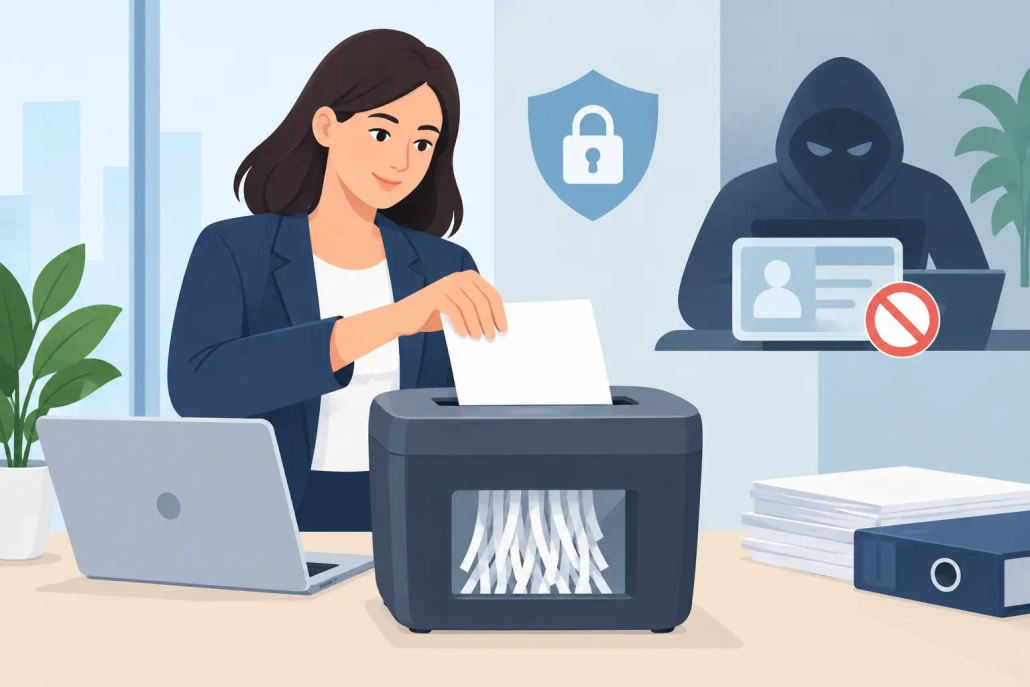
Shredding significantly reduces the risk of identity theft because it makes sensitive information unreadable and unusable. It prevents confidential records from being retrieved from office trash, recycling bins, dumpsters, storage rooms, or unsecured archive boxes.
However, shredding is not a complete identity theft strategy on its own. A business also needs sensible access controls, secure digital practices, staff awareness, and a reliable process for managing paper records before destruction. Shredding is the final physical safeguard that stops old information from becoming an easy target.
For a Melbourne business, this matters whether you handle a few confidential files each week or manage thousands of archived records. Medical practices, law firms, schools, finance teams, real estate offices, and government-related organizations all retain information that should never enter the general waste stream.
Why Ordinary Recycling Is Not Secure
Paper recycling is environmentally responsible, but an open recycling bin is not a secure disposal method. Anyone who can access the bin may be able to read, photograph, remove, or piece together documents before they reach a recycling facility.
The same issue applies to regular garbage. Once a document leaves your premises in an unsecured bin, you lose visibility over who handles it and where it goes. A bag of discarded paper may contain employee tax forms, customer account details, handwritten passwords, bank information, invoices, quotes, or internal reports. Even records that appear harmless on their own can be combined with other information to support fraud.
Secure document destruction closes that gap. Materials are placed into a locked container or security bag, collected by trained personnel, transported for destruction, and processed for recycling after the information has been destroyed.
The Types of Records That Create Identity Theft Risk
Many businesses focus on obvious records such as payroll files and client contracts, yet confidential information often appears in everyday office paperwork. The risk is not limited to full account numbers or government-issued identification. A name, date of birth, address, email address, signature, or customer reference number can be useful to an identity thief.
Records that should be securely destroyed include:
- Employee files, resumes, payroll documents, tax records, and performance reviews
- Client applications, intake forms, contracts, invoices, and payment records
- Medical, legal, financial, and education-related files
- Printed emails, internal reports, meeting notes, and strategy documents
- Archived files that have passed their required retention period
- ID badges, access cards, uniforms, branded materials, CDs, and other media that could expose business information
Archive boxes deserve particular attention. They are often moved to basements, storage units, back rooms, or off-site facilities and forgotten for years. When it is time to clear space, the temptation is to throw everything into recycling. That is precisely when secure archive box destruction is most valuable.
Secure Shredding Is About Chain of Custody
The key difference between a small office shredder and a professional destruction service is not simply the size of the cutting blades. It is chain of custody.
An office shredder can be suitable for occasional low-volume records, but it relies on staff following the process every time. Papers may sit beside the machine, remain in desk drawers, or be placed in an open recycling bin when the shredder jams or fills up. Staff time is also consumed feeding sheets into the machine, clearing paper jams, and emptying bags of shredded material.
A secure service is built to remove those weak points. Lockable bins provide a controlled place for confidential waste as it is generated. Security bags can be used where bins are not practical. Scheduled pickups keep disposal regular, while on-call pickups and one-time cleanouts help businesses deal with projects, office moves, storage clearances, and bulk archive removals.
The best setup depends on how much confidential paper your business produces and where it is generated. A busy office may need regularly serviced lockable bins. A small business may only need periodic bag collection. A records manager clearing old files may need pallet-scale archive removal. The security principle remains the same: restrict access until the material is destroyed.
What a Professional Destruction Process Should Include
Businesses should know what happens after confidential waste leaves their office. A clear process makes it easier to demonstrate that disposal has been handled responsibly and gives decision-makers confidence that sensitive records are not being left exposed.
A dependable service should provide secure collection options, documented handling, destruction of the material, and a Certificate of Destruction. The certificate is a practical record for internal compliance files, audits, and vendor management. It confirms that the materials were destroyed rather than simply removed.
At Metro Paper Destruction, businesses can use lockable 240-liter bins, security bags, scheduled servicing, on-call collections, or one-off cleanouts based on their operational needs. Archive boxes, confidential paper, CDs, and uniforms can be removed securely, with a Certificate of Destruction issued at no extra charge.
Destruction should also support responsible recycling. Secure paper destruction and recycling are not competing goals. Once confidential information has been rendered unreadable, the paper can be directed into the recycling stream rather than sent unnecessarily to landfill.
Common Gaps That Leave Information Exposed
Identity theft risk often develops through routine shortcuts rather than deliberate negligence. A staff member clears a desk into a recycling box. A manager takes old customer files home to shred. A storage room is cleaned out quickly before a move. These decisions may feel practical at the time, but they create a period when confidential information is accessible or unaccounted for.
Another common gap is unclear retention practices. Keeping every document forever does not make a business safer. It increases the amount of sensitive information that could be lost, stolen, or mishandled. Retain records for the appropriate business, legal, and regulatory period, then arrange secure destruction when they are no longer needed.
Digital information requires the same discipline. Shredding paper will not protect data still stored on old CDs, hard drives, USB devices, or retired equipment. Those materials need an appropriate destruction process as well. Businesses should treat physical and digital disposal as parts of the same information security policy.
How to Make Shredding Part of Everyday Operations
The simplest systems are usually the ones employees follow. Place locked collection bins where confidential paper is created, such as near printers, finance areas, reception desks, HR teams, and records rooms. Make it clear that confidential documents go into the secure bin, not desk-side trash or open recycling.
Staff should understand what counts as confidential waste. This includes drafts and duplicate copies, not only signed originals. A printed spreadsheet left at a copier can be just as sensitive as a file kept in a locked cabinet.
Set pickup frequency according to volume, and review it when your business changes. If bins are regularly overfilled, records may end up beside them. If a major archive cleanout is planned, arrange a dedicated collection rather than trying to process months or years of files through standard office bins.
It is also worth assigning ownership. An office manager, records coordinator, operations manager, or compliance lead should monitor the process, organize collection schedules, retain destruction certificates, and address issues before they become a security problem.
A Practical Step to Reduce Risk
No business can eliminate every identity theft risk, but unsecured paper should not be the weak point. Secure shredding limits access to confidential records, reduces the chance of information being recovered from waste, and gives your team a consistent process for disposal.
If old files are taking up space, bins are overflowing, or staff are relying on office shredders, it is a good time to review how confidential waste is handled. A free quote for secure collection and destruction can turn an overlooked task into a controlled, documented part of your business operations.


Leave a Reply
Want to join the discussion?Feel free to contribute!