
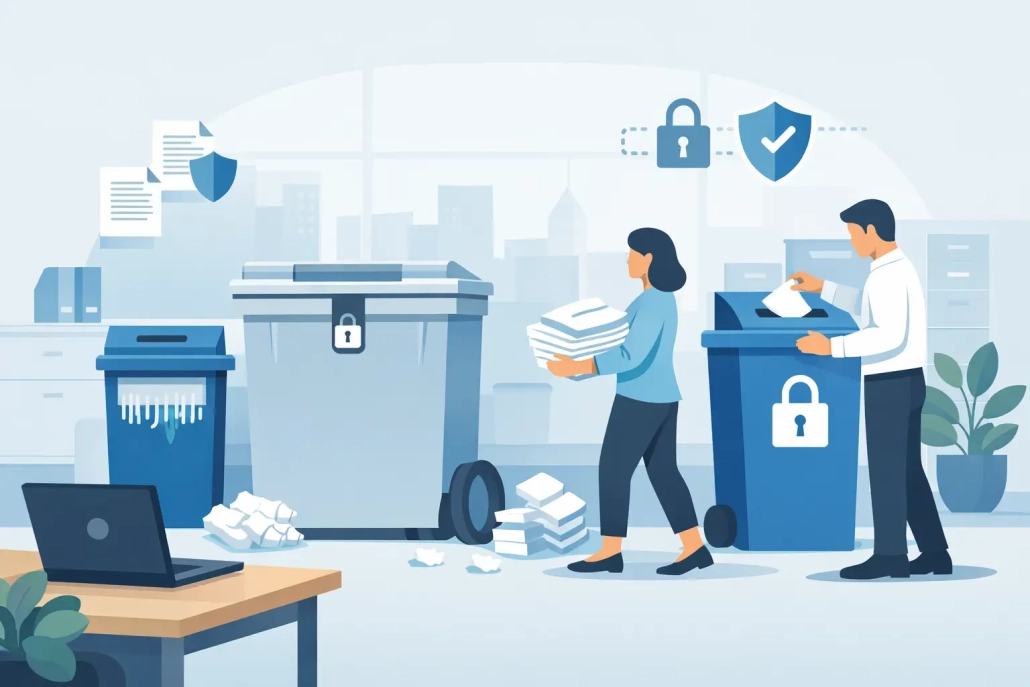
Best Confidential Waste Containers for Offices
A confidential waste container is not ordinary office furniture. It is the first control point in your document destruction process. The best confidential waste containers keep sensitive paperwork out of desk-side trash cans, prevent unauthorized access, and make secure collection straightforward for staff.
For offices handling customer records, employee information, financial paperwork, legal files, or medical documents, choosing the right container reduces risk before shredding even begins. The right option depends on how much paper your business produces, where waste is generated, and whether you need scheduled collection or a one-time cleanout.
What Makes a Confidential Waste Container Secure?
A secure container should do more than hide paper from view. It needs to stop documents from being removed once they have been deposited. That means a lockable design, a restricted opening, and a reliable collection process that maintains control of materials from your office through to destruction.
The strongest setups also remove uncertainty for employees. Staff should be able to place documents in the container quickly without sorting, bagging, or storing paperwork in drawers until someone has time to deal with it. If confidential disposal is inconvenient, paper often ends up in general recycling or regular trash – exactly where it should not be.
Look for containers that are durable, clearly marked, and appropriate for the area where they will be used. A container in a public reception area may need a smaller opening and more discreet placement than one in a controlled records room. Locking it is essential, but location matters too.
Best Confidential Waste Containers by Office Need
There is no single container that suits every business. A small accounting office with daily paperwork has different needs from a hospital department clearing stored files, or a law firm managing years of archived client records.
Lockable 240-Liter Bins for Regular Office Waste
For most busy workplaces, lockable 240-liter bins are among the best confidential waste containers. They provide enough capacity for day-to-day disposal without taking over valuable floor space. They are well suited to offices, schools, professional service firms, medical practices, and government-related workplaces with ongoing paper waste.
A secure bin works best when collection is scheduled around actual usage. Weekly, fortnightly, or monthly service may all be appropriate depending on your document volume. Over-servicing wastes money, while leaving a full container in place for too long can encourage staff to use unsafe alternatives.
A lockable bin also makes responsibilities clear. Employees deposit documents, and an approved destruction provider collects the contents securely. Your team does not need to transport sensitive material, manage an internal shredder, or decide which records can safely enter regular recycling.
Security Bags for Smaller Volumes and Flexible Collection
Security bags are a practical choice for small offices, remote teams, or businesses that only produce confidential waste occasionally. They are also useful when paperwork accumulates in several locations before a collection is arranged.
A purpose-designed security bag should be tamper-evident and securely sealed. Once filled, it should remain closed until it is collected for destruction. This approach offers flexibility, but it does rely on staff storing full bags in a secure location. For high-volume offices, bags can become harder to manage than a fixed lockable bin.
Security bags are often a good fit for on-call pickups, office relocations, seasonal file clearouts, and smaller one-off destruction jobs. They give businesses a controlled way to gather materials without committing to a permanent container service.
Archive Boxes for Records Cleanouts
Archive boxes are not confidential waste containers in the same sense as a lockable bin, but they are often the right solution when clearing stored records. If your business has a storage room, basement, or off-site archive full of old files, transferring those boxes into smaller bins can create unnecessary handling and delay.
Secure archive box removal allows records to stay contained until collection. This is especially useful for legal, medical, financial, and administrative files that are no longer required under your retention policy. The important point is that boxes should be collected through a controlled process, not placed beside a regular dumpster or handed to staff for disposal.
For pallet-scale archive removal, ask whether the provider can collect large quantities directly from your location. A service designed for volume can save significant time and reduce the chance of boxes being misplaced during a manual office cleanout.
Smaller Console Units for Staff Areas
A compact locked console can work well near printers, copy rooms, payroll areas, or administrative desks. These units encourage correct disposal at the point where documents are created or handled. They are particularly useful where staff regularly print drafts, reports, forms, and customer information.
The trade-off is capacity. Smaller units fill quickly and need more frequent monitoring or collection. They are best used as part of a wider system, with a larger central lockable bin available for higher volumes.
Match Container Size to Your Real Paper Volume
Choosing the largest available container is not always the best decision. An oversized bin may take up space and sit partially empty for long periods. On the other hand, a container that overflows creates an immediate security weakness.
Start by looking at the paper your team actually discards over a typical month. Consider printed drafts, outdated reports, client files, invoices, HR records, returned forms, and mail containing personal information. Then allow for predictable spikes, such as end-of-financial-year filing, office moves, records reviews, or staff changes.
If volume varies sharply, a combination approach is usually more cost-effective. Use a lockable bin for routine disposal and arrange an on-call pickup or one-off archive collection when larger quantities build up. This keeps your regular service manageable while giving you a secure outlet for unexpected cleanouts.
Do Not Overlook Chain of Custody
A secure container is only one part of confidential disposal. Your process should remain controlled after the container leaves your premises. Ask how materials are collected, transported, and destroyed, and whether your business receives written confirmation after the job is complete.
A Certificate of Destruction provides a clear record that confidential materials were destroyed. It is useful for internal compliance files, audits, customer requirements, and demonstrating that your business has taken reasonable steps to protect information.
The collection team should also be able to remove containers efficiently without leaving documents unattended in hallways, loading areas, or public spaces. For a busy office, this operational detail matters. Security failures often happen during handoffs, not because a bin was missing a lock.
Where Should Confidential Waste Containers Be Placed?
Place containers where people naturally handle sensitive paper, but do not place them where visitors or unauthorized staff can easily interfere with them. Copy rooms, mailrooms, finance departments, HR areas, records rooms, and back-office workspaces are common locations.
For larger workplaces, several smaller access points may be safer than asking employees to carry confidential papers across the building. However, too many containers can make servicing inefficient. The right balance depends on office layout, staff numbers, and the sensitivity of the records involved.
Clear labels help. Employees should understand that the container is for confidential paper only, not food waste, general recycling, or office supplies. A simple internal reminder can prevent contamination and keep collection running smoothly.
Paper Is Not the Only Confidential Material
Businesses often focus on paper records while overlooking other items that can expose information or create brand risk. CDs, DVDs, old media, security passes, branded uniforms, and obsolete promotional materials may all need secure destruction.
These items should not automatically be placed in a paper bin. Ask your destruction provider whether it offers separate handling for digital media, uniforms, and non-paper materials. Using the correct service protects confidential information and prevents damage to recycling equipment.
Choose a Service That Fits Your Schedule
The best confidential waste containers are supported by a collection service that works around your business. Scheduled pickups are ideal for ongoing disposal. On-call pickups provide flexibility when demand changes. One-off cleanouts are often the most practical choice for archive rooms, relocations, or major records reviews.
Metro Paper Destruction provides lockable bins, security bags, secure collection, and free Certificates of Destruction for businesses that need a straightforward disposal process. A competitive quote should reflect your actual volume and service frequency, not force your business into a package that does not fit.
The practical next step is simple: identify where confidential paper is currently being discarded, estimate the volume, and put a locked container where your staff need it most. A secure routine is easier to maintain than a rushed response after sensitive documents have already been left exposed.


Leave a Reply
Want to join the discussion?Feel free to contribute!