
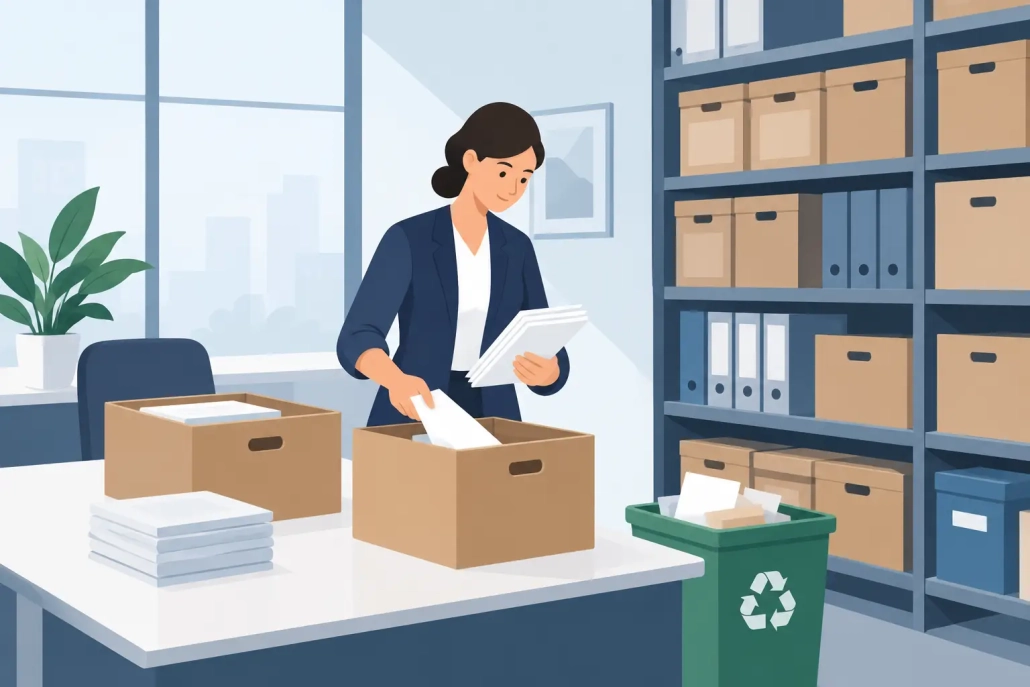
A Guide to Archive Clean Outs for Businesses
Archive rooms have a way of becoming a business risk without anyone noticing. Boxes accumulate after office moves, staff changes, system upgrades, and busy reporting periods. A proper guide to archive clean outs helps you turn that backlog into a controlled project, without exposing confidential information or asking staff to carry, sort, and dispose of sensitive records themselves.
For businesses holding client files, financial records, medical information, employee documents, contracts, or internal reports, an archive clean-out is not simply a storage task. It is a security and records-management decision. The goal is to retain what must be kept, securely destroy what has reached the end of its retention period, and create a clear record of the process.
Start With Retention, Not Disposal
The fastest way to create risk is to destroy records because they look old or take up space. Before arranging removal, identify the categories of material in your archive and confirm your organization’s retention requirements. These may be set by internal policy, contracts, industry rules, tax obligations, legal matters, or privacy requirements.
You do not need staff to review every page in every archive box if boxes have been labeled and managed properly. Start with box dates, department labels, file categories, and any retention schedule your business already uses. Separate material into three practical groups: records that must be retained, records approved for secure destruction, and boxes that need further review.
If there is a litigation hold, audit, investigation, insurance matter, or customer dispute connected to particular records, put those files aside. Destruction should stop for anything subject to a legal or operational hold, even if its normal retention date has passed. When in doubt, have the responsible manager, records officer, or legal adviser make the call before pickup is booked.
Create a Clear Archive Clean-Out Plan
A clean-out runs more smoothly when one person owns the project. This may be an office manager, operations manager, records manager, or compliance contact. Their role is to coordinate access, approve the scope, confirm which boxes can be destroyed, and keep staff from adding unrelated waste at the last minute.
Walk through the storage area before the collection date. Count boxes, note whether there are stairs, elevators, loading docks, restricted access points, or parking limitations, and identify any items that are not paper archives. A provider can remove large volumes efficiently, but accurate information helps ensure the right vehicle, labor, and collection method are arranged.
For large archive rooms, it is useful to work in sections. Mark the boxes approved for destruction and keep them separate from records being retained. A simple label such as “Destroy” with the project date can prevent accidental removal of current files. Avoid writing client names, account numbers, or other sensitive details on temporary labels.
Know What Requires Secure Destruction
Archive clean-outs commonly include paper files, banker boxes, bound reports, invoices, payroll records, tax documents, HR files, patient information, legal files, sales records, and old correspondence. If the material contains personal information, commercially sensitive details, signatures, financial data, or confidential business information, it should not go into ordinary recycling or a general trash bin.
Secure destruction is also relevant for more than paper. Old CDs, DVDs, USB drives, ID cards, branded uniforms, and other items can carry data or expose your organization if discarded carelessly. Check the contents of the archive area before collection. If you find digital media or uniforms mixed in with boxes, arrange the appropriate destruction service rather than assuming everything can be processed the same way.
There is a trade-off with pre-sorting. Removing obvious non-paper items can make a project easier to manage, but businesses should not ask employees to open highly confidential files simply to sort them page by page. A secure provider can advise on acceptable materials and collection requirements. The priority is maintaining confidentiality from the archive room through final destruction.
Protect the Chain of Custody
The most important part of any guide to archive clean outs is what happens between the storage shelf and the destruction facility. Confidential records remain your responsibility until they are securely destroyed. Leaving archive boxes in a hallway, loading bay, unsecured dumpster, or public recycling area creates an avoidable exposure.
Use a destruction provider with a defined chain of custody. That means trained collection personnel, secure handling procedures, controlled transport, and documented destruction. For ongoing needs, lockable 240-liter security bins or sealed security bags can keep records protected while they wait for scheduled pickup. For a one-time purge, archive boxes can be collected directly from your office, storage room, or off-site location.
Collection logistics matter. Confirm who can access the archive room, whether staff need to escort the collection team, and where vehicles can park. If boxes are stored across multiple floors or at several locations, explain that upfront. A reliable service provider should be able to plan around your site rather than leaving your team to solve removal issues on the day.
Choose the Right Pickup Method
The right collection option depends on the volume of material and whether the clean-out is a one-time event or part of an ongoing records program.
A one-off archive clean-out is a practical choice when you are clearing a storage room, preparing for an office relocation, closing a branch, or disposing of records after a retention review. The provider collects approved boxes and confidential materials in one scheduled project.
On-call pickups suit businesses that generate occasional volumes of confidential waste but do not need regular service. Scheduled pickups work better for offices that continuously produce documents requiring secure destruction. Lockable bins provide a secure point of disposal for day-to-day paperwork, while security bags can work well for smaller departments or sites with limited space.
For pallet-scale archives, ask for a quote based on the number of boxes, pallets, site access, and labor required. Price matters, but the lowest estimate is not automatically the best value if the collection process is unclear or proof of destruction is not included. Compare the full service: secure removal, transportation, destruction, recycling, documentation, and site-specific logistics.
Prepare Staff Without Creating Extra Work
Staff cooperation helps, but an archive purge should not become a weeks-long internal project. Give employees clear instructions on what they need to do and what they should leave alone. Tell them which records are approved for destruction, which boxes must remain, and who to contact if they find uncertain material.
Keep the instructions practical. Staff should not place food waste, liquids, office supplies, or general garbage in confidential destruction bins. They should not take boxes home, leave them in vehicles, or place them in public areas while waiting for pickup. If records are moved internally, move them directly to a secure holding point.
For businesses with multiple departments, nominate one contact in each area to confirm completion. This avoids the common problem of a clean-out being booked before one department has finished its review. It also creates a useful audit trail showing that the disposal decision was authorized.
Request Proof of Destruction
A Certificate of Destruction is more than a piece of paper. It is evidence that confidential material was collected and destroyed through a documented process. Keep the certificate with your records-management documentation, especially for sensitive projects involving customer data, employee files, health information, or financial documents.
The certificate should support your internal record of what was destroyed, when the collection occurred, and which location or department was involved. For larger jobs, keep the box count, pickup date, approval email, and retention review notes alongside it. This creates a practical trail if a question arises later.
Metro Paper Destruction provides secure collection across Melbourne for archive boxes, confidential paper records, CDs, and uniforms, with Certificates of Destruction provided at no extra charge. Whether you need a single archive room cleared or an ongoing secure disposal arrangement, a clear quote and planned collection can remove the burden from your staff.
Make the Next Clean-Out Easier
The best archive clean-out prevents the next storage problem from building quietly behind a locked door. Once old records have been removed, label retained boxes consistently with department, date range, destruction review date, and a simple contents description. Keep a current retention schedule and review it on a set cycle rather than waiting until storage is full.
For active confidential waste, give staff a secure disposal point close to where paperwork is created. Regular collection and lockable bins reduce the temptation to use ordinary recycling or store documents in desks and cupboards. That improves office organization while reducing the chance that sensitive material is overlooked.
A secure archive clean-out is a practical way to reclaim space, reduce information risk, and give your business confidence that old records have been handled properly. Start with a retention check, arrange secure collection, and keep the documentation. The result is not just an empty archive room, but a safer process for the records still in your care.


Leave a Reply
Want to join the discussion?Feel free to contribute!