
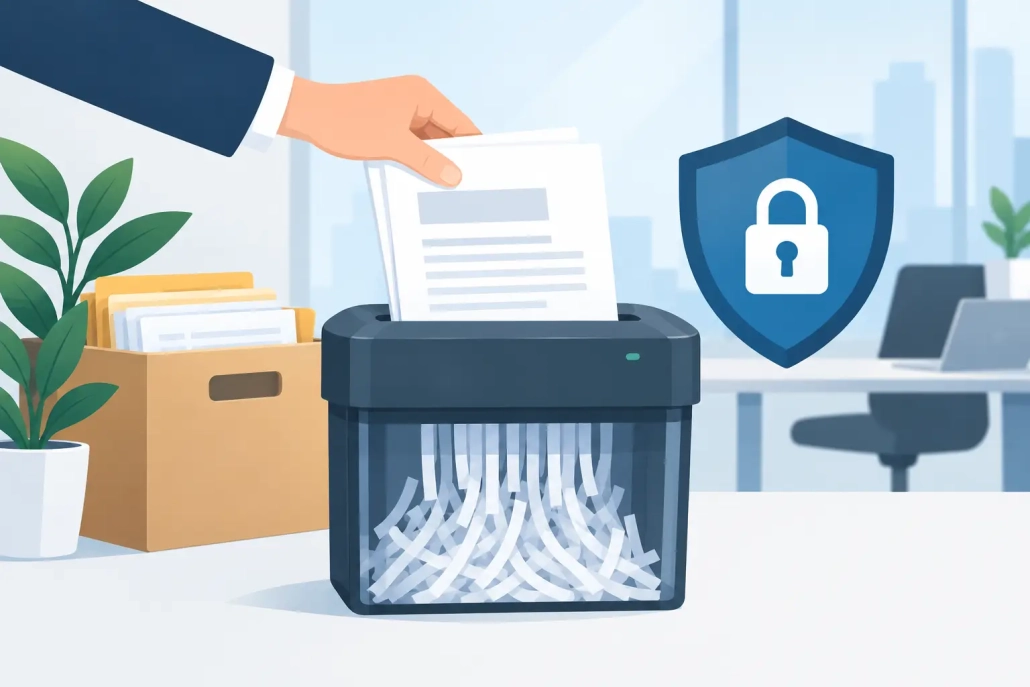
Records Disposal That Protects Your Business
A filing room packed with old client files is not just an inconvenience. It is a security exposure waiting for the wrong person, water leak, office move, or rushed clean-out. Proper records disposal removes that risk by ensuring confidential paper and media leave your workplace under controlled conditions and are destroyed beyond recovery.
For Melbourne businesses, the practical question is not whether old records should go. It is which records can be destroyed, when they should be removed, and whether the disposal process gives you a clear chain of custody and proof of destruction.
Records disposal is a security process, not a cleanup job
Throwing documents into general waste or recycling bins is not secure disposal. Once sensitive files leave your control without protection, so does the information inside them. Customer details, staff records, financial information, medical notes, contracts, internal reports, and business plans can all create serious problems if exposed.
Secure disposal starts at the point of collection. Records should be placed in lockable containers or packed into archive boxes that are collected by trained personnel. They should then be transported for confidential destruction and recycling, with a Certificate of Destruction issued once the job is complete.
That process matters because a clean office is not the same as a secure office. A disposal provider should be able to explain exactly how material is collected, handled, destroyed, and documented.
Know what can be destroyed
Most businesses hold far more confidential material than they realize. The obvious items are employee files, client records, invoices, tax paperwork, bank statements, and legal correspondence. However, confidential waste also includes draft documents, printed emails, meeting notes, outdated marketing lists, price sheets, reports, and misprints from office printers.
Archive rooms often contain boxes that have not been reviewed in years. Some may need to be retained for operational, contractual, tax, legal, or industry-specific reasons. Others are simply taking up expensive space and increasing your exposure if there is a breach.
The right retention period depends on the type of record and the requirements that apply to your organization. Do not destroy documents simply because they are old. Establish a retention schedule, check for any active disputes, audits, or legal holds, and authorize destruction only after the relevant review is complete.
Once a category of records is approved for destruction, remove it promptly. Holding unnecessary confidential information creates ongoing risk without delivering business value.
Paper records and archive boxes
Archive box destruction is often the best option when a business is clearing out stored records in bulk. Rather than asking staff to sort, shred, and bag years of documents, sealed archive boxes can be collected directly from storage areas, offices, or off-site locations.
This approach is particularly useful during an office relocation, lease expiry, records-room clean-out, merger, renovation, or transition to digital systems. Pallet-scale archive removal is also available for larger projects where hundreds or thousands of boxes need to be removed efficiently.
There is a trade-off. Bulk removal is fast and cost-effective, but only after you have confirmed the contents are approved for destruction. Label boxes clearly during your retention review so staff do not accidentally dispose of active files alongside expired records.
Digital media and branded items
Confidential information is not limited to paper. CDs, DVDs, backup media, and other physical media may contain files that should not enter general waste. Destroying the media itself prevents the information from being retrieved later.
Old uniforms can also create a security issue, especially where logos, staff names, security identifiers, or access-related branding are visible. Secure uniform disposal helps prevent discarded workwear from being reused or misrepresented.
Choose the right collection method
A dependable records disposal service should fit the way your business operates. A small office with regular paperwork has different needs from a medical practice clearing patient archives or a law firm preparing for a large office move.
For regular confidential waste, lockable 240-liter bins provide a straightforward solution. Staff can place approved documents into the bin as they work, rather than leaving papers on desks or waiting for an annual purge. The bins remain locked between collections and can be serviced on a schedule that suits your volume.
Security bags are useful for smaller workplaces, temporary projects, or sites without room for a bin. They can hold confidential paperwork securely until collection.
For irregular needs, an on-call pickup or one-off clean-out is usually the better choice. This gives you secure removal without committing to a scheduled service you may not need. It is a practical option after a records review, at the end of a project, or when archive storage has reached capacity.
Metro Paper Destruction provides mobile customer-site collection across Melbourne, including scheduled services, on-call pickups, and large archive removal jobs. The objective is simple: remove confidential materials without adding another logistical task to your team.
What a secure chain of custody should look like
Security should be visible throughout the service, not treated as a vague promise. Before booking a provider, ask how records are kept secure from your office through to destruction.
A sound process normally includes secure containers or sealed boxes, controlled collection, secure transport, documented handling, destruction, and a Certificate of Destruction. The certificate is not just paperwork. It is your record that the materials were collected and destroyed through a defined process.
This documentation can be valuable for internal governance, audits, client requirements, and compliance reviews. It shows that your business took reasonable steps to protect information when it was no longer needed.
Be cautious of providers that only offer a pickup with no clear evidence of what happens next. Low-cost disposal is not a saving if it leaves your organization unable to account for confidential records.
Make disposal part of your records policy
The safest disposal program is routine. When teams are unsure what to do with sensitive paperwork, documents tend to collect in desk drawers, printer trays, meeting rooms, and unsecured recycling bins. That is where avoidable breaches begin.
Your records policy should state what is confidential, where it must be placed for disposal, who authorizes archive destruction, and how long different record types are retained. Staff should know that confidential materials never belong in general waste.
Keep the instructions simple. For example, everyday confidential papers go into the locked bin. Approved archive boxes are marked for destruction and collected during a booked clean-out. Digital media and uniforms are separated for secure destruction. Clear processes reduce mistakes and make compliance easier to manage.
It also helps to assign ownership. An office manager, operations lead, records manager, or compliance contact should oversee retention reviews and coordinate larger destruction projects. This avoids the common problem of boxes sitting untouched because no one is sure who can approve their disposal.
Why recycling still matters
Secure destruction and environmental responsibility can work together. Once confidential material has been destroyed through the appropriate process, paper can be recycled rather than sent to landfill. This reduces waste while protecting the information your business is responsible for.
The key is the order of operations. Security comes first. Documents should be securely collected and destroyed before they enter the recycling stream, not placed directly into open recycling containers and assumed to be safe.
For businesses with sustainability targets, secure paper recycling offers a practical way to reduce waste without compromising confidentiality.
Book removal before storage becomes a problem
If archive boxes are crowding your storage room, confidential paper is piling up near printers, or your business is preparing for a move, now is the right time to schedule a review and collection. Waiting until space is completely full usually means a rushed decision, more internal handling, and greater risk.
Start by separating records that must be retained from those approved for destruction. Then choose a service format that matches your workload: locked bins for ongoing waste, security bags for smaller volumes, or a one-off archive removal for larger clear-outs. Request a free quote, confirm the collection process, and keep the Certificate of Destruction with your records.
Secure records disposal gives your business more than empty shelves. It gives your team a clear, defensible way to protect the information people have trusted you to handle.


Leave a Reply
Want to join the discussion?Feel free to contribute!