
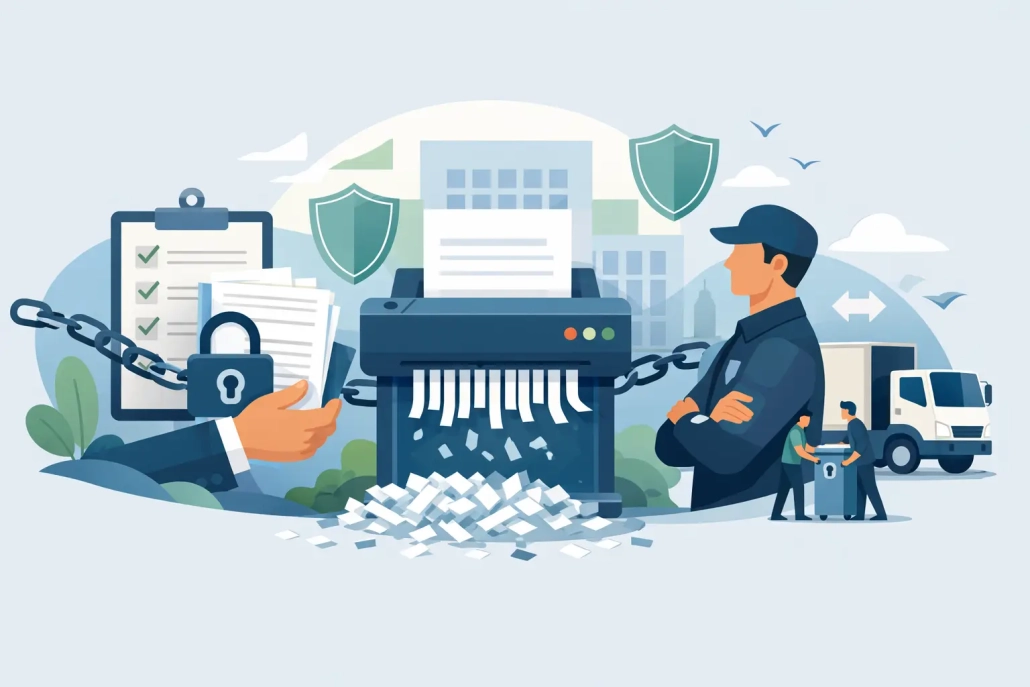
Why Chain of Custody Shredding Matters
A file does not become safe just because it leaves your office. The highest risk often starts the moment confidential records are placed in a bin, moved through a hallway, loaded into a truck, or handed between staff. That is why chain of custody shredding matters. It closes the gaps between collection and destruction, so your business is not relying on assumptions, trust alone, or a basic pickup service that cannot show where your material went.
For businesses that manage client records, employee files, financial documents, medical paperwork, legal files, or archived boxes, disposal is not a minor admin task. It is part of your security process. If the handoff is weak, the entire system is weak.
What chain of custody shredding actually means
Chain of custody shredding is a controlled process that documents and protects confidential material from the point of disposal through final destruction. In plain terms, it means your documents are not left exposed, moved casually, or transferred without accountability.
A proper chain of custody starts before pickup. It begins with how documents are stored on site, who can access them, and whether the container itself prevents unauthorized handling. Lockable bins and secure bags are not just convenience items. They are the first control point.
From there, the process should continue with secure collection, clearly managed transport, and verified destruction. If any part of that chain is informal, the protection is weaker than it looks. A business may think it is using a shredding service, but if records can be accessed between pickup and destruction, the service is only partially secure.
Where businesses get exposed
Most document disposal failures do not come from industrial-scale breaches. They come from everyday shortcuts. Boxes are left near a loading dock. Old files are placed in open recycling. Staff carry documents to a storage area before a pickup. A one-time cleanout is handed to a general waste provider because it seems faster or cheaper.
That is where risk builds. Sensitive information does not need to be stolen in bulk to create damage. A single payroll record, medical form, customer file, or legal document can trigger real consequences.
For office managers and operations teams, the issue is not only whether documents are eventually shredded. The issue is whether they remain protected during every step before shredding happens. That is the core difference with chain of custody shredding.
The key parts of a secure chain of custody shredding process
A credible provider should be able to explain the process without vague language. Security should be visible in the service itself.
Secure on-site collection
Confidential waste should be stored in lockable consoles, bins, or sealed security bags until collection. This limits internal access and reduces the chance of documents being misplaced, removed, or mixed with regular waste.
For businesses with steady paper volumes, scheduled servicing is usually the cleanest option. It keeps records moving out on a routine basis and avoids overflow. For archive projects, one-time box removals or pallet-scale clear-outs may be more practical. The right format depends on volume, frequency, and how much space old records are taking up.
Controlled handling during pickup
Pickup is one of the most overlooked points in the process. If material is collected casually, carried through public areas, or loaded without control, your chain is already compromised.
Secure collection means the material is removed by trained personnel, placed into controlled transport, and handled as confidential waste from the moment it leaves your premises. This is especially important for medical offices, schools, law firms, financial businesses, and any organization working under privacy obligations.
Transport to destruction
Once documents are off site, your business still needs confidence that they are not sitting unprotected, being sorted loosely, or mixed into a general recycling stream before destruction. The transport stage should be managed as part of the security process, not treated as a simple delivery task.
If a provider cannot clearly explain what happens after pickup, that is a problem. A secure chain of custody includes tracked movement and restricted handling right through to destruction.
Verified destruction and documentation
The final step is proof. A Certificate of Destruction matters because it confirms the service was completed and provides a record for your business. That documentation helps support internal policy, audits, and general compliance housekeeping.
A certificate does not replace a secure process, but it is an important part of it. Without proof of destruction, you are left with a promise instead of a record.
Why chain of custody shredding matters for compliance and risk
Different industries face different rules, but the pressure is the same. Businesses are expected to protect private information and dispose of it responsibly. That includes customer data, employee records, tax files, patient forms, contracts, IDs, and internal business information.
The risk is not only legal. It is operational and reputational. A poor disposal process can lead to data exposure, loss of trust, and unnecessary internal disruption. Even if no breach is confirmed, the inability to show how records were handled can become a problem in itself.
Chain of custody shredding gives businesses a clearer position. Instead of hoping material was handled correctly, you have a defined service model with secure storage, secure pickup, destruction, and documented completion.
That matters even more during office moves, archive room cleanouts, or end-of-year record disposal. High-volume projects create pressure, and pressure often leads to shortcuts. A secure provider helps remove that risk by taking control of the process from collection to destruction.
Not every business needs the same setup
This is where a practical approach matters. A law office with ongoing confidential paperwork may need lockable bins and regular service. A school may need periodic cleanouts after enrollment cycles. A medical practice may need stricter document handling and more frequent pickups. A corporate office clearing decades of archived files may need box destruction or pallet-scale removal rather than a small recurring bin service.
The point is not to overbuy. It is to match the service to the exposure. Too little service creates buildup and risk. Too much service adds cost without much benefit. A good provider should help you choose the right collection method, pickup frequency, and container type based on actual volume and sensitivity.
What to ask before choosing a provider
If you are comparing shredding services, ask direct questions. How are documents stored on site? Are containers lockable? Who handles collection? What happens during transport? Is destruction documented? Can the provider handle both regular service and large cleanouts if your needs change?
Price matters, but price without process is not much value. The cheapest option can become expensive very quickly if it leaves gaps in your document security.
This is also where local service can make a difference. A provider with flexible scheduling, on-call pickups, and experience handling everything from office bins to archive box destruction is usually better equipped to support real business needs than a one-size-fits-all operator. Metro Paper Destruction, for example, builds its service around secure removal, flexible pickups, and free Certificates of Destruction because those details are what businesses actually need when risk is on the line.
Chain of custody shredding is more than paper removal
Many businesses focus on paper, but confidential disposal often goes wider than that. Archived boxes, CDs, branded uniforms, and other sensitive materials can create the same exposure if they are discarded carelessly. A chain of custody approach should extend to any item that contains private information or could be misused if recovered.
That broader view is often what separates a basic waste vendor from a true secure destruction partner. If your provider can only deal with one narrow category of waste, your internal team may still be left managing risk in other areas.
The real value is peace of mind you can document
A secure shredding service should reduce workload, reduce risk, and make compliance easier to support. That only happens when the process is controlled end to end. Chain of custody shredding gives businesses a simple, defensible way to manage confidential disposal without relying on staff improvisation or unsecured storage.
If your current process includes open boxes, irregular cleanouts, unclear handling, or no proof of destruction, it is worth fixing now rather than after a problem forces the issue. The right service does more than remove paper. It helps you keep control of sensitive information until the very last step.

Leave a Reply
Want to join the discussion?Feel free to contribute!