
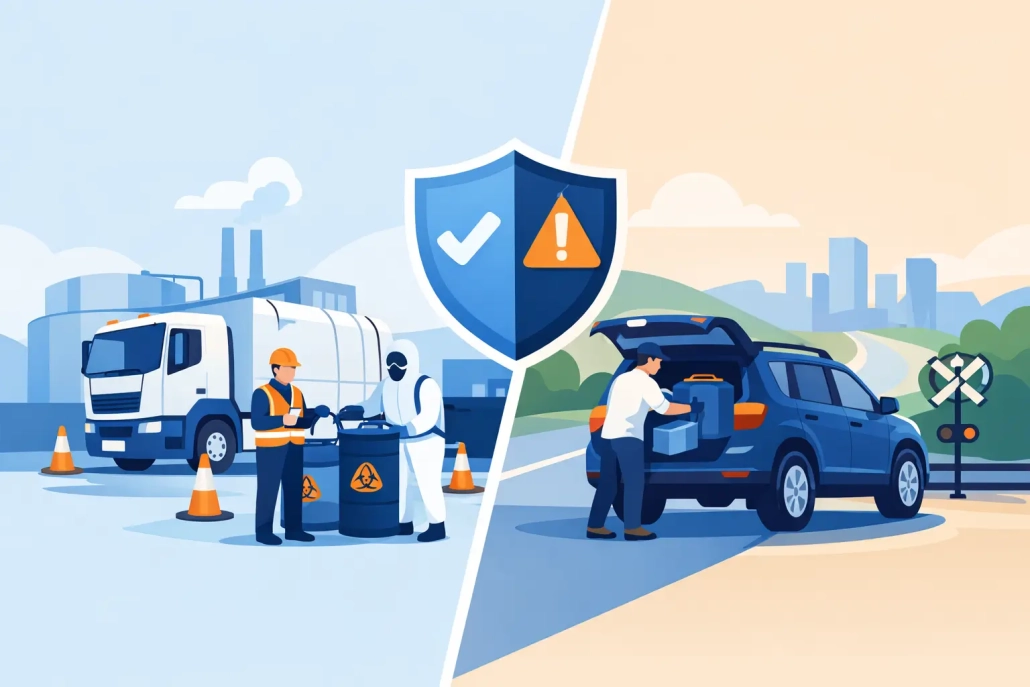
Onsite Collection vs Self Transport: Which Is Safer?
A locked filing cabinet does not protect a document once it leaves your office. That is the practical difference businesses need to consider when weighing onsite collection vs self transport. Both options can remove old records, expired client files, employee paperwork, and confidential media, but they place very different security and workload responsibilities on your team.
For a small, one-time disposal job, transporting material yourself may appear straightforward. For regular confidential waste or a large archive clean-out, a professional collection service can reduce handling, improve chain-of-custody control, and free your staff to focus on their actual work.
What onsite collection involves
Onsite collection means a secure destruction provider comes to your location to collect confidential material. Depending on the volume and service arrangement, this may involve lockable document bins, security bags, archive boxes, palletized records, or sealed containers for CDs and uniforms.
Your staff place material into the approved container, and the provider collects it on a schedule, on request, or as part of a one-off clean-out. The material is securely removed for destruction and recycling, with a Certificate of Destruction provided as proof that the service has been completed.
The key benefit is that your business does not need to store loose documents for long, load vehicles, organize a trip, or decide which employee is responsible for the material once it leaves the building. Collection is particularly useful where documents contain personal information, financial records, medical details, legal files, payroll information, or commercially sensitive data.
What self transport involves
Self transport means your employees gather the documents, load them into a business or personal vehicle, and take them to a destruction facility or other disposal point. In some cases, this is a reasonable choice. A business with a small number of boxes, a nearby facility, and staff available to make the trip may find it convenient for an occasional purge.
However, the responsibility remains with your organization from the moment records are removed from storage until they are accepted by the destruction provider. That includes keeping boxes secure in the office, during loading, in the vehicle, and while the vehicle is parked or in transit.
This method also relies on staff following a consistent process. A rushed office move, an unlocked vehicle, or a box left in a common hallway can create an avoidable exposure. The issue is not whether employees are trustworthy. It is whether the process leaves too much room for material to be misplaced, viewed, or stolen.
Onsite collection vs self transport: the security difference
The strongest case for onsite collection is a shorter, more controlled chain of custody. Documents stay within your workplace until a trained collection team takes responsibility for them. Lockable bins and security bags help prevent unauthorized access while the material is awaiting pickup.
With self transport, every handoff and movement point adds another opportunity for a problem. Employees may sort files in open areas, stack boxes near an exit, use an unsecured cart, or make multiple trips from the building to a vehicle. If the vehicle is shared, parked overnight, or used for other errands, confidential material can remain exposed for longer than intended.
For regulated or high-risk information, minimizing handling is usually the sensible approach. Medical practices, legal offices, accounting firms, schools, government-related organizations, and HR departments often hold records that should not travel in an employee’s car simply because a storage room is full.
A professional collection process also creates clearer accountability. Your business knows who collected the material, when it was removed, and that destruction was completed. A free Certificate of Destruction gives records managers and compliance staff documentation they can retain with their internal disposal records.
Time and operational workload
Self transport is often described as the cheaper option, but the visible disposal fee is only one part of the cost. Someone still has to review records, pack boxes, move them from storage, arrange a suitable vehicle, load and unload it, drive to the facility, wait, and return. If two employees spend several hours clearing an archive room, that is a real operating cost.
There is also the interruption factor. Office managers and operations staff are usually already coordinating suppliers, people, equipment, and deadlines. Asking them to manage a confidential disposal run can turn a simple task into a half-day project.
Onsite collection keeps the process closer to routine facilities management. Scheduled pickups work well for offices generating ongoing confidential paper waste. On-call pickups suit businesses with irregular volumes. One-off archive removals are designed for larger clear-outs, including boxed files and pallet-scale records that are not practical to carry in a sedan or small SUV.
The right service format depends on how quickly material accumulates and how much space it consumes. A lockable 240-liter bin can keep day-to-day documents contained. For a storage room full of archived files, secure box collection or a planned removal is usually more efficient.
Cost: look beyond the trip itself
Self transport can make sense when the quantity is genuinely small and the trip is simple. If you have one sealed box, a secure company vehicle, and a nearby destruction location, arranging your own drop-off may be adequate.
The calculation changes as volume and sensitivity increase. Consider staff time, fuel, vehicle access, parking, lifting, and the risk of damage or loss during transit. Large archive boxes are heavy, awkward to load, and easy to underestimate. A single box may be manageable. Twenty boxes, old binders, and files stored on shelving are a different job.
Onsite collection provides a clearer service cost because the logistics are included in the arrangement. A reliable provider can assess the volume, recommend bins or collection frequency, and quote for one-off or recurring work. Metro Paper Destruction offers free quotes and a quote-beating guarantee, helping Melbourne businesses compare the true cost of secure disposal without guessing at the labor involved.
When self transport may be the right choice
Self transport is not automatically wrong. It can be suitable for a very small quantity of low-volume confidential material when your organization can maintain security from start to finish. The material should be packed in sealed containers, kept out of public view, transported directly, and never left unattended in a vehicle.
It is also worth confirming that the receiving provider will issue a Certificate of Destruction. Without documented proof, your business may have difficulty showing that records were securely destroyed rather than merely removed.
Even in these cases, set a clear internal rule about who can handle the material and when it must be delivered. Informal processes tend to fail when the responsible employee is absent, the vehicle is unavailable, or the office is busy.
When onsite collection is the better business decision
Choose onsite collection when confidential waste is generated regularly, when documents are sensitive, or when the volume is too large for staff to manage safely. It is also the better fit for businesses that want to reduce internal handling and maintain an auditable disposal process.
Scheduled collection is useful for offices that need ongoing service. On-call pickup suits periodic clean-outs. A one-off collection is ideal after a records retention review, office relocation, storage consolidation, or closure of a department. The same approach can apply to confidential CDs, branded uniforms, and other items that should not enter normal trash or recycling streams.
Do not wait until cartons are blocking a hallway or old files have been stacked beside a printer. Put secure containers and a collection plan in place before storage becomes a security problem. The safest disposal process is usually the one your staff can follow without improvising.


Leave a Reply
Want to join the discussion?Feel free to contribute!