
Secure Office Recycling Solutions That Protect Data
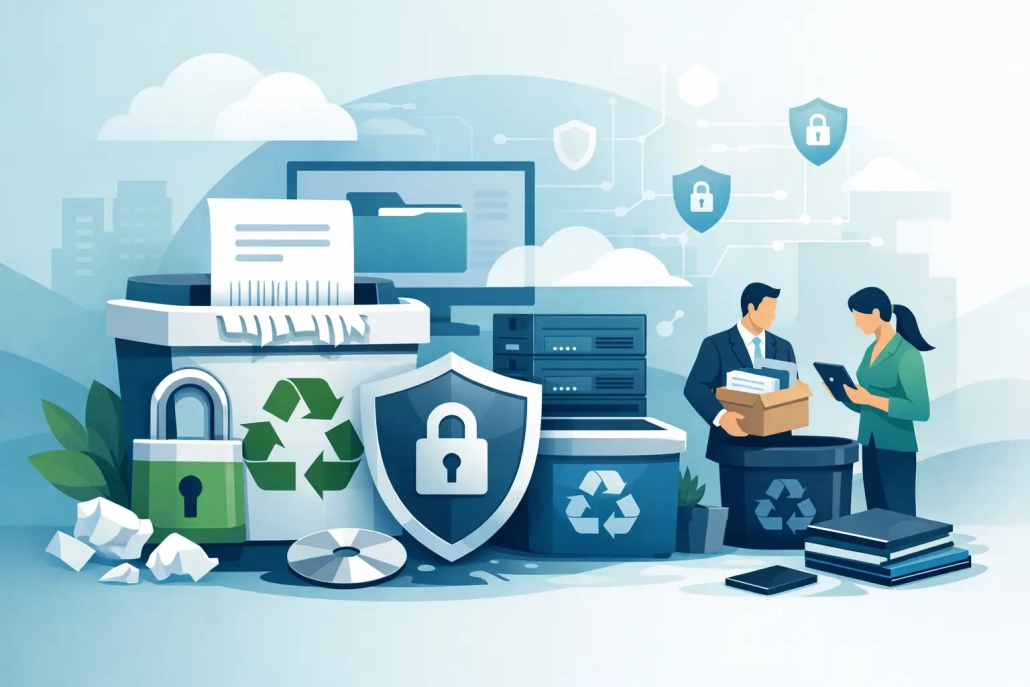
A recycling bin beside the printer is useful for ordinary paper, but it is not a secure disposal process. Printed customer details, employee records, invoices, contracts, medical information, and internal reports can all leave an office through the wrong waste stream. Secure office recycling solutions give businesses a practical way to clear paper and other sensitive materials without exposing confidential information.
For Melbourne offices, the right service should do more than remove clutter. It should provide secure storage before collection, controlled removal, documented destruction, and responsible recycling after destruction. That combination protects your organization, reduces internal handling, and keeps your workplace organized.
Why ordinary recycling is not enough
Standard recycling programs are designed for volume, not confidentiality. Once paper is placed in an open recycling bin, it may be handled by employees, cleaners, visitors, or waste contractors before it reaches a recycling facility. Even documents that appear routine can contain information that should not be accessible outside your business.
The risk is not limited to obvious documents such as payroll reports or client files. Draft proposals, meeting notes, contact lists, shipping paperwork, printed emails, and outdated forms can reveal names, addresses, account details, business plans, or internal processes. A few pages in the wrong hands can create a privacy issue, an operational problem, or reputational damage.
Secure recycling closes this gap. Sensitive material is placed into a locked container or security bag, collected by a specialist provider, destroyed through a controlled process, and then recycled. Your office receives the environmental benefit of recycling without treating confidential waste like general paper waste.
What secure office recycling solutions should include
A dependable service starts with the right collection method for the amount of material your office generates. For ongoing confidential paper waste, lockable 240-liter bins provide a simple on-site solution. Staff can deposit documents as they work, while the contents remain inaccessible until a scheduled collection.
Smaller offices or teams with lower volumes may be better suited to security bags. These are useful for periodic document clear-outs, end-of-financial-year records disposal, or departments that do not need a full-size locked bin. The important point is that the bags are handled as secure material from collection through destruction.
For larger jobs, archive box destruction and pallet-scale archive removal are often the most efficient options. Storing old files for years can consume valuable office space and make records management harder. If retention periods have ended, a one-off secure removal can clear a records room, storage cage, or off-site archive without asking staff to sort, transport, or feed documents through an office shredder.
A complete service should also cover more than paper when required. CDs, DVDs, hard-copy media, ID cards, branded uniforms, and other items may carry confidential information or expose your organization if disposed of carelessly. These materials need destruction methods suited to their format, not a general recycling bin.
Security depends on the chain of custody
Shredding is only one part of secure disposal. The process before and after shredding matters just as much. A business needs confidence that its confidential waste is controlled from the moment it leaves an employee’s desk until destruction is complete.
Start with secure containment. Lockable bins prevent casual access in shared office areas, while security bags help protect material awaiting pickup. This is especially relevant in busy workplaces with contractors, clients, students, patients, or visitors moving through the building.
Next comes secure collection. A professional provider removes the material directly from your site, reducing the need for staff to carry boxes through public areas or load confidential files into personal vehicles. Mobile collection is particularly practical for Melbourne businesses with limited time, limited storage, or multiple departments producing sensitive paper waste.
Finally, ask for evidence of destruction. A Certificate of Destruction provides a formal record that your material has been destroyed. This can support internal policies, audit requirements, privacy procedures, and records management obligations. It also gives office managers and compliance staff a clear answer when asked what happened to retired files.
Choose a service schedule that matches your office
There is no benefit in paying for a collection schedule that does not reflect your actual waste volume. A law firm processing high volumes of case paperwork may need frequent scheduled pickups. A small consulting office may only need an on-call collection when its security bags are full. A medical practice might use locked bins for daily records disposal and book a separate archive clean-out when old files reach their approved disposal date.
Scheduled service is best when confidential paper is generated consistently. It keeps bins from overflowing, limits the amount of sensitive material stored on site, and gives staff a clear routine. On-call service works well for variable volumes or offices that need flexibility. One-off clean-outs are appropriate for relocations, office closures, records-room clearances, or a long-overdue disposal project.
The right approach depends on your workflow, storage space, and risk level. What should not vary is the security standard. Whether a provider collects one bag or several pallets of archive boxes, the material should remain protected and documented.
Make secure disposal easy for staff
Even the strongest disposal policy fails if employees do not know what belongs in secure recycling. Keep instructions simple and place locked bins where confidential paper is created, such as near printers, finance teams, reception areas, HR departments, and records rooms.
Staff should understand that documents do not need to be individually sorted or shredded at their desks. In most cases, staples, paper clips, and bound documents can be placed directly into the secure container. This saves time and removes the temptation to leave papers in desk drawers, on printers, or in open recycling bins.
A short internal rule is often enough: if a document contains personal, financial, commercial, employee, client, student, patient, or operational information, place it in secure destruction. When in doubt, secure it. This is safer than expecting every employee to make a detailed judgment about what can be recycled openly.
Recycling after destruction supports your environmental goals
Secure destruction and recycling are not competing priorities. Once confidential paper has been destroyed, the resulting material can be processed for recycling rather than sent to landfill. This allows organizations to manage privacy risk while supporting practical waste-reduction goals.
The same principle applies to clearing archive boxes. Keeping expired records indefinitely is not an environmental strategy, and it is rarely an efficient use of office space. A planned archive destruction project can reduce storage, remove unnecessary risk, and ensure that recyclable paper is handled responsibly after destruction.
Be realistic about what recycling can and cannot solve. It does not replace a records retention policy, and it does not make every item suitable for standard paper recycling. Digital media, uniforms, and specialty materials may require separate destruction processes. A provider should explain what can be collected and how it will be managed rather than making vague environmental claims.
Questions to ask before booking
Before choosing a secure recycling provider, confirm how the material will be stored, collected, destroyed, and documented. Ask whether lockable bins and security bags are available, whether the provider can handle archive boxes and bulk removals, and whether a Certificate of Destruction is issued after service.
It is also worth checking pickup flexibility. Businesses should not have to wait through a security risk because a provider only offers one rigid service model. Look for scheduled, on-call, and one-off options so the service can adapt as your office grows, relocates, or clears old records.
Price matters, but low-cost general waste collection is not the same as secure destruction. Compare quotes based on the full service: secure containers, collection logistics, destruction, recycling, and documentation. A clear quote makes it easier to budget without hidden handling charges or unexpected project costs.
Metro Paper Destruction provides Melbourne businesses with secure collection options for ongoing paper waste, archive removals, CDs, and uniforms, along with free Certificates of Destruction. The service is designed to remove the handling burden from your team while keeping confidential material protected.
A locked bin, a scheduled pickup, or a one-time archive removal may seem like a small operational decision. In practice, it is a direct way to protect information that your customers, employees, and business trust you to keep safe. Start by identifying where confidential waste is currently accumulating, then put a secure collection process in place before it becomes a problem.


Leave a Reply
Want to join the discussion?Feel free to contribute!