
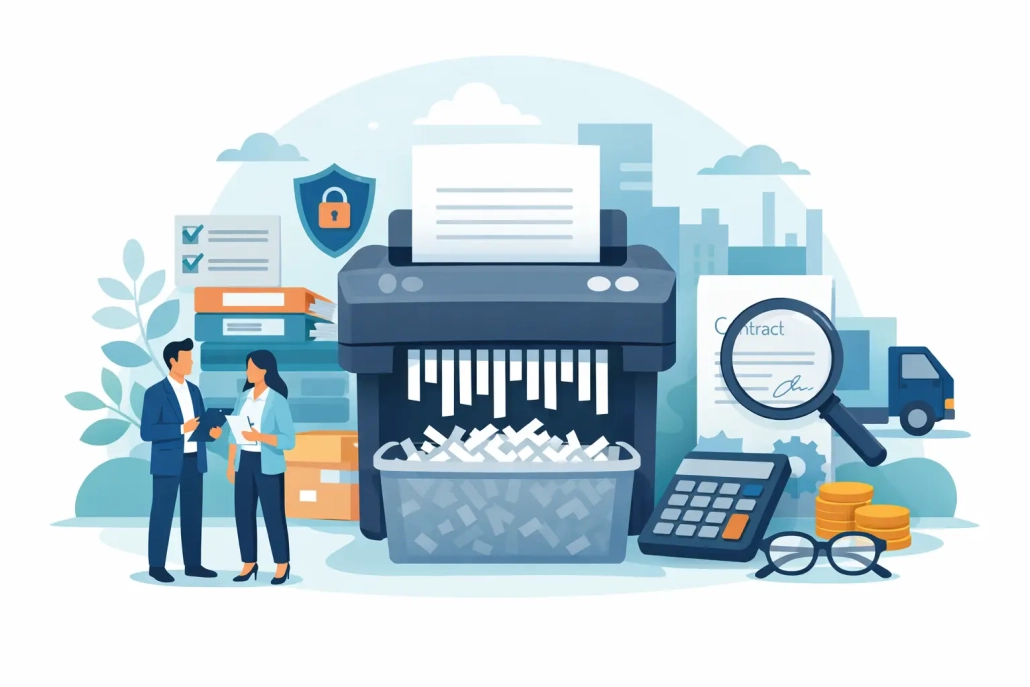
Business Shredding Procurement Guide for Buyers
A shredding provider is not simply a waste contractor. They may collect employee files, customer records, financial reports, medical information, legal documents, and archived paperwork that could expose your organization if mishandled. This business shredding procurement guide helps you assess providers on the issues that matter: secure custody, practical collection, clear proof of destruction, and pricing that stands up to scrutiny.
For office managers, records coordinators, compliance teams, and business owners, the right choice reduces risk without creating another administrative task. The wrong choice can leave bags of confidential paper near a copier, archive boxes waiting in a storeroom, and no clear record of what happened after collection.
Start With Your Actual Destruction Needs
Procurement works better when you define the job before requesting prices. A small office producing a few bags of confidential waste each month needs a different service from a legal firm clearing years of boxed files or a medical practice managing regular sensitive records.
Look at the volume, material type, pickup frequency, and location of the waste. Estimate how much paper is generated in a normal month, then identify periodic spikes such as end-of-year cleanouts, office moves, records retention reviews, or archive consolidation projects. A provider should be able to support routine service and one-off work without forcing you into a service model that does not fit.
Paper is often the main requirement, but do not overlook other confidential materials. Outdated CDs, branded uniforms, identification cards, labeled folders, and storage media may need secure destruction as well. Ask whether the supplier can manage these materials directly and how they are separated from paper streams.
Choose the right collection format
For ongoing confidential waste, lockable consoles or 240-liter secure bins are usually the most practical option. Staff can dispose of documents as they work, while the container keeps material out of general recycling or unsecured trash. A scheduled pickup arrangement is generally best where volumes are predictable and security cannot depend on someone remembering to book a collection.
Security bags can suit lower-volume offices or businesses with irregular waste. They take up less room and can be collected on an on-call basis. For archive rooms and major cleanouts, boxed record removal or pallet-scale collection may be more efficient than filling small bins over several visits.
The best option depends on your workplace. Do not buy a weekly pickup schedule if a monthly service is enough. At the same time, a low price is not a saving if secure containers overflow, staff start storing documents under desks, or collections are repeatedly delayed.
Build Security Into the Procurement Criteria
A shredding quote should explain more than a price per bin or per box. Your procurement specification should require a clear chain of custody from the point documents leave staff control through to final destruction.
Ask prospective providers how confidential material is secured before pickup, during loading and transport, and at the destruction facility. Lockable containers, controlled collection processes, trained staff, and secure vehicles are practical safeguards, not marketing extras. You need to know whether documents are protected at every handoff.
Your evaluation should also cover these core requirements:
- Lockable bins or secure bags suitable for your available space and expected volume.
- Documented collection procedures, including what happens if a scheduled pickup is missed or access is unavailable.
- Secure removal of archive boxes, including the ability to handle large volumes without leaving records exposed in common areas.
- A Certificate of Destruction issued after the work is completed.
- Responsible recycling of shredded paper once confidentiality has been protected.
A provider does not need to make the process complicated to make it secure. In fact, simple procedures are often safer because employees are more likely to follow them. The goal is a service your team can use correctly every day.
Check chain of custody in practical terms
Avoid vague assurances such as “we take security seriously.” Request a plain explanation of who collects the materials, how they are loaded, where they go, and when destruction is completed. If your organization has privacy obligations, internal governance rules, or audit requirements, confirm that the provider’s documentation can support those requirements.
Certificates of Destruction are particularly valuable. They give your business a record that confidential material was destroyed through a defined service process. Keep certificates with your compliance or records documentation, especially for archive purges and large disposal projects. A free certificate should be standard, not an unexpected add-on fee.
Compare Prices Without Sacrificing Control
Price matters, but it should be compared on a like-for-like basis. One quote may appear cheaper because it excludes secure containers, call-out charges, box handling, certificate fees, or minimum service commitments. Another may be based on a collection frequency that is unrealistic for your actual volume.
Request a written quote that separates recurring charges from one-off costs. For scheduled shredding, clarify the container size, pickup frequency, any minimum term, and charges for additional collections. For archive destruction, ask how boxes, loose files, pallet quantities, stairs, loading access, and time on site are priced.
It is also sensible to ask what happens when your needs change. Businesses grow, reduce office space, move locations, or switch to digital recordkeeping. A supplier that can adjust bin numbers, collection timing, and project work will usually provide better long-term value than one offering a rigid package.
Competitive pricing should not mean cutting corners. It means paying for the level of security and service you need, with no hidden costs. A quote-beating guarantee can be useful, but only after you confirm that the competing service offers the same secure collection, destruction documentation, and recycling process.
Assess Service Reliability Before You Sign
A secure shredding plan depends on collections happening when promised. Delays can create crowded bins, unsecured overflow, and frustrated staff who resort to regular trash or office recycling. Ask how the provider schedules routes, manages urgent requests, and communicates service changes.
Local service coverage also matters. A provider that regularly services your area can respond more effectively to urgent cleanouts, changing pickup volumes, and access requirements. For Melbourne businesses, mobile customer-site collection is often the simplest way to protect documents without assigning internal staff to transport confidential material.
During procurement, consider the day-to-day experience. Can you arrange an on-call collection quickly? Will the driver collect from a practical location? Can the provider handle a one-time archive room clearance as well as ongoing bins? These details affect whether the service remains useful after the initial contract is signed.
Use a Clear Evaluation Process
For a routine service, a short comparison of two or three qualified providers is usually enough. Score each supplier against your required collection format, security controls, proof of destruction, recycling approach, responsiveness, and total quoted cost. Keep the criteria focused on the risks your organization actually faces.
For larger archive projects, provide the same information to every bidder. Include the approximate number of boxes or pallets, site access conditions, target completion date, whether records are loose or boxed, and any special materials that require destruction. Consistent information produces more reliable quotes and prevents avoidable variations later.
Before service begins, appoint one internal contact to manage access, collection changes, and certificates. Then tell staff exactly what belongs in the secure bin or bag. A secure service is only effective when confidential paper enters the secure stream rather than being left on desks, placed in regular recycling, or stored indefinitely.
Questions to Ask Before Appointing a Shredding Provider
A final supplier conversation should give you direct answers to a few operational questions. How will our documents be secured from placement through collection? What container or bag options suit our volume? Can you provide scheduled, on-call, and one-off archive services? Is a Certificate of Destruction included? How are shredded materials recycled? What are all recurring and additional charges?
If the answers are clear, specific, and supported by a written quote, you are in a strong position to proceed. If a provider avoids discussing custody, documentation, or extra fees, keep looking.
Metro Paper Destruction helps Melbourne organizations put practical controls around confidential waste, from lockable 240-liter bins and security bags to archive box removal, CD destruction, and uniform disposal. The right procurement decision should leave your workplace cleaner, your records process easier to manage, and your confidential information out of reach from the moment it is discarded.


Leave a Reply
Want to join the discussion?Feel free to contribute!