
Confidential Waste Disposal for Melbourne Businesses
A discarded client file, an old staff roster, or a box of archived invoices can create a serious exposure if it leaves your premises the wrong way. Confidential waste is not ordinary office waste. It contains information that can affect customers, employees, suppliers, and your business reputation long after the paper is no longer needed.
For Melbourne organizations, secure disposal should be a routine business process, not a task saved for the next office cleanup. The right service removes sensitive material securely, gives your team a clear chain of custody, and provides proof that destruction has taken place.
What Counts as Confidential Waste?
Confidential waste includes any item carrying private, commercially sensitive, or personally identifiable information. Paper records are the most common example, but they are not the only concern. A secure disposal plan should account for materials that can identify a person, reveal business activity, or expose internal operations.
Common confidential materials include client and patient records, employee files, payroll documents, legal paperwork, financial reports, tax records, invoices, purchase orders, internal correspondence, tender documents, and outdated marketing lists. Schools may hold student records. Medical practices may hold patient paperwork. Law firms, accountants, and government-related organizations often retain large volumes of archived files with strict privacy requirements.
It also extends beyond paper. Old CDs, DVDs, branded uniforms, identification cards, and media containing business information should not be placed in general trash or standard recycling. A uniform with a company logo may seem harmless, but it can be used to misrepresent your organization if it ends up in the wrong hands.
Why a Recycling Bin Is Not Enough
A normal recycling bin is designed for material recovery, not secure information handling. Once documents are placed in an open or shared bin, you may lose control over who can access them, where they are transported, and whether they are fully destroyed.
Office shredders solve only part of the problem. They take staff time, jam under volume, require ongoing maintenance, and often leave shredded material sitting in bags until someone removes it. For businesses with regular paperwork or years of stored archives, internal shredding is rarely the most efficient or secure option.
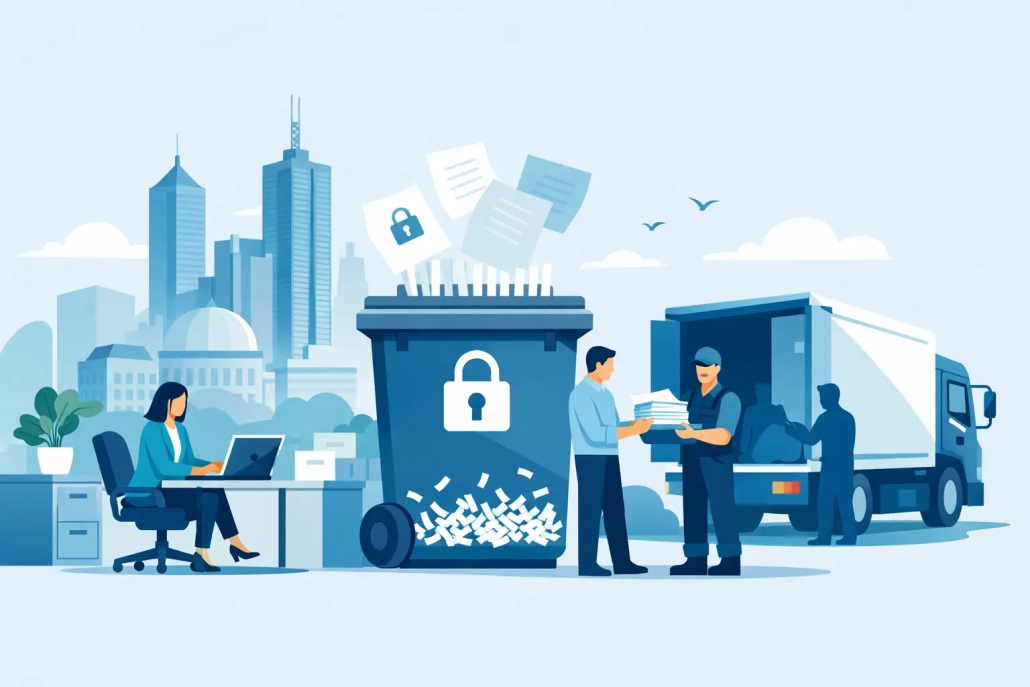
Secure confidential waste disposal replaces uncertainty with a managed process. Documents are collected in locked containers or security bags, removed by trained personnel, transported for destruction, and processed for recycling after destruction. Your business receives a Certificate of Destruction as evidence of the completed service.
That certificate matters. It creates a useful record for internal policies, audits, compliance files, and customer assurance. It also means a staff member does not have to rely on a verbal confirmation that the material was handled properly.
Confidential Waste Collection That Fits Your Workplace
The best collection method depends on the volume of material, the space available, and how frequently your office produces sensitive documents. A small professional office may need a lockable bin collected on a regular schedule. A medical practice may need secure bags for confidential material generated between visits. A large organization clearing a records room may require pallet-scale archive removal and a one-off destruction service.
Lockable 240-liter bins are practical for workplaces producing steady volumes of paper. Staff can place documents in the bin throughout the week without sorting, feeding, or shredding pages one at a time. Because the bin remains locked, sensitive records are protected while they wait for collection.
Security bags are useful where space is limited or document volumes are lower. They can also suit occasional clear-outs, branch offices, and teams that do not need a permanent bin on site. For archive projects, boxed records can be collected directly from storage areas, saving your staff from moving heavy files or arranging disposal trips.
Scheduled pickups provide consistency for businesses with ongoing requirements. On-call pickups work well when volumes fluctuate. A one-off clean-out is often the right choice after an office move, records retention review, merger, or storage room cleanup. There is no single setup that suits every organization, which is why flexible collection options matter.
The Secure Destruction Process
A reliable provider should be able to explain what happens from collection to final destruction in plain language. Security is not just the shredder at the end of the process. It starts the moment confidential material is placed in a container and continues until the destroyed material enters the recycling stream.
At Metro Paper Destruction, the process begins with secure collection from your Melbourne site. Lockable bins, security bags, archive boxes, or palletized records are removed according to the service arranged. This avoids placing confidential material in public waste areas or asking employees to transport it themselves.
The material is then securely destroyed and prepared for recycling. A free Certificate of Destruction is issued to confirm the service. For many office managers and compliance teams, this is the difference between hoping a disposal task was completed and having a record that it was.
Chain of custody is especially valuable when different people handle records across a business. Reception staff, administrators, records managers, and outside contractors may all be involved before a file reaches its final destination. A controlled service reduces the number of handoffs and makes responsibility clear.
When to Arrange a Confidential Waste Clean-Out
Some businesses benefit from regular service, while others need help with a specific accumulation of material. Waiting until storage is full can make the job harder, more expensive, and more disruptive. A planned clean-out gives you the opportunity to remove obsolete records before they become an operational problem.
Consider arranging secure destruction when you are relocating offices, reducing storage space, reviewing record retention periods, replacing filing systems, or preparing for an audit. It is also sensible after staff changes in finance, HR, legal, or administration, where outdated working files may have been retained longer than necessary.
Archive destruction is not simply about clearing room. Old records can still contain names, account details, signatures, health information, pricing, and internal decisions. If they are no longer needed, they should be disposed of through a secure, documented process rather than left in a warehouse or discarded with general waste.
Protect Paper, Media, and Branded Items
Paper is usually the largest part of a confidential waste stream, but a complete disposal program looks at the other items leaving the business. CDs and DVDs may hold backups, presentations, customer data, or legacy system exports. They need physical destruction, not a quick trip to the trash.
Uniform disposal is another service worth considering for businesses with customer-facing staff. Destroying outdated uniforms, ID-bearing apparel, and branded textiles helps prevent unauthorized use of your logo or staff appearance. This is particularly relevant for security, health care, hospitality, transport, and service businesses.
Separating these materials at the point of disposal makes collections easier. Your team does not need to become records destruction experts, but they should know which bin, bag, or collection method is intended for each type of sensitive item.
Choosing a Provider Without Adding Work
Price matters, but the lowest quote is not useful if the service is difficult to schedule, the collection process is unclear, or proof of destruction costs extra. Look for a provider that can handle your current volume and adjust as your needs change.
Ask whether locked bins are available, whether collections can be scheduled or requested on demand, how archive boxes are removed, and whether Certificates of Destruction are included. If your site has limited access, multiple floors, or a large backlog of files, discuss that upfront so the collection plan matches the job.
Local collection is also practical. A provider that services Melbourne businesses can arrange site-based pickups rather than requiring your staff to load sensitive material into personal vehicles or make trips to a disposal facility. That saves time and reduces unnecessary handling.
A free quote should be straightforward, particularly for recurring bins, archive box destruction, or a one-off clean-out. Metro Paper Destruction also offers a quote-beating guarantee, giving businesses a practical way to compare secure service without compromising on protection.
Make Secure Disposal Part of Normal Operations
Confidential information does not become safe simply because it is old, duplicated, or no longer useful. It needs a disposal process that is as deliberate as the process used to create and store it. Put secure bins where documents are generated, schedule collection before storage builds up, and retain Certificates of Destruction with your other business records.
A clear confidential waste process protects privacy, keeps work areas organized, and gives your team one less risk to manage. When old records are ready to go, arrange a secure collection rather than letting them become tomorrow’s problem.


Leave a Reply
Want to join the discussion?Feel free to contribute!