
Employee Uniform Disposal Compliance Made Clear
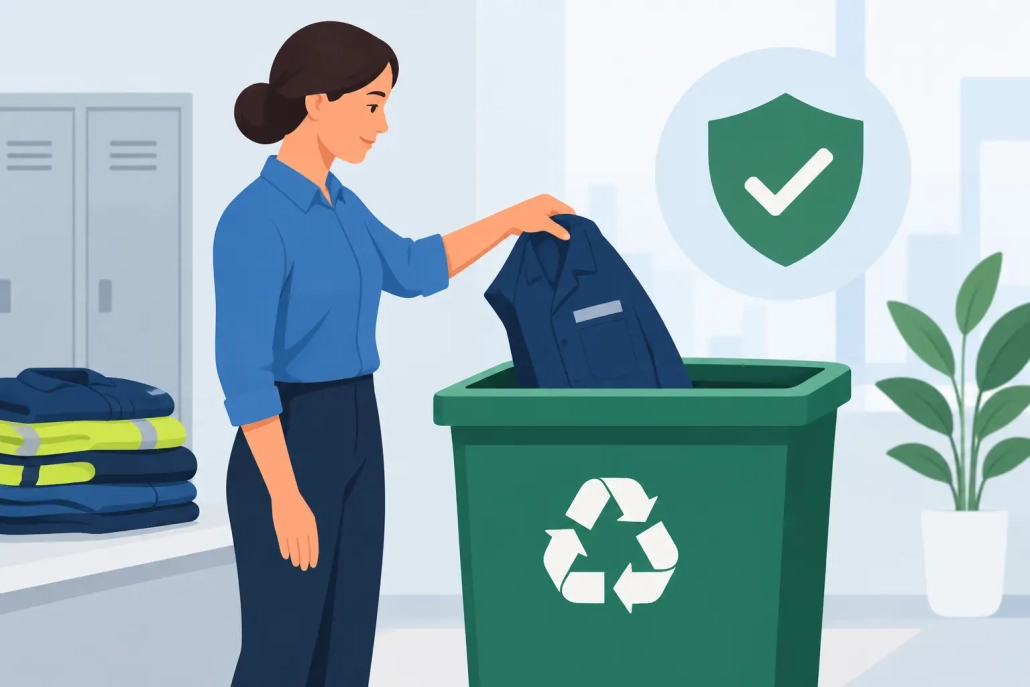
A retired uniform is not always harmless waste. A shirt with a company logo, a security jacket, a medical scrub top, or a garment with a name badge can identify your people, your premises, and the service they provide. Employee uniform disposal compliance means removing those items in a way that protects brand security, personal information, and your organization’s internal controls.
For many businesses, the problem appears during staff turnover, a rebrand, a site closure, or a warehouse cleanout. Uniforms get placed in general trash bags, donated without assessment, or stored for years because no one owns the decision. That creates an avoidable risk. A documented, secure destruction process is usually faster, clearer, and easier to defend.
Why uniforms need controlled disposal
Uniforms are corporate assets even after they are no longer wearable. Logos, colors, department markings, patches, security identifiers, and embroidered names can make them useful to someone attempting impersonation. This is particularly relevant for health care, education, transport, facilities management, government contractors, retail, construction, security, and any organization with public-facing staff.
The risk is not limited to counterfeit activity. A discarded uniform can expose an employee’s name or job title, create confusion with customers, or damage a brand when it appears in an unsuitable setting. Old garments may also contain access cards, keys, radio tags, identification holders, or paperwork left in pockets. Treating uniforms as ordinary trash gives your business no assurance that those materials will not reappear.
Compliance requirements vary by location, industry, contract, and internal policy. Some organizations have specific obligations around identification, client confidentiality, controlled assets, or disposal records. Even where there is no single law governing every garment, a secure process demonstrates reasonable care and supports your broader privacy, security, and risk-management procedures.
What employee uniform disposal compliance should cover
A workable policy does not need to be complicated, but it should define who is responsible, what items require secure disposal, and how destruction is verified. The goal is to prevent uniforms from leaving your control without authorization.
Start by identifying the items that carry a security or brand risk. This includes logoed shirts, jackets, workwear, high-visibility garments, caps, aprons, lab coats, scrubs, security apparel, branded footwear, and garments with embroidered names. Include expired stock, damaged clothing, returns from departing employees, and leftover uniforms from previous branding campaigns.
Your policy should also state whether reusable items can be cleaned and reassigned internally. Reuse can reduce costs, but only when names, badges, patches, and old logos are fully removed and the garment remains appropriate for service. If removal leaves a recognizable brand mark or compromises the item, destruction is the safer option.
Donation is another area where businesses need clear rules. Unbranded, clean clothing may be suitable for donation if your policy permits it. Branded uniforms, security clothing, or garments linked to a particular workplace should not be donated casually. Once they leave your custody, you lose control over how they are used, altered, or represented.
Build a secure uniform disposal process
The best process is one employees can follow without creating extra work. Make uniform return part of offboarding and site-cleanout procedures rather than an informal request made after an employee has already left.
Collect items in a controlled location
Provide a designated collection point for retired uniforms. For ongoing volumes, a lockable bin is practical because it keeps bags and garments out of open storage areas. For small quantities, use sealed security bags and keep them in a restricted location until collection.
Avoid leaving uniforms in loading docks, unlocked closets, or general waste areas. The period between collection and destruction is part of the security process. Control access to the items until they are removed by an authorized provider.
Before sealing a bag or bin, ask staff to check pockets, badge holders, and garment compartments. Remove keys, access cards, ID cards, paperwork, USB drives, and other items that may need a separate secure disposal route. This simple check prevents a uniform cleanout from becoming a data-security issue.
Keep a basic disposal record
Your record can be straightforward: the date, location, department, approximate quantity, description of the garments, and the person authorizing disposal. For higher-risk uniforms, record asset numbers or other identifiers where relevant.
This documentation helps answer practical questions later. If a former employee asks what happened to returned workwear, or an auditor asks how branded assets are controlled, you have a clear record instead of relying on memory. It also helps facilities and procurement teams identify recurring waste volumes and plan scheduled service.
Use a provider that destroys, not just collects
Collection alone is not disposal compliance. Your provider should be able to explain how uniforms are securely removed, destroyed, and processed for recycling where possible. Ask whether there is a documented chain of custody from pickup through final destruction, especially if uniforms carry logos, names, or security markings.
Mobile collection at your site reduces handling by your staff and avoids asking employees to transport sensitive materials themselves. Depending on volume, businesses may use scheduled pickups, on-call collections, or a one-time cleanout for a warehouse, archive room, or closing location.
A Certificate of Destruction is a useful final record. It confirms that materials were collected and destroyed through a defined service process. Keep the certificate with your disposal log and any related offboarding or asset-management records. It is simple proof that the job was completed rather than merely moved elsewhere.
Confirm responsible recycling practices
Security and environmental responsibility can work together. After the identifying features and garments have been securely destroyed, textile materials may be directed to appropriate recycling streams where available. The exact outcome depends on fabric type, contamination, trims, and local processing capability.
Do not assume every uniform can be recycled in the same way. Fire-resistant workwear, heavily contaminated garments, mixed-material apparel, and items with metal or plastic components may require different handling. A disposal provider should be clear about what can be recycled and should not make blanket claims that cannot be supported.
When to schedule uniform destruction
There are four common triggers: employee departure, branding changes, periodic stock reviews, and major cleanouts. Handling each trigger consistently stops obsolete garments from accumulating in cupboards and storerooms.
For businesses with regular turnover, add uniform return to the offboarding checklist. Managers should know where to place returned items, and HR or operations should know who authorizes final disposal. A scheduled collection service can suit organizations that generate uniforms throughout the year.
For rebrands, mergers, relocations, and site closures, a one-time collection is often more efficient. Gather all obsolete stock from departments, storage rooms, vehicles, and satellite locations before booking pickup. Separating uniforms from documents, digital media, and general waste will make the removal process quicker and reduce the chance of sensitive items being overlooked.
Common gaps that create unnecessary risk
The most common gap is assuming a logo can be cut off and the garment is no longer identifiable. In practice, a distinctive color scheme, reflective pattern, patch outline, or remaining embroidery can still connect it to your organization. Assess the full garment, not only the visible logo.
Another gap is treating uniform disposal as a facilities-only task. It affects HR, security, operations, procurement, and compliance. A short written procedure that assigns responsibilities is more reliable than expecting each department to make its own judgment.
Finally, avoid choosing a disposal method based only on the lowest upfront price. A cheap general-waste solution may offer no secure collection, no destruction confirmation, and no evidence for your records. The better comparison is total risk, staff time, pickup convenience, and documented proof of service.
Metro Paper Destruction provides secure uniform collection and destruction for Melbourne businesses, with flexible pickup options, lockable bins, security bags, and Certificates of Destruction issued at no extra charge. It is a practical option for organizations that need old workwear removed without leaving staff to manage sensitive branded materials internally.
Set a clear return rule before the next employee leaves or the next rebrand begins. When uniforms have a secure collection point, an authorized removal process, and proof of destruction, they stop being a loose end in your security program.


Leave a Reply
Want to join the discussion?Feel free to contribute!