
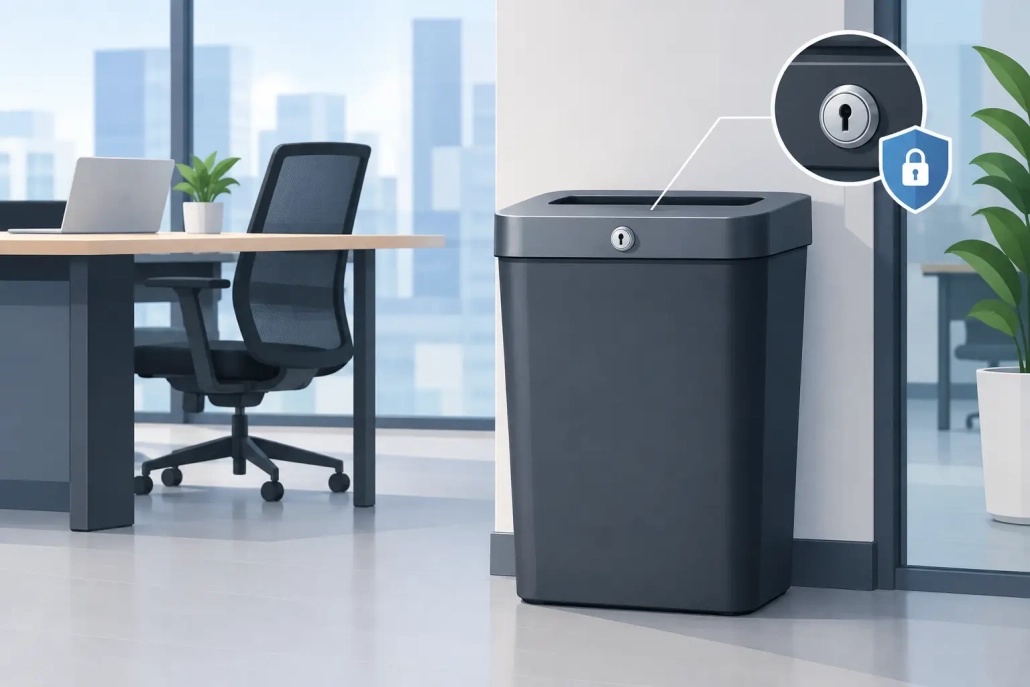
Lockable Bin Service Review for Secure Offices
A lockable bin is not simply a convenient place to put discarded paperwork. For a business handling employee files, client records, financial documents, medical information, or internal reports, it is the first control point in the confidential destruction process. If papers sit in an open recycling box, a desk drawer, or an unlocked storage room before pickup, the risk has already increased.
This lockable bin service review looks at what businesses should expect from a secure document disposal provider, where the service delivers real value, and what to check before arranging collections. The right service should reduce administrative work while giving your business a clear, secure path from disposal to destruction.
What a Lockable Bin Service Should Do
A professional lockable bin service provides a dedicated container for confidential paper waste at your workplace. Staff place documents directly into the bin as they no longer need them. The bin remains locked, and only authorized collection personnel can access its contents when it is removed for secure destruction.
For most offices, the practical advantage is simple: confidential waste does not build up in unsecured piles. Employees do not need to decide which papers can go into regular recycling or spend time feeding documents through a small office shredder. Sensitive paper is separated at the point of disposal, which makes the process easier to follow consistently.
A 240-liter lockable bin is a common choice for businesses with ongoing paperwork. It suits offices, medical practices, schools, legal firms, accounting teams, and organizations with regular document turnover. The correct bin size and pickup frequency depend on your volume. A busy office may need weekly or monthly collection, while a smaller team may only need service when the bin is full.
Lockable Bin Service Review: The Security Standard
The main reason to use a lockable bin is confidentiality. A bin that is merely labeled “confidential” but left open does not provide meaningful protection. Staff, visitors, contractors, cleaners, or anyone passing through the area may be able to view or remove documents.
A reliable service should use bins designed to remain locked between collections. They should be placed in a sensible location, such as a staff work area, records room, copy room, or another controlled internal space. Placement matters. A secure bin kept in a public lobby or unsupervised loading area can create unnecessary exposure.
The collection process also deserves attention. Your provider should remove the locked bin or securely transfer its contents for transport, rather than asking your staff to carry loose paperwork outside. This maintains a clearer chain of custody and limits the number of people handling sensitive records.
Ask how destruction is completed and how proof is provided. A Certificate of Destruction gives your business a written record that confidential materials were securely destroyed. This is particularly useful for compliance files, internal procedures, audits, and records-management policies. Metro Paper Destruction provides Certificates of Destruction at no extra charge, giving customers evidence that the job has been completed.
Convenience Is More Than a Pickup Date
A lockable bin service works best when it fits the way your office actually operates. Fixed schedules are useful for organizations with predictable document volumes. A regular collection helps prevent overflow and removes the need for staff to monitor bins closely.
However, scheduled service is not the only option that matters. Some businesses generate large volumes during annual cleanouts, file retention reviews, office relocations, payroll processing, or archive reduction projects. In those cases, an on-call pickup, one-time cleanout, or archive box destruction service may be a better fit than increasing the regular collection schedule.
The best providers offer both recurring and flexible collection options. That means you can keep a lockable bin on site for everyday confidential waste, then arrange additional collection when old files need to be cleared quickly. There is no benefit in paying for a collection frequency that exceeds your real needs, but waiting too long can leave bins overloaded and records stored insecurely elsewhere.
Responsiveness matters when the need is urgent. If a storage room must be cleared before a lease ends or archived personnel files need to be removed ahead of an audit, you need a provider that can give clear timing and handle the collection without adding work for your team.
What Can Go Into the Bin?
The purpose of a lockable bin is secure paper disposal, not general office waste. Typical contents include printed reports, invoices, customer correspondence, employee records, medical paperwork, legal documents, bank information, internal notes, outdated forms, and misprinted materials.
Many businesses also use the service for documents that appear harmless on their own but become sensitive when combined. A list of names, a partial account number, internal contact details, or old meeting notes can still expose private or commercial information. Staff should be encouraged to use the bin whenever there is doubt.
Items such as archive boxes, binders, large folders, CDs, uniforms, or bulky media may require a separate destruction service. It is worth confirming this before collection rather than forcing unsuitable items into the bin. A provider that handles document shredding, archive removal, CD destruction, and uniform disposal can simplify these jobs by giving you one point of contact.
Pricing: Compare the Full Service, Not Just the Bin
Low advertised pricing can be appealing, but the useful comparison is the total cost of secure disposal. Ask whether the quote includes bin delivery, collection, secure transport, destruction, and the Certificate of Destruction. Also confirm whether there are minimum terms, collection fees, fuel charges, or extra costs for urgent pickups.
The cheapest option is not always the most cost-effective if it leaves your staff sorting paper, arranging separate destruction jobs, or chasing paperwork after the fact. Equally, a larger bin or more frequent service is not automatically better. The right arrangement is one that matches your document volume without creating unnecessary charges.
For businesses in Melbourne, a local provider can be especially practical because collections can be arranged around site access, reception hours, parking restrictions, and operational requirements. Request a clear quote based on your bin size, collection frequency, and any additional archive or media destruction needs. A quote-beating guarantee can also help when you are reviewing an existing provider’s rates.
Questions to Ask Before You Book
Before committing to a lockable bin service, confirm the bin capacity, lock design, expected pickup window, and whether collections can be changed as your needs change. Ask what happens if your bin fills before the next scheduled collection and whether one-off pickups are available.
You should also verify how certificates are issued, whether they are included in the quoted price, and what information they contain. A useful certificate should identify the completed destruction service clearly enough for your internal records.
Finally, consider who in your organization will manage the service. An office manager may coordinate access on collection day, while a records manager or compliance contact may retain the destruction certificates. Setting this responsibility early keeps the process straightforward.
A lockable bin service is a practical safeguard, but it is most effective when employees know to use it and your provider can collect reliably. Choose a service that protects documents from the moment they leave a desk, provides proof of destruction, and gives your business the flexibility to deal with everyday paper waste as well as larger cleanout jobs.


Leave a Reply
Want to join the discussion?Feel free to contribute!