
Can ID Cards Be Shredded? Secure Disposal Rules
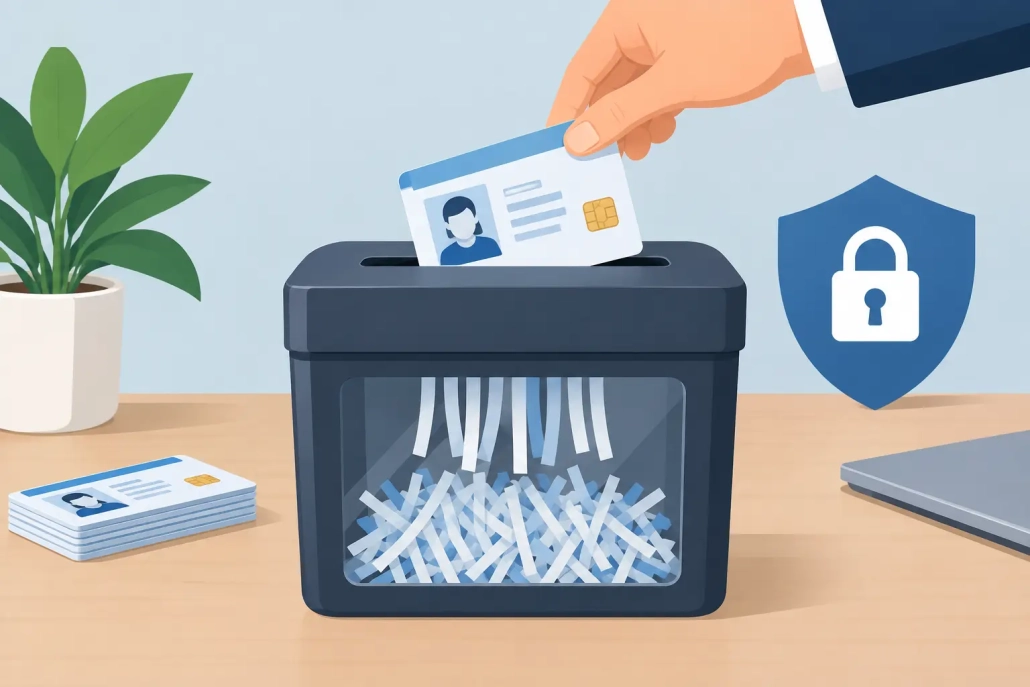
A former employee’s ID badge can look harmless in a desk drawer, but it may carry a name, photo, employee number, barcode, access credential, or embedded chip. So, can ID cards be shredded? In many cases, yes – but the right disposal method depends on the type of card and the information or access it contains.
For businesses, the goal is not simply to make an old card unusable. It is to prevent identity theft, unauthorized site access, and the recovery of confidential information while keeping a clear record of disposal.
Can ID Cards Be Shredded Safely?
Plastic ID cards can be shredded using equipment designed for cards and other hard media. A standard office paper shredder is usually not the answer. It may jam, wear down quickly, or leave pieces large enough for card details to remain visible.
A professional destruction service uses industrial equipment that can process plastic cards into small, unrecoverable pieces. The cards are then sent for appropriate recycling where possible. This is the practical choice for expired staff badges, visitor passes, membership cards, access cards, and similar credentials collected in volume.
However, shredding is not automatically appropriate for every card. Government-issued identification, active access cards, and cards with special embedded technology may have separate handling requirements. The card issuer’s instructions should always come first.
Why Old ID Cards Create a Security Risk
An ID card does not need to contain a Social Security number or banking details to create a problem. A discarded employee badge can help someone impersonate a staff member, learn how your organization identifies personnel, or attempt to enter a workplace.
Cards often reveal more than people expect. A photograph and full name can support social engineering attempts. A barcode or printed number may be linked to internal systems. A proximity card or smart card may still allow building, parking, printer, or system access if it has not been disabled.
The risk increases when cards are placed in ordinary trash or recycling bins. Once material leaves your premises, you may no longer know who has handled it or where it has gone. Secure collection and documented destruction give your business control over that process.
Check the Card Type Before Destruction
Before placing ID cards into a secure destruction container, identify what they are and whether they remain active. Your IT, facilities, HR, or security team may need to deactivate credentials before physical disposal.
Common card types include:
- Employee photo IDs and visitor badges
- Proximity cards, key cards, and RFID access cards
- Smart cards with contact chips or embedded electronics
- Membership, customer loyalty, and insurance cards
- Government-issued licenses, passports, and identification cards
Employee and visitor IDs are generally suitable for secure shredding once access has been removed. Proximity and RFID cards should also be deactivated first. Shredding destroys the physical card, but it does not replace the need to remove the cardholder from your access-control system.
Government-issued IDs require more care. Some issuing agencies ask cardholders to return expired or canceled cards, while others provide specific destruction instructions. Do not assume that every government card should go into a shredding bin. Check the requirements for that document before proceeding.
What About Chips, Magnetic Stripes, and RFID?
Modern cards may store information in several ways. Magnetic stripes, barcodes, contact chips, and RFID or NFC components can each hold or connect to data. Cutting a card in half may damage it, but it is not a reliable business disposal process.
Industrial shredding physically breaks these components apart. This makes the card and its embedded technology extremely difficult to reconstruct or use. For large quantities of access cards, smart cards, and other credentials, secure destruction is safer and more efficient than asking staff to cut cards individually.
If a card contains a battery, unusual electronic component, or a token supplied by a software or security provider, separate instructions may apply. Some hardware should be returned to the issuer rather than shredded. When in doubt, keep the item out of the general destruction stream until your security team confirms the correct method.
A Practical Process for Businesses
The simplest approach is to make ID cards part of your offboarding and records-disposal procedure. When an employee leaves, collect the badge with keys, devices, and any company documents. Cancel physical and digital access, then place the card in a locked secure-waste bin or security bag for destruction.
For a one-time cleanup, gather expired badges, old visitor passes, outdated membership cards, and inactive access cards from reception desks, HR files, facilities offices, and archive storage. Keep them secured until collection. Do not leave boxes of cards in a loading dock, open recycling area, or unsecured mailroom.
A secure provider can collect the material from your site through scheduled service, on-call pickup, or a one-time cleanout. This is particularly useful when cards are mixed with confidential paper records, archived employee files, CDs, uniforms, or other materials that should not enter normal waste channels.
Proof Matters When You Destroy ID Cards
For organizations with privacy, security, or audit obligations, disposal should be documented. A Certificate of Destruction provides evidence that confidential materials were securely destroyed. It supports internal recordkeeping and gives managers a clear answer if a client, auditor, or leadership team asks how retired credentials were handled.
Documentation is especially valuable for medical offices, legal firms, schools, financial services businesses, government-related organizations, and companies managing secure facilities. These workplaces often have formal processes for staff departures, visitor controls, and confidential waste. ID card disposal should fit into those processes rather than be handled as an afterthought.
A good provider also maintains a controlled chain of custody from collection through destruction. Lockable containers, secure pickup, and trained handling reduce the chance of cards being misplaced or accessed before they are destroyed.
Do Not Rely on Office Shredders or Trash Bins
Small office shredders can be useful for occasional paper, but they are not designed to manage large volumes of plastic cards. They can jam, require frequent maintenance, and create a temptation for staff to throw cards away when the machine is unavailable.
Trash and standard recycling bins are worse. They provide no secure chain of custody, no confirmation of destruction, and no assurance that personal or access-related details cannot be recovered. Even cards that appear inactive can reveal information about your organization or former employees.
For businesses handling a steady flow of credentials, a locked bin and scheduled collection service create a more reliable routine. For archive clearouts or office relocations, an on-call pickup can remove accumulated materials without tying up staff time.
Secure Disposal Should Be Part of Offboarding
The best time to deal with an ID card is when it is returned. Make badge collection a standard line item on every offboarding checklist, alongside equipment return and access cancellation. That simple step helps prevent former credentials from staying in circulation, being taken home, or ending up in ordinary waste.
If your business has boxes of old badges or access cards already stored away, do not let uncertainty delay action. Sort out any cards that must be returned to an issuer, deactivate remaining credentials, and arrange secure destruction for the rest. A professional collection service can remove the burden from your team while providing documented proof that the job was completed.


Leave a Reply
Want to join the discussion?Feel free to contribute!