
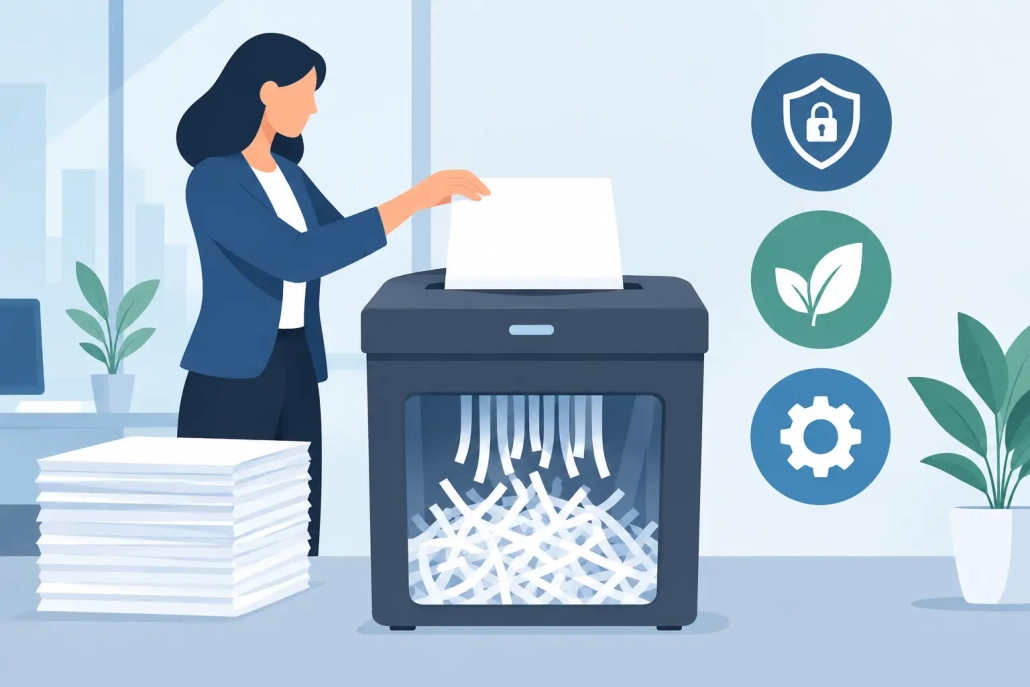
Top Reasons to Outsource Paper Shredding
A file left beside a printer, a full recycling bin, or an archive room nobody has reviewed in years can create a serious confidentiality problem. The top reasons to outsource paper shredding come down to one practical issue: sensitive information needs a controlled path from your workplace to final destruction.
For offices, medical practices, legal firms, schools, and other organizations handling private records, relying on an in-house shredder is often slower, less secure, and more expensive than it appears. A professional service provides secure collection, reliable destruction, and written proof that your confidential waste has been handled properly.
1. Stronger protection for confidential information
Paper records can contain customer details, employee files, financial information, medical records, contracts, internal reports, and login credentials. Throwing these materials into regular trash or recycling exposes your business to avoidable risk. Even documents that appear routine can reveal enough information for fraud, identity theft, or a damaging privacy breach.
Outsourced shredding creates a more secure process. Documents are placed into lockable security bins or secure bags, collected by trained staff, and transported for confidential destruction and recycling. This reduces the number of people handling sensitive paper and removes the temptation to let documents pile up in unlocked desks, open boxes, or common recycling areas.
For businesses with a high volume of records, the difference is significant. A small office shredder may leave strips that can potentially be reconstructed, while commercial destruction equipment is designed to process large quantities securely and consistently.
2. A clearer chain of custody
Security is not only about the final shredding step. It also depends on what happens before the paper is destroyed. Who has access to the records? Where are they stored? When are they removed? Can the business show that the material was managed responsibly?
A professional document destruction provider gives your business a defined chain of custody. Lockable bins keep documents contained at your site. Scheduled or on-call collection means confidential material does not sit around waiting for someone to deal with it. At the end of the process, a Certificate of Destruction provides formal evidence that the materials were securely destroyed.
This documentation is useful for internal records, audits, client requirements, and compliance processes. It also gives managers a simple answer when they are asked how confidential documents are disposed of.
3. Less pressure on staff and office managers
In-house shredding sounds simple until it becomes someone’s ongoing job. Staff must remove staples and clips, feed small batches into a machine, clear paper jams, empty bags, clean up shredded waste, and arrange disposal. That time adds up quickly, particularly during office relocations, clean-outs, or records retention projects.
Outsourcing paper shredding removes that burden from your team. Instead of asking employees to spend hours at a desktop shredder, documents can go directly into a secure bin or bag as part of normal office routines. When the container is full, a collection is arranged.
This is especially valuable for office managers and operations staff already responsible for facilities, suppliers, workplace organization, and administration. Secure disposal becomes a managed service rather than another task that gets pushed to the bottom of the list.
4. Better value than maintaining in-house equipment
A basic shredder may look inexpensive, but the real cost includes staff time, equipment repairs, replacement machines, electricity, waste bags, and the loss of productivity when the machine overheats or jams. Small machines are also poorly suited to archive box destruction or bulk disposal projects.
Professional shredding is designed for volume. Whether you need regular collection from a lockable 240-liter bin, a one-time archive clean-out, or pallet-scale removal of old records, the service can be matched to the amount of material you have.
The right arrangement depends on your business. A small office may only need occasional secure bag collection, while a legal practice or medical center may benefit from scheduled pickups. The key is paying for a service level that fits your document flow instead of owning equipment that is either inadequate or underused.
5. Keeps work areas organized and safer
Archive boxes and overflowing paper storage areas take up valuable space. They can make offices harder to clean, complicate a move, and create a safety issue when heavy boxes are stacked in hallways, storerooms, or near workstations. More importantly, long-term storage increases the period in which confidential information remains exposed.
A one-off destruction service gives businesses a practical way to clear old files without compromising security. Records managers can identify documents that have reached the end of their retention period, arrange collection, and regain usable storage space.
This is not a reason to destroy documents prematurely. Retention requirements vary by industry and document type. Businesses should confirm what must be kept before arranging disposal. Once records are approved for destruction, however, secure removal is far safer than letting outdated files occupy valuable space indefinitely.
6. Flexible service for routine waste and major clean-outs
One of the strongest reasons to outsource paper shredding is flexibility. Confidential waste does not always arrive at a predictable rate. Some businesses generate it steadily every week. Others have large bursts of paper after a records review, financial year-end, office move, or system migration.
A professional provider can support both ongoing and ad hoc needs. Scheduled pickups help maintain a regular disposal routine. On-call collections work when volumes change. One-off clean-outs make sense for archive boxes, surplus files, or a storage room that needs to be cleared quickly.
The same principle applies beyond paper. Organizations may also need secure destruction for CDs, branded uniforms, identification materials, and other items that could expose customer information or create reputational risk if discarded carelessly.
7. Responsible recycling without mixing confidential waste into regular bins
Businesses are rightly expected to reduce waste, but recycling should not come at the expense of confidentiality. Placing sensitive documents in an ordinary recycling bin may support a sustainability goal while creating a major security gap.
Secure destruction allows businesses to do both. Documents are collected and destroyed through a controlled process, then the shredded paper can be directed into recycling streams. This keeps confidential material out of general waste while supporting responsible resource recovery.
For organizations with environmental reporting goals, this is a more defensible approach than sending paper to landfill or relying on staff to decide which documents are safe to recycle in open bins.
8. Protects the trust your business has earned
Clients, patients, employees, and partners expect their information to be handled with care. A single discarded document can damage trust that took years to build. The financial cost of a breach matters, but the reputational cost can be harder to repair.
Outsourcing does not remove every privacy responsibility from your business. Staff still need clear rules about what belongs in secure disposal containers, and managers need to ensure bins are placed where they are convenient but not publicly accessible. What outsourcing does provide is a dependable system that makes the secure choice easier to follow every day.
Metro Paper Destruction provides secure document collection and destruction options for Melbourne businesses, including lockable bins, security bags, scheduled service, on-call pickups, and archive removals. Certificates of Destruction are issued at no extra charge, giving your organization clear proof of service.
If confidential paper is taking up space, being handled by staff, or ending up too close to regular waste, it is time to put a secure disposal process in place. A free quote can help you choose a collection arrangement that protects your records without adding unnecessary cost or work to your team.


Leave a Reply
Want to join the discussion?Feel free to contribute!