
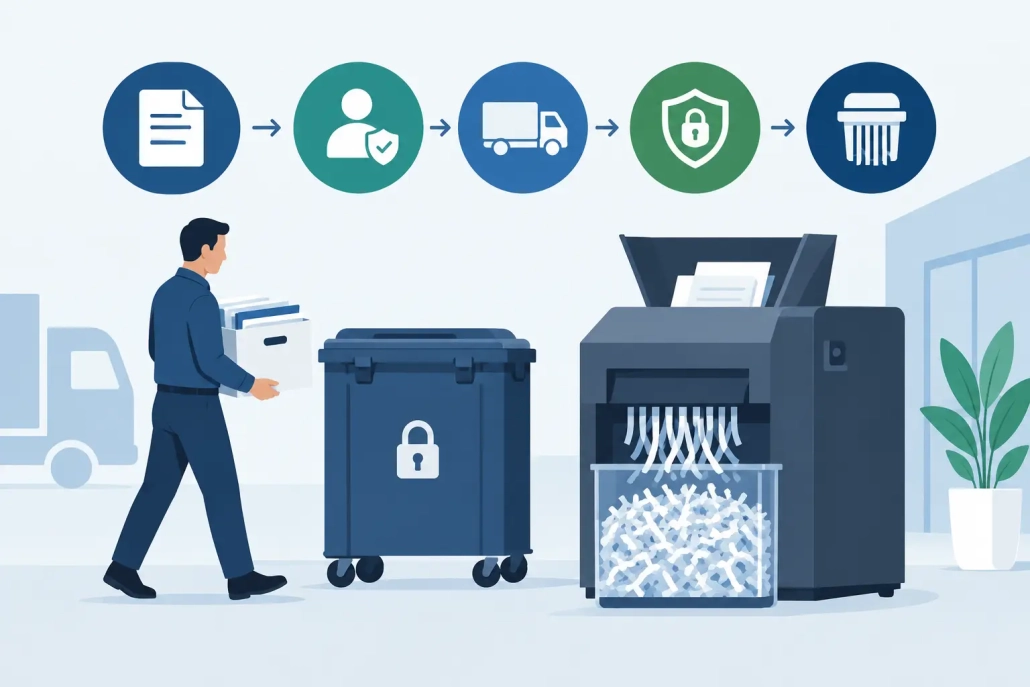
Chain of Custody Guide for Secure Destruction
A confidential file does not become safe simply because it has been placed in a recycling bin or loaded into a staff member’s car. Risk exists at every handoff, from the moment records leave a desk until they are permanently destroyed. This chain of custody guide explains how businesses can control that process, protect sensitive information, and retain clear evidence that disposal was handled properly.
For offices, medical practices, legal firms, schools, and records-heavy organizations, a documented chain of custody is not extra paperwork. It is a practical safeguard against lost records, privacy breaches, unauthorized access, and disputes about what happened to confidential material.
What a Chain of Custody Means for Business Records
A chain of custody is the documented history of an item from the moment it is identified for disposal through to final destruction. For confidential paper, archive boxes, CDs, hard media, uniforms, and other sensitive materials, it shows who controlled the material, when it changed hands, where it was stored, and how destruction was completed.
The goal is simple: no unexplained gaps. If a client, auditor, regulator, or manager asks where a box of records went, your business should be able to show a clear, sensible path from secure storage to certified destruction.
The level of documentation depends on the material and your internal obligations. A small office clearing outdated personnel files may need a straightforward collection record and Certificate of Destruction. A medical practice or legal office with high-risk records may also need internal logs, box identifiers, authorized staff sign-off, and retention records. More controls can mean more administration, so the right approach is the one that matches the sensitivity and volume of your information.
Where Chain-of-Custody Failures Usually Happen
Most disposal failures are not dramatic. They happen through routine shortcuts: a full box left beside a printer, files placed in an unlocked dumpster, a staff member taking records home to sort, or a contractor collecting material without a receipt or defined procedure.
The weak point is often the period before collection. If confidential paper sits in open recycling containers, shared storerooms, or hallways, anyone with access to that area may be able to view or remove it. Shredding later does not undo an earlier exposure.
Another common gap occurs during a large archive cleanout. When dozens or hundreds of boxes are being removed, teams can lose track of what has been collected, what remains onsite, and what was meant to be retained. A clear inventory and a designated staff contact reduce confusion before the collection vehicle arrives.
A destruction certificate is valuable proof, but it should not be the only control. The certificate confirms destruction was completed. Your internal process should also show that the material was secured before pickup and released only to an approved provider.
Chain of Custody Guide: A Practical Process
A reliable process does not need to slow down your office. It needs defined responsibilities, secure containers, and records that are easy to retrieve. The following steps provide a workable framework.
1. Identify what requires secure destruction
Start by defining confidential waste for your organization. This usually includes client and employee records, financial documents, medical information, legal files, invoices, account details, internal reports, printed emails, ID copies, archive boxes, branded uniforms, and obsolete CDs or other media.
Do not rely on staff judgment alone for borderline documents. Provide clear instructions on what belongs in secure destruction rather than general recycling. When in doubt, treating a document as confidential is usually the safer and less costly choice.
2. Keep materials secure before collection
Use locked containers in areas where confidential paper is generated. Lockable 240-liter bins work well for regular office volumes, while secure bags can suit smaller teams, remote locations, or one-time cleanouts. The container should remain locked and accessible only to authorized staff and the collection provider.
For archive boxes, keep records in a controlled room until collection. Avoid staging boxes in public reception areas, loading docks, or unsecured hallways. If boxes must be moved before pickup, assign that task to authorized employees and record how many boxes have been prepared.
3. Authorize the release of records
Decide who can request a pickup and who can release material to the driver. This may be an office manager, records manager, compliance officer, or another nominated employee. The point is accountability, not bureaucracy.
For high-volume removals, prepare a collection sheet showing the date, location, number of boxes or containers, and the name of the staff member approving release. You do not necessarily need to list every file inside each box, but you should be able to identify the batch of records that left your premises.
4. Record the handoff to the destruction provider
At collection, confirm the provider’s identity and ensure the material is removed directly from the secure container or controlled storage area. A professional service should use trained personnel and a secure vehicle process, not leave confidential material unattended for later loading.
Retain a pickup receipt, service docket, or collection record. For recurring collections, the regular service record may be enough when paired with your internal log. For a major archive purge, a detailed count of boxes, pallets, or bags provides stronger evidence and makes internal reconciliation easier.
5. Retain proof of destruction
Once destruction is complete, file the Certificate of Destruction with the relevant collection records. The certificate should identify the service provider, confirm secure destruction, and include the applicable service date or reference.
Keep these records according to your company’s document retention policy, contractual requirements, or industry obligations. The certificate is useful when answering customer questionnaires, preparing for audits, investigating a potential breach, or demonstrating that outdated records were handled responsibly.
What to Ask a Secure Destruction Provider
Not all disposal services provide the same level of control. General waste collection may be cheaper at first glance, but it rarely provides secure containment, documented handoff, or proof that confidential material was destroyed. Those missing controls can create a much larger cost if information is exposed.
Before choosing a provider, ask how materials are secured at your site, who performs the collection, how the material is transported, and what documentation you receive afterward. Also ask whether the service can handle the formats you need. Paper records, full archive boxes, CDs, uniforms, and branded items can require different handling.
Flexible collection options matter as well. Scheduled pickups are practical for businesses producing confidential waste every week or month. On-call collections suit fluctuating volumes. A one-time archive cleanout may require box-by-box removal or pallet-scale collection. Your provider should be able to match the service format to the job rather than forcing every business into the same schedule.
Metro Paper Destruction provides secure collections across Melbourne using lockable bins, security bags, scheduled service, on-call pickups, and one-off archive removals. A free Certificate of Destruction gives businesses documented confirmation after their confidential material has been destroyed and sent for responsible recycling.
Assign Clear Responsibilities Internally
A chain of custody works only when employees know their part in it. Staff should know where confidential waste goes and understand that ordinary recycling bins are not suitable for sensitive paper. Managers should know who is authorized to order collections. The person responsible for records or compliance should know where pickup records and destruction certificates are stored.
Brief training is often enough. Cover the locations of locked bins, the types of materials that require secure destruction, the procedure for full bins or archive boxes, and the contact person for a collection request. Include this process in onboarding for staff who handle customer, employee, financial, health, or legal information.
Review the process after office moves, reorganizations, staffing changes, or large cleanouts. These are the times when locked bins get relocated, storage rooms become crowded, and routine controls can be overlooked.
Make Secure Disposal Easy to Follow
The strongest chain of custody is one employees can follow without improvising. Place secure containers where confidential waste is created, schedule collection often enough to prevent overflow, document major handoffs, and keep destruction certificates in one reliable location.
If your current process depends on open bins, informal trips to a recycler, or staff holding boxes under their desks until someone has time to deal with them, it is time to tighten the process. A secure collection plan gives your team a clear next step every time confidential material reaches the end of its useful life.

Leave a Reply
Want to join the discussion?Feel free to contribute!