
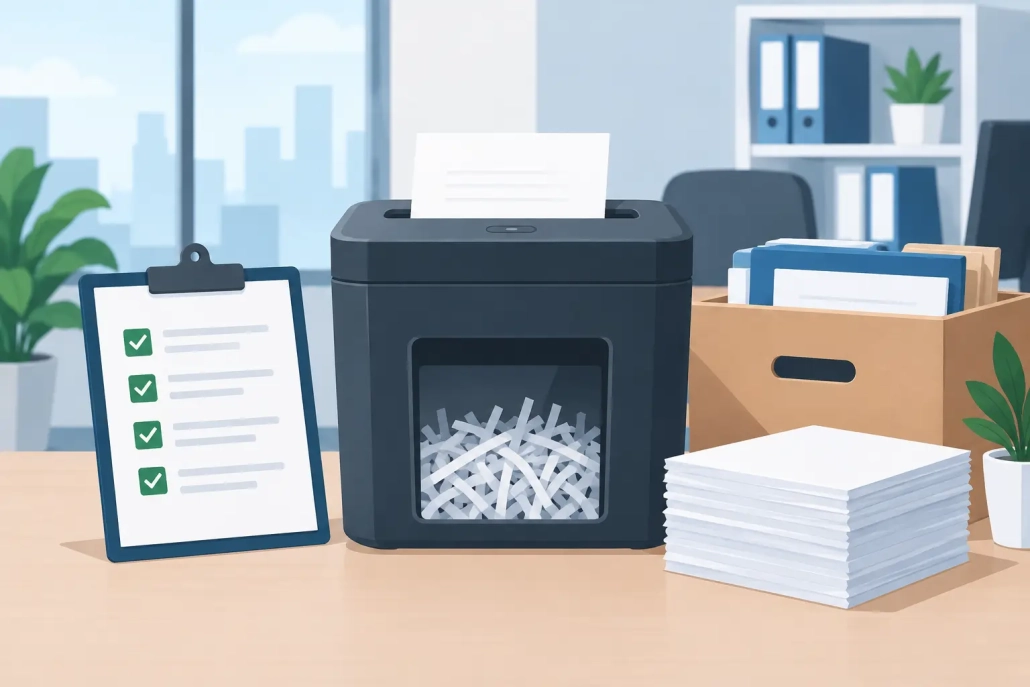
Office Cleanout Shredding Checklist for Secure Disposal
An office cleanout can uncover years of forgotten paperwork in cabinets, storage rooms, and archive boxes. That is exactly where an office cleanout shredding checklist helps. It gives your team a clear process for separating records that must be retained from confidential material that needs secure destruction, without exposing sensitive information during the move or cleanup.
For Melbourne businesses, the goal is not simply to make space. It is to remove confidential waste with a documented chain of custody, protect client and employee information, and leave the premises organized for what comes next.
Start Your Office Cleanout Shredding Checklist Early
Do not leave document sorting until moving day or the final week of a lease. Rushed cleanouts lead to files being placed in general recycling, dumped in unsecured bins, or carried home by staff for later sorting. Each option creates an unnecessary privacy and compliance risk.
Assign one person to coordinate the project, whether that is an office manager, records manager, operations lead, or compliance officer. They should set the cleanout date, advise staff what can be discarded, and be the point of contact for the secure destruction provider.
Before anyone opens a filing cabinet, confirm your retention requirements. Financial, personnel, patient, legal, student, and contract records may need to be kept for a defined period. If there is a legal hold, audit, active dispute, or investigation, those records must not be destroyed, even if they are past their usual retention date.
A cleanout is also a good time to identify records that should move to secure off-site storage rather than be destroyed. The right decision depends on the record type, your industry obligations, and whether the information is still operationally useful.
Identify What Requires Secure Destruction
Confidential waste is broader than client files. Any material that could reveal personal, commercial, financial, or internal business information should be kept out of ordinary trash and recycling streams.
During the cleanout, set aside documents and media containing:
- Customer names, addresses, account details, and contact lists
- Employee files, resumes, payroll documents, tax forms, and disciplinary records
- Medical, legal, insurance, or educational records
- Bank statements, invoices, credit information, and payment data
- Internal reports, pricing, tenders, sales information, and strategic plans
- Printed emails, meeting notes, handwritten notes, and draft documents
- Old ID cards, access records, CDs, DVDs, USB drives, and branded uniforms
Do not judge a document by its age or appearance. A handwritten note with a password, an old client list, or a ten-year-old employee file can still create a serious data breach. If you are unsure whether an item is confidential, treat it as confidential until an authorized person confirms otherwise.
Separate Retain, Recycle, and Destroy Materials
Create three clearly marked work areas: retain, regular recycling, and secure destruction. This simple step prevents staff from making disposal decisions independently while packing up an office.
The retain area should be limited to records that have been checked against your retention schedule or approved by the responsible manager. Keep this material away from the cleanout area so it is not mixed back into destruction boxes.
Regular recycling is appropriate only for clearly non-confidential material, such as blank forms, public brochures, general packaging, and duplicate documents with no sensitive information. If a page includes even partial personal or business information, it belongs in secure destruction.
The secure destruction area should be supervised and access-controlled. Avoid leaving boxes of records in hallways, loading docks, common areas, or outside a building while you wait for collection. A locked office or lockable security bin is a much safer holding point.
Use Secure Containers While You Sort
Loose paperwork is difficult to control during a busy office cleanout. Staff can accidentally place it in the wrong container, and pages can be lost while moving files between rooms. Secure containers reduce that risk.
For an ongoing office cleanout or large archive review, lockable 240-liter bins provide a practical collection point for paper records. Staff can place documents directly into the bin, while access to the contents remains restricted. Security bags can suit smaller departments, satellite offices, or one-off batches of confidential documents.
Archive boxes should remain closed and labeled until collection whenever possible. There is no need for staff to remove staples, paper clips, folders, or binder clips unless your destruction provider specifically asks. Over-handling documents adds time and increases the chance that records will be misplaced.
If your cleanout includes a substantial volume of archived files, request a pallet-scale archive removal service. This is often more efficient than asking staff to feed documents through small office shredders or make repeated trips to a recycling facility.
Record What Is Being Destroyed
A detailed inventory is not always required for every box, but basic documentation is good business practice. Record the department, file category, date range, and approximate number of boxes or containers being destroyed. This creates a useful internal record and helps confirm that no active files were included by mistake.
For sensitive projects, ask department heads to sign off before their records are released for destruction. This is particularly useful for HR files, legal files, financial archives, and medical or client records.
You should also identify any non-paper items before pickup. CDs, DVDs, digital media, ID materials, and uniforms may require a separate destruction process. Listing them in advance helps ensure the collection crew arrives prepared and that every material stream is handled securely.
Arrange a Secure Collection and Chain of Custody
A secure destruction service should remove the burden from your team, not add another task to the cleanout. Arrange a pickup format that matches the volume and timeline of your project. Scheduled service works well when the cleanup will take place over several days. An on-call pickup may be better for a smaller batch. For relocations, renovations, lease exits, or archive room clearances, a one-off cleanout service is usually the most efficient option.
Confirm where the collection vehicle can park, whether there are stairs or loading dock requirements, and who can provide building access. Clear access helps the collection happen quickly and keeps confidential material from waiting in unsecured areas.
At Metro Paper Destruction, secure collection is available across Melbourne for office documents, archive boxes, CDs, and uniforms. Materials are removed for confidential destruction and responsible recycling, with a Certificate of Destruction provided at no extra charge.
Verify the Destruction Certificate
A Certificate of Destruction is more than a receipt. It provides evidence that the confidential material entered a secure destruction process. File the certificate with your cleanout records, together with any internal approval forms and box inventory.
This documentation can support your privacy procedures, internal audits, and records management program. It also gives management a clear answer if questions arise later about how old files were disposed of.
Check that the certificate identifies the service provider, the date of destruction or collection, and the type of service completed. If your organization has formal compliance requirements, confirm in advance what records your auditors or governance team need to retain.
Avoid Common Cleanout Mistakes
The most common mistake is using regular recycling as a shortcut. Commercial recycling bins may be accessible to cleaners, contractors, other tenants, or members of the public before collection. Recycling is environmentally responsible only after confidential information has been securely destroyed.
Another mistake is relying on a small office shredder for a large clearout. These machines are slow, create staff downtime, jam frequently, and may not handle folders, bound documents, CDs, or high volumes of archive boxes. They can be useful for occasional desktop disposal, but they are rarely the best option for a full office cleanout.
Finally, do not treat empty desks as cleared desks. Check drawers, locked cabinets, printer trays, meeting rooms, mail areas, and storage cupboards. Confidential documents often accumulate in the places nobody considers part of the filing system.
A well-run cleanout protects more than floor space. When every box, bag, and bin has a clear destination, your business can leave the old office or reclaim the archive room knowing confidential information was handled properly from collection through destruction.


Leave a Reply
Want to join the discussion?Feel free to contribute!