
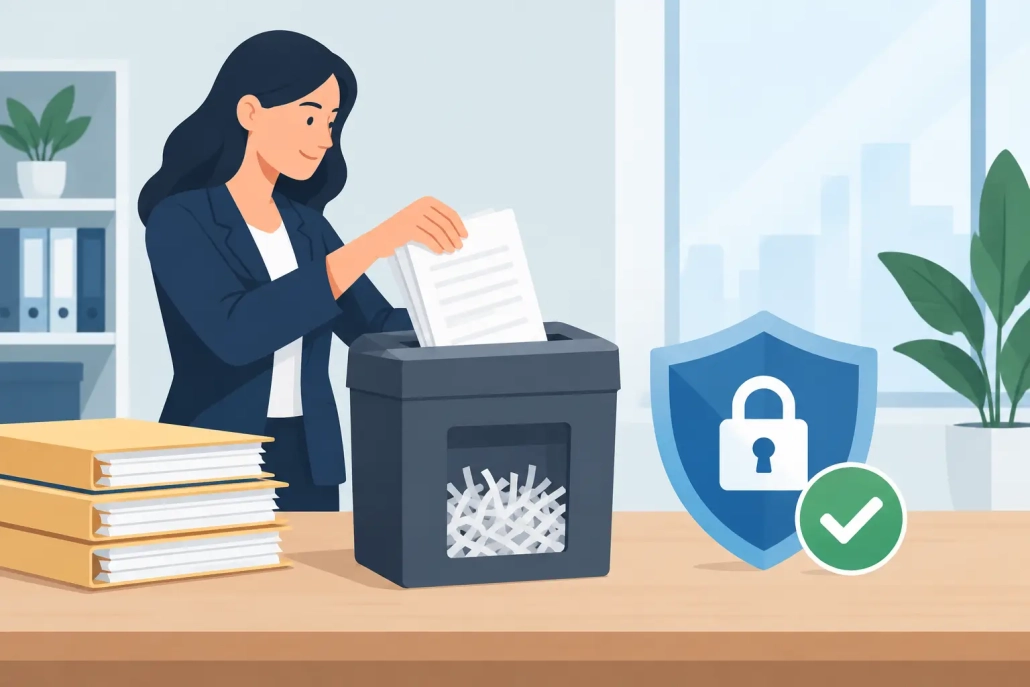
Financial Records Disposal Without the Risk
A storage room full of old files is not just a space problem. Every box of invoices, payroll reports, tax documents, client files, and bank records can contain information that should never reach a dumpster or public recycling bin. Proper financial records disposal removes that exposure while helping your business regain control of its archives.
For Melbourne businesses, the practical question is not whether old records should be cleared out. It is whether they can be removed securely, on a schedule that suits the business, with proof that the material was destroyed. A reliable destruction process gives office managers, records teams, and business owners a clear answer.
Know What Can Be Destroyed
Financial documents often remain useful longer than expected, so disposal should begin with a retention review. Your accountant, legal adviser, industry regulator, or internal records policy can help determine what must be kept and for how long. Retention periods can vary according to the record type, your industry, and the circumstances of the business.
Once records have reached the end of their required retention period, keeping them indefinitely creates a different problem. Old files are harder to manage, take up valuable space, and increase the number of documents that could be lost, misfiled, or accessed without authorization.
Common records suitable for secure destruction after approval include:
- Superseded invoices, purchase orders, receipts, and expense reports
- Old payroll records, timesheets, payment summaries, and employee tax documents
- Bank statements, merchant reports, account reconciliation files, and canceled checks
- Aged customer account files, credit applications, and payment records
- Duplicate audit papers, obsolete budgets, and outdated financial reports
The key is to separate destruction from routine office cleanout. Financial records need a controlled process, not a general waste collection.
Why Regular Bins Are Not Enough
Paper does not stop being confidential because it is old. A page with an account number, signature, address, tax file number, salary figure, or payment history can create a serious privacy issue if it is recovered from a trash bin.
Office shredders can seem like a simple alternative, but they place the work and risk back on your team. Staff must sort documents, feed small batches through the machine, empty shredded material, and ensure nothing is left beside the shredder. Machines jam, throughput is slow, and documents may sit in open recycling containers before collection.
For archive rooms or multi-box cleanouts, internal shredding is rarely cost-effective. It takes employees away from their normal work and can turn a short records project into weeks of disruption. Secure collection and professional destruction are designed to handle volume without leaving confidential material exposed in the workplace.
Build a Secure Financial Records Disposal Process
A good process is straightforward, but each step should protect the chain of custody. Start by identifying the records approved for destruction. If your business has multiple departments, nominate one person to coordinate the review so that accounting, HR, operations, and management are working from the same retention rules.
Next, decide whether your need is ongoing or project-based. A business that regularly produces confidential paperwork may benefit from lockable 240-liter bins or security bags collected on a scheduled basis. This keeps day-to-day financial waste contained from the moment it is discarded.
If you are clearing an archive room, relocating offices, digitizing historical files, or dealing with years of boxed records, a one-off cleanout may be the better fit. Archive boxes can be removed in bulk, including pallet-scale quantities, without your staff having to transport sensitive files themselves.
The collection method matters. Documents should be placed into secure containers, collected by trained personnel, and removed for confidential destruction and recycling. Avoid staging approved records in hallways, loading docks, unlocked storage areas, or open recycling bins while waiting for pickup. That gap between approval and destruction is where avoidable risk often appears.
Keep Proof of Destruction
A secure service should provide a Certificate of Destruction after the material has been processed. This document is more than an administrative extra. It creates an auditable record that confidential financial records were securely destroyed.
Keep certificates with your records management or compliance documentation. They can help demonstrate that your business followed a deliberate disposal process if questions arise during an audit, internal review, client assessment, or incident investigation.
The certificate does not replace a retention policy. It supports it. Your policy should explain what types of records are retained, who authorizes destruction, how disposal is completed, and where destruction certificates are stored. Even a simple written procedure can prevent inconsistent decisions between departments.
Match the Service to Your Volume
The right disposal arrangement depends on how much confidential paper your business generates and how quickly it accumulates. A small professional office might need secure bag collection during tax season or at the end of a records review. A medical practice, legal office, school, or finance team may require regular bin servicing to stop confidential waste from building up.
Large archive projects need a different approach. Hundreds of boxes may be taking up rent-paying floor space, but not every box should be destroyed without review. A staged project works well: identify eligible boxes, label any records that need to be retained, then arrange collection in manageable batches. This keeps the workplace organized and reduces the chance of removing material that is still required.
There is also a cost trade-off. Scheduled service can be efficient for recurring confidential waste, while on-call pickups may suit businesses with irregular volumes. For a major archive purge, bulk removal is often more economical than sending staff to shred documents box by box. A free quote before work begins makes it easier to compare the best option for your actual volume.
Do Not Forget Digital Media and Branded Items
Financial information is not limited to paper. Old CDs, DVDs, backup media, and obsolete data discs may contain reports, exports, scanned records, or customer information. These items need destruction methods suited to the media, rather than being mixed into ordinary e-waste.
Uniforms and branded clothing can also create an avoidable security concern, particularly for businesses where staff roles, logos, or access credentials could be misused. If a records cleanout coincides with an office closure, merger, or rebrand, it makes sense to review these materials at the same time.
A single collection plan for paper archives, confidential media, and branded uniforms can reduce clutter and make the project easier to manage. The important point is that each material type receives appropriate secure destruction.
Questions to Ask Before Booking Collection
Before choosing a provider, confirm how your records will be handled from collection through destruction. Ask whether lockable bins or security bags are available, whether one-off and scheduled pickups are offered, and whether large archive box removals can be managed. Confirm that a Certificate of Destruction is included and that the destroyed paper is recycled responsibly.
Also ask how collection is arranged at your site. A responsive provider should be able to work around access restrictions, loading areas, office hours, and the scale of your cleanout. Convenience should not mean leaving confidential boxes unattended at the curb or expecting your team to carry them off-site.
Metro Paper Destruction provides secure Melbourne collection for recurring confidential waste and one-off archive clearances, with lockable bins, security bags, secure removal, recycling, and free Certificates of Destruction. For businesses comparing quotes, competitive pricing should still come with a process that protects confidentiality at every stage.
Make Disposal Part of Records Management
The safest financial records disposal program is not a once-in-a-decade storage room crisis. It is a regular operational habit. Review retention periods, authorize disposal, place approved material into secure containers, and retain the destruction certificate.
When old financial records are removed through a controlled process, your business gains more than shelf space. It reduces exposure, gives staff a clear procedure to follow, and keeps confidential information out of the waste stream where it does not belong. Start with the boxes taking up room today, then put a secure collection routine in place for tomorrow.


Leave a Reply
Want to join the discussion?Feel free to contribute!