
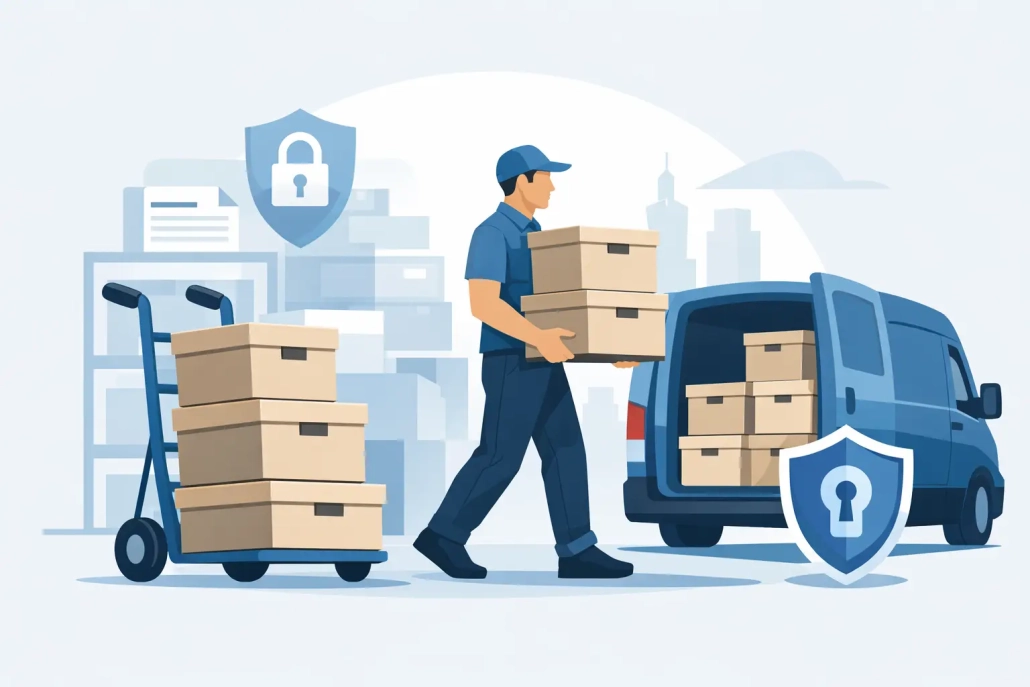
Archive Box Pickup Service for Secure Records
Archive rooms have a way of becoming permanent holding areas. Boxes stack up after a relocation, a records review, or a long-delayed cleanout, and soon no one is certain what is still required, what has passed its retention period, or who can access it. A secure archive box pickup service removes that burden without putting confidential records at risk.
For Melbourne businesses, secure disposal is not simply a matter of clearing space. Old files can contain customer details, employee records, financial information, health information, contracts, and internal correspondence. Leaving boxes in an open storeroom, sending them to general recycling, or asking staff to dispose of them themselves creates an unnecessary security gap.
When Archive Boxes Need Secure Removal
Archive destruction is often needed after records reach the end of their approved retention period. It is also common during office moves, mergers, storage reductions, policy changes, and annual records audits. In some cases, a business may simply need to reclaim a meeting room, storeroom, or off-site storage area that has become filled with inactive files.
The contents of an archive box matter more than its label. A box marked “old accounts” may hold tax records, bank details, invoices, and customer correspondence. A box from a former employee may include resumes, payroll material, performance records, or identity documents. Even outdated information can be valuable to someone looking to commit fraud or misuse private data.
Secure destruction gives your organization a clear end point for records that no longer need to be kept. Rather than shifting boxes from one location to another, you can arrange collection, destruction, and recycling through one controlled process.
How an Archive Box Pickup Service Works
A professional service should make the process straightforward while keeping security controls in place. Metro Paper Destruction collects archive boxes from business locations across Melbourne, whether you have a small number of boxes for a one-time cleanout or pallet quantities of stored records.
First, confirm which boxes are approved for destruction. Your records manager, office manager, compliance contact, or business owner should identify the material that has met its retention requirements. This step is important. A destruction provider can securely destroy approved records, but your business remains responsible for deciding what must be retained.
Once the scope is clear, arrange a pickup time that works with your site access, loading area, and operational schedule. Archive boxes are removed from your premises for secure destruction. For larger jobs, pallet-scale archive removal can be arranged so bulky cleanouts do not disrupt your staff or block valuable work areas.
After destruction, you receive a Certificate of Destruction at no extra charge. This provides a clear record that the confidential material was destroyed through a professional service. The paper is then directed to recycling, helping your business dispose of redundant records responsibly rather than sending them to landfill.
What Should Be Included in Your Pickup Request
Accurate job details help ensure the right collection is scheduled and the quote reflects the work required. You do not need a perfect inventory of every page, but a few practical details make planning easier.
Let the provider know the approximate number of archive boxes, whether they are standard storage boxes or oversized cartons, and where they are located. Access can affect the collection method and timing. For example, boxes stored on an upper floor without elevator access require different planning from boxes staged near a ground-level loading dock.
It is also useful to mention whether the boxes are loose, sealed, on pallets, or mixed with other confidential materials. Many businesses use an archive cleanout to remove old CDs, uniforms, loose paperwork, or secure waste at the same time. Addressing everything in one collection can be more efficient than arranging separate jobs.
If you need a recurring service as well as an archive purge, ask about secure collection options for day-to-day confidential waste. Lockable 240-liter bins and security bags can help prevent new paperwork from building up in desks, printer areas, and back rooms after the archive boxes have been removed.
Security Matters Before Destruction, Not Just After
A Certificate of Destruction is valuable proof of service, but security should begin when the boxes leave your control. The collection process needs to protect documents from the moment they are removed from your office, clinic, school, legal practice, or facility.
Avoid placing archive boxes in public corridors, shared loading areas, or unsecured waste rooms while waiting for collection. If boxes need to be staged, use a restricted area and limit access to authorized staff. Clearly separate approved-for-destruction records from files that must be retained. A simple staging error can create a serious records management problem.
It is also worth checking for items that should not be mixed into paper archive boxes. Hard drives, electronic media, uniforms, identification cards, and branded materials may require a separate destruction method. A capable provider can advise on secure options for these items, but they should be identified before collection rather than discovered halfway through a cleanout.
One-Time Cleanout or Scheduled Service?
The right service format depends on why the records are being removed. A one-off archive box pickup is usually the best fit for a storage-room cleanout, office relocation, end-of-year purge, or large records disposal project. It gives you a practical way to clear approved material quickly without committing to an ongoing schedule.
Scheduled pickups are more suitable when confidential waste is generated regularly. Legal firms, medical practices, accounting offices, schools, and corporate offices often need secure disposal throughout the year. Regular servicing helps control day-to-day paperwork, while occasional archive collections handle larger volumes when retention periods expire.
Some organizations need both. A business may book a major archive removal now, then put lockable bins in place to manage future confidential waste. This approach can reduce clutter, support better internal handling, and prevent old records from accumulating again.
The Cost of Delaying Archive Destruction
Holding records longer than necessary has a cost. There is the visible cost of storage space, shelving, off-site storage fees, and staff time spent locating boxes. There is also the less visible cost of risk. The more confidential material stored in an office, the greater the chance of unauthorized access, accidental loss, water damage, fire damage, or improper disposal.
General waste disposal is not an acceptable substitute for secure destruction when documents contain personal or commercially sensitive information. Standard recycling collection may be appropriate for blank packaging or non-confidential office paper, but it does not provide the same controlled handling or destruction confirmation for archive records.
Price matters, particularly when you are clearing a large volume of boxes. However, the cheapest option is not always the most cost-effective if it leaves your organization without secure removal, reliable service, or documentation. Request a clear quote based on your volume and access requirements, then compare what is actually included. A competitive price should still cover professional collection, secure destruction, recycling, and your Certificate of Destruction.
Preparing for an Archive Box Pickup Service
You can make collection day faster by confirming the approved boxes in advance and keeping them together where practical. Remove boxes that must be retained from the pickup area, and alert reception, building management, or security staff if the collection team will need access to a loading zone or service elevator.
There is no need to spend hours removing staples, paper clips, or files from folders unless you have been specifically asked to do so. The priority is to keep documents secure and ensure the correct records are included. If boxes contain mixed material and you are unsure whether everything is approved for destruction, pause and check internally before booking the pickup.
A well-planned archive cleanout does more than create room. It gives your business a controlled way to dispose of redundant information, maintain a clear record of destruction, and return valuable space to productive use. When boxes have reached the end of their retention life, arranging secure collection is a practical next step.


Leave a Reply
Want to join the discussion?Feel free to contribute!