
Best Document Destruction Providers: What to Check
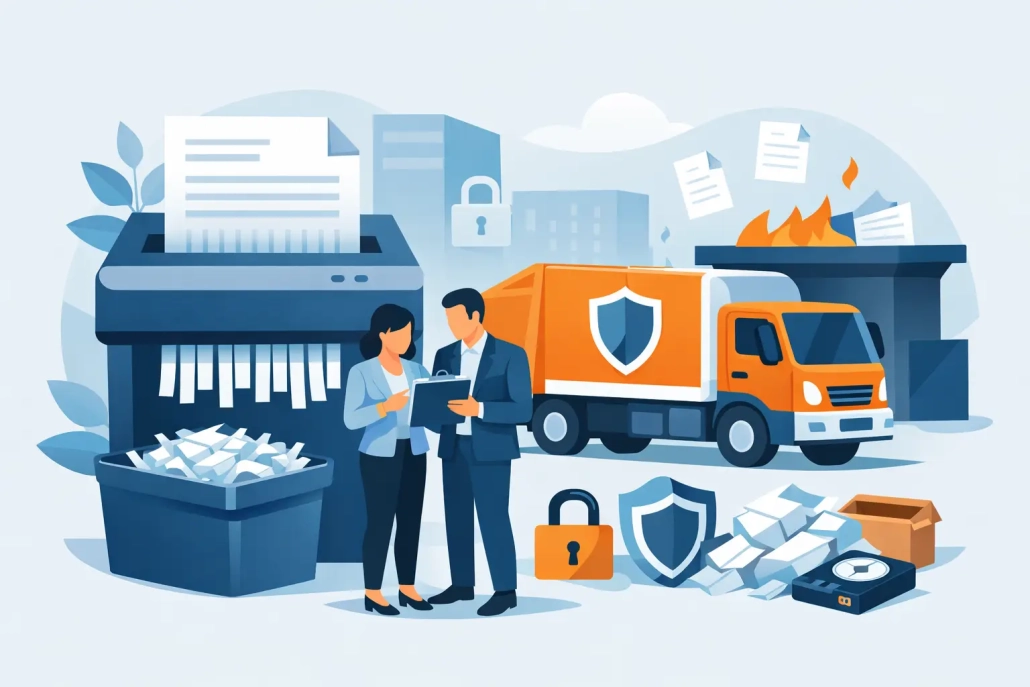
A full archive room, an overflowing office shredder, or a stack of former employee files can create the same problem: sensitive information is still sitting on your premises. The best document destruction providers remove that risk with a clear chain of custody, secure collection, verified destruction, and service options that fit how your business works.
For Melbourne businesses, the choice should not come down to price alone. A low pickup charge means very little if confidential records are left unsecured, staff are expected to handle heavy archive boxes, or there is no proof that destruction took place. The right provider makes confidential waste disposal routine, accountable, and easy to manage.
What the Best Document Destruction Providers Do Differently
A professional provider is more than a truck collecting paper. It should operate a controlled process from the moment your documents enter a secure bin or bag until the material has been destroyed and sent for recycling.
Start with collection security. For ongoing office paper waste, lockable consoles or 240-liter bins keep documents out of general waste streams and away from unauthorized staff or visitors. The container should remain locked, with access limited to approved employees and the destruction provider’s collection team. This matters in shared offices, medical practices, schools, legal firms, and any workplace where paperwork may contain client, employee, financial, or operational information.
For larger jobs, secure handling is just as important. Archive boxes should be collected directly from storage areas, loaded safely, and accounted for during removal. If records have been kept for years, a provider should be able to handle a one-time cleanout or pallet-scale archive removal without turning your staff into a moving crew.
The final safeguard is documentation. A Certificate of Destruction provides a record that confidential materials were collected and destroyed. Ask whether it is included as standard, rather than treated as an extra charge. It is useful for internal records, audits, privacy procedures, and demonstrating that your business has taken reasonable steps to dispose of sensitive material securely.
Match the Service to Your Volume and Workflow
There is no single destruction arrangement that suits every organization. The best service is the one that removes risk without creating unnecessary cost or administration.
Scheduled secure-bin service
Scheduled service is usually the right choice for businesses that produce confidential paper waste every week or month. Offices, accounting firms, healthcare providers, and professional services businesses often benefit from a lockable bin collected on a regular schedule. Staff place sensitive documents in the bin as they work, rather than accumulating loose piles for a future cleanout.
The trade-off is that a fixed schedule can be inefficient for a small office with irregular volumes. Before agreeing to a service frequency, consider how quickly bins fill, whether there are seasonal peaks, and where the bin can be positioned without disrupting the workplace.
On-call pickups
On-call collection gives businesses flexibility when confidential waste volume changes. It can work well for offices with periodic projects, schools at the end of a term, or firms that only need destruction after a records review. You still get a professional collection process, but you are not paying for a visit when there is nothing ready to remove.
Ask how quickly an on-call pickup can be arranged and whether there is a minimum volume. A responsive local operator can be especially valuable when you need space cleared before an office move, inspection, or storage deadline.
One-time archive and cleanout destruction
A one-time destruction job is designed for accumulated files, closed matters, expired records, and old storage boxes. This is where provider capacity matters. A business with a few boxes may only need collection bags and a pickup. An organization clearing a storeroom may need dozens of archive boxes removed or pallets collected from a warehouse.
Do not assume all providers price these jobs in the same way. Some charge by box, others by bin, weight, or pallet. A clear quote should explain what is included, including collection, loading, destruction, and the certificate. If your records are stored upstairs, in a basement, or at an off-site facility, state that early so the quote reflects the actual work.
Check More Than Paper Shredding
Paper is the obvious concern, but confidential waste often appears in other forms. A capable provider should tell you precisely what it can collect and destroy, rather than encouraging everything to go into one bin.
CDs, DVDs, and other outdated media may contain backups, client lists, images, or old system data. These need physical destruction appropriate to the material. Branded uniforms can also create a security and reputational issue when they are no longer needed. Destroying obsolete uniforms helps prevent logos, staff identifiers, or access-related clothing from being reused improperly.
Ask about archive box destruction if your priority is clearing records quickly. In many cases, staff time is the hidden cost of disposal. A service that removes sealed boxes from your site can be more practical than asking employees to feed documents through small office shredders for days.
Questions to Ask Before You Compare Quotes
A quote is only useful when you know what service sits behind it. When assessing providers, ask direct operational questions:
- Are lockable bins or secure bags available for your type of collection?
- Does the provider offer scheduled, on-call, and one-time collection options?
- Will you receive a Certificate of Destruction at no additional cost?
- Can the company remove archive boxes, pallets, CDs, and uniforms where required?
- How are materials kept secure during collection and transport?
- Is recycling included after destruction?
- Are there call-out fees, minimum charges, or extra costs for access and loading?
These questions expose the difference between a basic waste pickup and a confidential destruction service. They also make quote comparisons fairer. A cheaper figure may exclude certificates, containers, labor, or collection from difficult access points.
Why Certificates and Recycling Both Matter
Confidential destruction has two outcomes: the information must be destroyed, and the resulting material should be handled responsibly. These are not competing priorities.
A Certificate of Destruction gives your business evidence of the completed service. Keep it with your records management or compliance documentation, particularly if the material involved employee files, customer information, health records, financial documents, or sensitive internal correspondence. While a certificate does not replace your own retention and privacy procedures, it is a practical part of a defensible disposal process.
Recycling is the appropriate next step for destroyed paper material. It keeps paper out of landfill and gives businesses a practical way to manage confidential waste responsibly. The key is sequence: secure destruction first, recycling afterward. Documents should never be treated as ordinary recycling while they still contain readable information.
Avoid the Risks of In-House Shredding
Small office shredders have a place for occasional low-volume use, but they are rarely the best answer for ongoing confidential waste. They jam, overheat, require staff time, and leave bags of shredded material that still need disposal. More importantly, they encourage staff to leave documents in trays or beside the machine while waiting for someone to shred them.
In-house shredding also creates inconsistent habits. One employee may shred every page, another may place papers in general recycling, and a third may take a box home to deal with later. Secure bins and scheduled collection create one simple process for everyone: confidential documents go into the locked container and are removed by an approved provider.
For large archive clearouts, the gap is even wider. Shredding years of records internally is slow, labor-intensive, and difficult to supervise. Professional removal frees your staff to focus on their actual work while reducing storage pressure and exposure to confidential information.
Choose a Provider That Can Respond When Needed
Reliable service is often tested when circumstances change. Your office may relocate, a records retention review may identify a large volume for disposal, or a staff member may discover old files in an unused cabinet. A provider should be able to scale from regular bin collection to an urgent one-off removal without making the process complicated.
Metro Paper Destruction provides Melbourne businesses with lockable 240-liter bins, security bags, scheduled and on-call collections, archive box and pallet removal, plus secure CD and uniform destruction. A free Certificate of Destruction and competitive quote give decision-makers a clear, practical basis for arranging service.
Before the next storage area fills up, identify what needs to be destroyed, estimate the volume, and request a clear quote. A secure collection arrangement now is far easier than managing a privacy issue after confidential records have been misplaced.


Leave a Reply
Want to join the discussion?Feel free to contribute!