
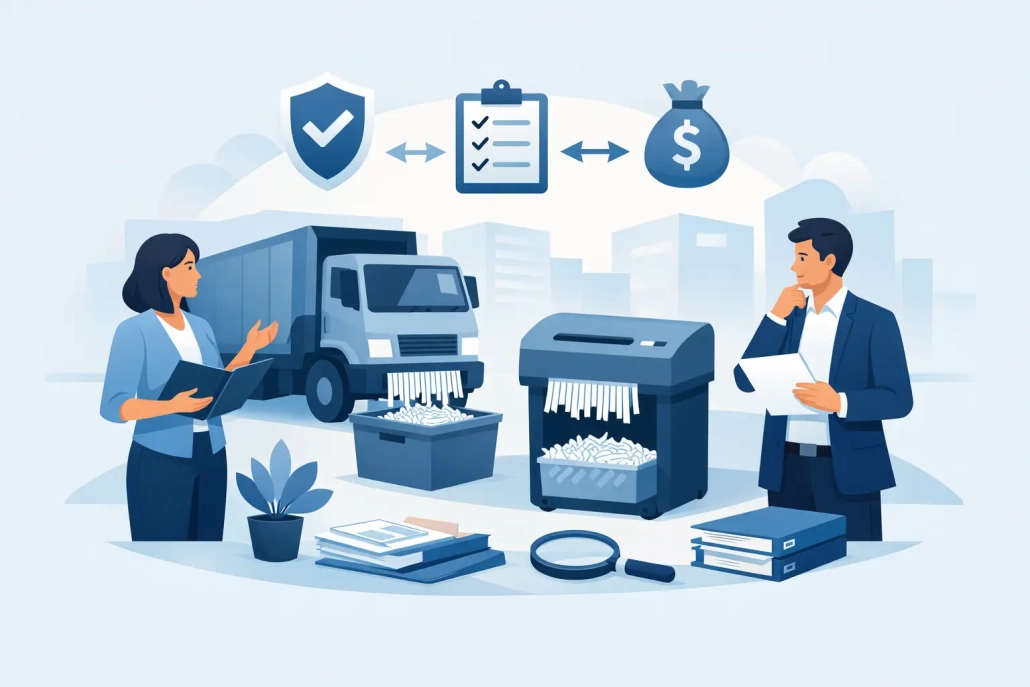
How to Choose a Shredding Provider for Business
A locked office cabinet is not a disposal plan. Once confidential files, employee records, client information, financial documents, or old media leave your control, your business needs to know exactly who handles them and how they are destroyed. Knowing how to choose shredding provider services comes down to checking the details that protect your information, your staff, and your reputation.
The lowest price is only a good deal when the service includes secure collection, documented destruction, and pickup arrangements that actually suit your workplace. A reliable provider should make confidential waste easy to manage without asking your team to carry boxes, store loose documents, or guess whether materials were destroyed properly.
Start With the Type and Volume of Material
Before requesting quotes, identify what needs to be destroyed. A small office clearing a few archive boxes has different needs than a medical practice producing confidential paper waste every day. The right service format should match the work rather than force you into a contract or pickup schedule that does not fit.
For ongoing paper waste, lockable consoles or 240-liter security bins provide a practical collection point. Staff can dispose of documents as they work, while the material remains secured until pickup. This is usually the best option for offices handling invoices, personnel files, client records, reports, and other routine confidential paperwork.
For a records room cleanout, archive box removal or pallet-scale collection may be more suitable. Ask whether the provider can collect full boxes directly from your storage area and whether they have the equipment and logistics to handle a large volume safely. A provider that is equipped only for small bin collections may not be the right fit for a major archive destruction project.
Also consider materials beyond paper. Old CDs, DVDs, branded uniforms, identification cards, and other items can create privacy or security issues if they are simply thrown away. If your business has several material types, choosing one provider that can manage them securely can reduce administration and prevent disposal gaps.
How to Choose a Shredding Provider With Real Security Controls
Security should be visible in the service process, not just promised in a sales conversation. Ask what happens from the moment your documents are placed in a bin or handed over for collection. The provider should be able to explain its chain of custody in clear, practical terms.
Start with the containers. For ongoing service, bins should be lockable and designed to prevent unauthorized access. Security bags should be tamper-evident and suitable for businesses that need a flexible, lower-volume collection option. Open cardboard boxes, unsealed bags, and unlocked office recycling bins are not appropriate for sensitive material.
Next, ask how material is collected and transported. You need confidence that documents are removed by trained personnel and kept secure during transit. A professional provider should have a controlled collection process, not an informal arrangement where confidential records are left unattended in a loading dock or common area.
The final step is destruction. Confirm that materials are destroyed rather than merely stored, sorted, or passed to another party without clear accountability. If a provider uses a third party for any part of the work, ask who takes responsibility for the material and where the handover occurs. Subcontracting is not automatically a problem, but unclear responsibility is.
A secure provider will answer these questions directly:
- What containers are supplied, and are they lockable or tamper-evident?
- Who collects confidential material and how is it secured in transit?
- Where and how is the material destroyed?
- Is there a documented chain of custody from collection through destruction?
- Can the provider handle paper, archive boxes, media, and uniforms when required?
Require a Certificate of Destruction
A Certificate of Destruction is more than a piece of paperwork. It gives your organization a record that confidential material was collected and destroyed through a defined service process. This can support internal records policies, privacy procedures, audits, and supplier due diligence.
Ask when the certificate is issued and what it confirms. The document should clearly identify the service date and provide evidence that destruction has occurred. It should not be treated as an expensive add-on or something you need to chase after every pickup.
Free Certificates of Destruction are a practical sign that a provider understands the accountability businesses need. Keep these records with your other compliance and service documentation, particularly if you handle personal information, health records, legal files, financial documents, or government-related material.
Choose Pickup Options That Match Your Workflow
Convenience matters because an inconvenient shredding service will not be used consistently. If staff have to wait months for an available pickup or carry heavy archive boxes across the building, confidential material is more likely to pile up in desks, cupboards, and unsecured storage areas.
Scheduled pickups work well for businesses with predictable volumes. Weekly, monthly, or other regular collections keep secure bins from overflowing and make document disposal part of normal operations. This is often the simplest choice for busy offices, schools, professional firms, and practices with steady paper waste.
On-call pickups suit businesses with uneven volumes or limited space. You may only need collection after a records review, office relocation, end-of-year cleanout, or a project that produces a large amount of confidential paperwork. A one-off cleanout is also a sensible option when you need to clear archive boxes without committing to ongoing service.
Ask whether the provider can adjust service as your needs change. A growing office may begin with security bags, move to a lockable bin, and later require regular archive box destruction. Flexibility helps you avoid paying for capacity you do not need while ensuring your service does not fall behind when volumes increase.
Compare Quotes on Scope, Not Just Price
A low quote can hide costs for bin delivery, collection, box handling, certificates, callout fees, fuel charges, or excess volume. When comparing providers, make sure each quote covers the same scope of work. Otherwise, a cheaper headline price may become more expensive once the service begins.
Request a clear quote that explains the collection method, container size, pickup frequency, volume limits, destruction documentation, and any charges that may apply to archive boxes, pallets, media, or uniforms. If you are planning a large cleanout, give an accurate estimate of the number of boxes or pallets so the provider can allocate the right vehicle and staff.
Price still matters. Secure destruction should be affordable, especially for businesses that require regular service. But cost efficiency means receiving the level of security and service you actually need at a transparent rate. It does not mean accepting vague terms or cutting corners with confidential information.
A provider willing to offer a free quote and compete on price is useful, provided the quote also confirms the security process and Certificate of Destruction. The best choice is usually the provider that makes both the service and the cost easy to understand.
Check Local Coverage and Responsiveness
A local provider can make collections easier to arrange and can be particularly valuable when you need a quick archive removal or an unexpected pickup. For Melbourne businesses, confirm that the provider services your suburb, can access your building, and can manage the collection conditions at your site.
Responsiveness is also a practical security issue. If a full bin, office move, or records disposal project cannot be booked promptly, confidential material may remain on site longer than necessary. Pay attention to how the provider handles your initial inquiry. Clear answers, straightforward scheduling, and a detailed quote are usually good indicators of how the account will be managed after you sign up.
Look for Recycling Without Compromising Confidentiality
Secure destruction and responsible recycling should work together. Once confidential paper has been destroyed through a controlled process, the resulting material can be recycled rather than sent to landfill. This helps businesses reduce waste while keeping information protection as the first priority.
Ask how paper is handled after destruction and whether the provider has a defined recycling process. Do not assume that a general recycling service offers confidential destruction. Standard recycling bins are typically accessible to multiple people and do not provide the controlled handling, destruction evidence, or secure collection required for sensitive records.
Make the Decision Before Storage Becomes a Risk
The right provider should remove a recurring burden from your team. They should supply the right containers, collect material when required, securely destroy it, and provide evidence that the job was completed. Whether you need a lockable bin for everyday documents or a one-time removal of archived files, the process should be clear from the first quote.
Metro Paper Destruction provides Melbourne businesses with secure collections, flexible pickup options, and free Certificates of Destruction for routine confidential waste and larger cleanout projects. Choose a provider that can explain every step, price the work clearly, and give your business confidence that confidential material will not become tomorrow’s problem.


Leave a Reply
Want to join the discussion?Feel free to contribute!