
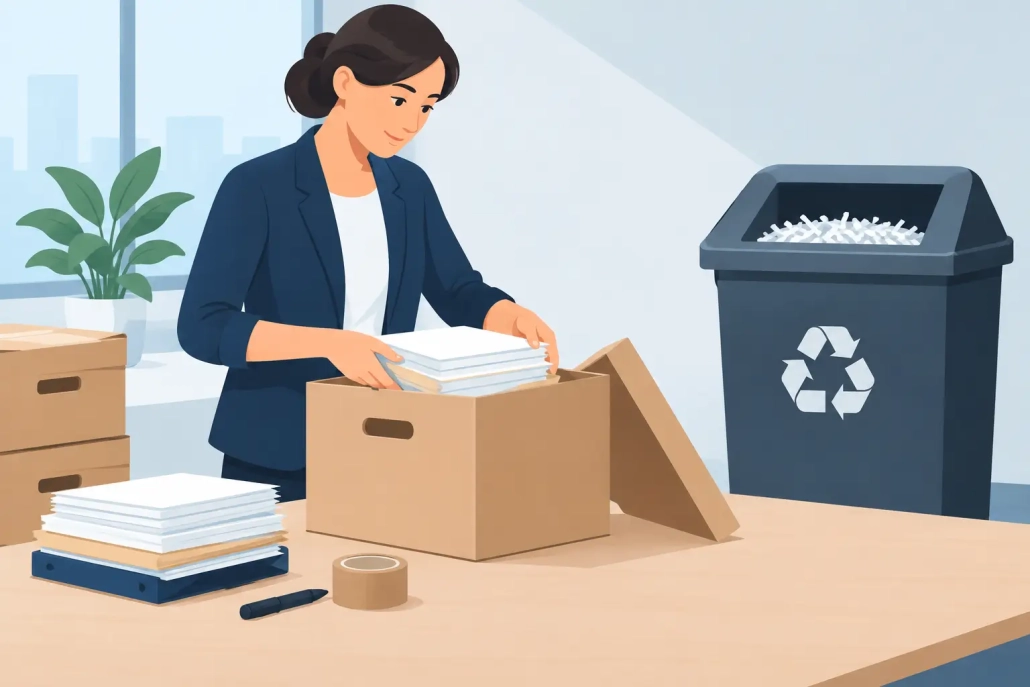
How to Prepare Archive Boxes for Secure Disposal
Archive boxes often hold years of confidential material: client files, employee records, financial documents, patient information, contracts, and internal reports. When it is time to clear storage space, the job is not simply moving old paper out the door. Knowing how to prepare archive boxes helps protect sensitive information from the moment records leave your office until they are securely destroyed and recycled.
For Melbourne businesses, a planned archive clean-out can reduce clutter, lower storage costs, and prevent confidential records from being handled carelessly. The key is to prepare boxes for collection in a way that is secure, practical, and easy for your team to manage.
Start With a Clear Retention Decision
Before packing anything for destruction, confirm that the records have reached the end of their required retention period. Different documents may need to be kept for different lengths of time depending on your industry, legal obligations, tax requirements, contractual terms, and internal policies.
This step matters because a rushed clean-out can create a new risk if important records are destroyed too early. Ask the relevant records manager, compliance contact, accountant, or legal adviser to confirm what can be disposed of. Once approval is given, separate approved material from documents that must remain in storage.
Do not rely on a box label alone if the contents are unclear. A box marked “Accounts 2018” may contain later documents, employee information, or files that need separate review. Spot-check mixed boxes before adding them to the destruction pile.
Sort Records Before You Pack
A secure destruction provider can handle large volumes of paper, but basic sorting makes collection faster and reduces mistakes. Keep records approved for destruction together, and keep active files, items for long-term storage, and documents awaiting review well away from the collection area.
You do not need to remove standard paper clips, staples, or small binder clips from paper records unless your provider gives different instructions. Removing them by hand wastes staff time and creates unnecessary handling of confidential pages. However, separate materials that require a different destruction process, such as CDs, USB drives, hard drives, uniforms, branded items, or other non-paper media.
If records contain folders, lever arch files, or large binders, consider whether the material should be removed and packed into archive boxes. This can make boxes easier to stack and transport. For a one-off clean-out involving thousands of files, leave the heavy lifting to the collection team where possible rather than asking staff to dismantle every folder.
Use Strong, Sensible Archive Boxes
Choose archive boxes that are clean, dry, and structurally sound. A weakened box can split during handling, exposing documents and slowing down a secure removal. Avoid overfilled boxes that cannot close or lift safely, as well as boxes that are so empty they waste collection space.
Fill each box evenly and keep the weight manageable for safe handling. Paper is heavier than many people expect. A compact box of files may be too heavy for one person, particularly if it contains bound documents or dense financial records. Smaller, properly filled boxes are generally safer than a few oversized cartons.
Close the lid securely. Tape is usually not necessary unless a box is damaged or likely to open during movement, but the contents should not be visible or able to fall out. If you are reusing boxes, remove old shipping labels and labels that identify unrelated records.
Label for Control, Not for Exposure
Labels are useful for managing a large archive disposal project, but they should not reveal confidential details. Avoid writing client names, patient names, account numbers, case references, employee details, or descriptions of sensitive matters on the outside of a box.
Use a simple internal reference instead. For example, your team may use a project code, department name, or numbered sequence such as “HR Disposal 01” through “HR Disposal 25.” Keep the matching contents register in a secure location if you need an audit trail.
For most businesses, the outside label only needs to show that the box is approved for secure destruction and belongs to a specific collection batch. Clear, limited labeling helps staff identify the right material without advertising what is inside to visitors, contractors, or unauthorized employees.
Create a Secure Holding Area Before Pickup
Prepared archive boxes should not sit in an open hallway, loading dock, reception area, or shared storage room for days. Once records have been selected for destruction, treat them as confidential waste until they are collected.
Store boxes in a locked office, secure records room, or other restricted-access area. Limit access to the employees responsible for the project. If the clean-out will occur in stages, use lockable secure bins or security bags for smaller volumes of day-to-day confidential paper while larger archive boxes are staged separately.
A clear holding area also prevents staff from accidentally adding active documents to the disposal batch or removing records after they have been approved for destruction. This is especially useful in medical practices, legal offices, schools, and businesses with multiple departments sharing storage space.
Prepare a Simple Collection Inventory
An inventory does not need to be complicated, but it provides useful control over a large disposal job. Record the number of boxes, the relevant department or batch code, and the date the boxes were released for secure destruction. If your internal procedure requires it, have an authorized staff member sign off before collection.
For pallet-scale archive removal, count boxes by pallet and make sure access paths are clear. Note any boxes stored upstairs, in basements, behind shelving, or in areas with limited elevator access. These details help the collection team plan the right equipment, staffing, and vehicle space.
The goal is not to create more paperwork. It is to make sure everyone knows what has been approved, what is waiting for collection, and what has left the site. A secure provider should continue that chain of custody through removal and destruction, then provide a Certificate of Destruction for your records.
Make Collection Day Easy and Secure
Before the scheduled pickup, tell relevant staff where the archive boxes are located and who is authorized to release them. Keep the collection route practical. Clear obstacles from hallways, confirm parking or loading access, and advise building management if a service elevator or loading zone is needed.
You do not need to bring confidential boxes to the curb or leave them unattended outside. A professional collection service should remove boxes from your premises, reducing staff handling and minimizing exposure. For urgent clean-outs, on-call collection may be more suitable than waiting for a regular service date. For ongoing records disposal, scheduled pickups and lockable bins can keep sensitive paper under control throughout the year.
If your business is disposing of a very large archive, ask for a quote based on the number of boxes, access conditions, and collection requirements. Accurate information upfront helps avoid delays and ensures the job is priced appropriately.
Common Mistakes to Avoid When Preparing Archive Boxes
The most common problem is treating archived records as ordinary recycling. Placing confidential documents in a general recycling bin leaves your business with little control over who handles the material or whether it is destroyed. Office shredders are also rarely practical for archive volumes, and they can leave staff spending hours handling documents that should have been removed securely.
Another mistake is leaving boxes unlabeled and uncounted. This makes it difficult to tell whether every approved box was collected. At the other extreme, detailed labels can expose private information. Use basic batch controls and keep sensitive descriptions off the box exterior.
Finally, do not mix paper archives with electronic media or branded uniforms without checking the collection arrangement. These items require their own secure destruction process. Separating them before pickup prevents disruption on collection day.
How to Prepare Archive Boxes With Less Risk
The best archive disposal process is controlled from start to finish: confirm retention requirements, pack approved records safely, store boxes in a restricted area, and arrange secure removal by a trusted provider. Metro Paper Destruction provides Melbourne businesses with archive box destruction, secure collection, and a free Certificate of Destruction, so your team has documented proof that confidential material has been handled properly.
When your archive room is ready for a clean-out, prepare the boxes with care, then let a secure collection service remove the burden from your staff. A free quote and a clearly planned pickup can turn an overloaded storage area into usable space without compromising confidentiality.


Leave a Reply
Want to join the discussion?Feel free to contribute!