
Shredding Bins Versus Consoles for Offices
A stack of client files left beside a desk is not just clutter. It is a security gap. When comparing shredding bins versus consoles, the best choice comes down to where confidential paper is created, how much your team produces, and how securely it must be held before collection.
Both options can support a professional document destruction program. Both should be lockable, collected by authorized personnel, and backed by a Certificate of Destruction. The difference is practical: a bin is built for volume and back-of-house storage, while a console is designed to sit inside the working office.
Shredding bins versus consoles: the practical difference
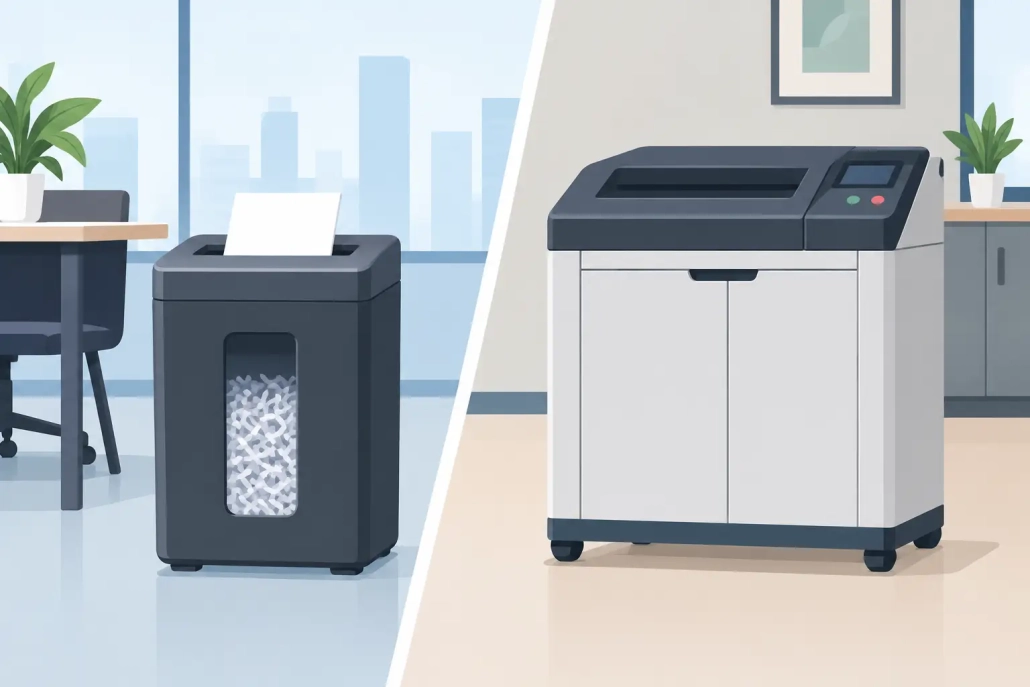
A secure shredding bin is a lockable container, commonly 240 liters, used to hold larger volumes of confidential paper. It is generally placed in a copy room, records area, mailroom, storage space, or other controlled location. Staff deposit documents through the secure opening, and the full bin is removed or emptied during a scheduled or on-call pickup.
A shredding console is a smaller lockable cabinet designed for office areas. It often looks like standard workplace furniture and can sit near desks, printers, reception areas, or administrative workstations. A slot in the top allows staff to dispose of documents without leaving their work area.
Neither option is automatically more secure simply because of its size or appearance. Security depends on the unit being locked, the access point being controlled, and the material being collected through a documented chain of custody. The right unit is the one employees will actually use every time.
When a secure shredding bin is the better fit
A shredding bin is usually the practical choice for businesses with steady paper volume. Legal firms processing matter files, medical offices managing patient paperwork, schools handling student records, and accounts departments working through invoices and payroll documents can fill smaller units quickly. A larger bin prevents overflow and reduces the temptation to place confidential material in regular recycling.
Bins also suit centralized workflows. If employees already take printing, copying, mail, and filing to one area, a secure bin can become the clear disposal point for the entire team. This keeps confidential waste contained without adding multiple collection points across the office.
For archive clean-outs, bins may help with day-to-day paperwork, but they are not always the fastest answer for stored records. Archive boxes, filing cabinets, and palletized documents often require a separate one-off removal service. Loading years of records into a small office bin creates unnecessary labor and delays the clean-out.
A bin is likely the better option when you need:
- High-capacity storage for regular confidential paper
- A central disposal point for several departments
- Less frequent pickups because the container holds more material
- A secure solution for copy rooms, mailrooms, and records areas
The trade-off is placement. A 240-liter bin needs floor space and may not suit a tight executive office, reception desk, or small clinic room. It is functional rather than discreet, which is exactly what many busy back-office spaces need.
When a shredding console makes more sense
A console works best where confidential paper is generated at the desk and immediate disposal matters. Think HR teams handling job applications, front-desk staff receiving forms, financial advisers working with client records, or medical reception staff dealing with personal information throughout the day.
The main advantage is convenience. When a console is close to the point of use, employees do not need to carry sensitive documents across the office or place them in a temporary desk tray. That simple change can improve compliance with internal privacy procedures.
Consoles are also useful in customer-facing settings because they blend more naturally with office furniture. A well-placed, locked console keeps paperwork out of sight while giving staff an easy, secure place to discard it. This can be especially valuable in reception areas where visitors, contractors, and delivery personnel may be present.
The limitation is capacity. A console is not intended to absorb the paper output of a large department for long periods. If it fills too quickly, staff may start leaving documents on top or beside it. That defeats the purpose of secure disposal. In high-volume settings, a console may need more frequent service, additional units, or support from a larger bin in a separate area.
Capacity should drive your pickup plan
Do not choose a unit based only on its appearance. Look at the real paper flow in your business. A small office that prints little but handles highly sensitive client forms may benefit from a console near the work area. A larger organization processing daily reports, contracts, files, and correspondence will generally get better value from a bin with scheduled collection.
Pickup frequency should match how quickly the container fills and the level of risk your business is willing to carry. Waiting until a bin overflows is not an efficient system. A regular service schedule gives staff a predictable process and keeps confidential waste from building up in unsecured areas.
On-call pickups can suit businesses with uneven volumes, seasonal workloads, or short-term projects. For example, a tax office may produce much more confidential paper during filing season than at other times of year. A school may need additional collection after enrollment periods or record retention reviews. The service should fit the work, not force the work to fit the container.
Security features matter more than furniture style
Whether you choose bins, consoles, or a combination of both, ask practical security questions. Can employees deposit paper without opening the unit? Is the container locked? Who has access to keys or service doors? How is the material handled once it leaves your office? Will you receive a Certificate of Destruction?
A secure process should prevent documents from being accessed, removed, or mixed into ordinary recycling before destruction. This matters for personal information, employee records, financial documents, medical files, customer data, internal reports, and commercially sensitive material.
The Certificate of Destruction is more than paperwork. It gives your organization a record that confidential materials were collected and destroyed through the proper service. For office managers, compliance staff, and business owners, that proof can be essential when reviewing internal procedures or responding to a client requirement.
Many offices need both bins and consoles
The choice does not always have to be one or the other. A practical setup for a larger office may include consoles in departments that handle sensitive information at desks, with a high-capacity bin in the records room for bulk paperwork. Staff can dispose of routine documents immediately, while large file clear-outs have a separate secure destination.
This approach is particularly useful when different teams work differently. Human resources may need a console near personnel files, while accounts may need a bin close to the copier. A records manager may also require one-off collection for archive boxes that do not belong in either unit.
Metro Paper Destruction can assess the volume, placement, and collection needs of your workplace and provide lockable containers, secure pickups, and a free Certificate of Destruction. The goal is not to add another office task. It is to make secure disposal routine.
Before ordering a container, walk through your office and identify where confidential paper is actually discarded, not where you assume it is discarded. Place the right secure unit at those points, set a collection schedule that prevents overflow, and give your team one clear rule: confidential paper never goes into regular trash or recycling.


Leave a Reply
Want to join the discussion?Feel free to contribute!