
Scheduled vs One Off Shredding: Which Fits?
A filing room that slowly fills with confidential paperwork creates a different problem from a storage area packed with old archive boxes. That is why the scheduled vs one off shredding decision should be based on how your business generates, stores, and manages sensitive material – not simply on which service appears cheapest at first glance.
For Melbourne businesses, the right approach protects private information, keeps workspaces under control, and gives staff a clear process for disposing of records they no longer need. It also provides documented proof that confidential materials were securely destroyed.
Scheduled vs One Off Shredding: The Core Difference
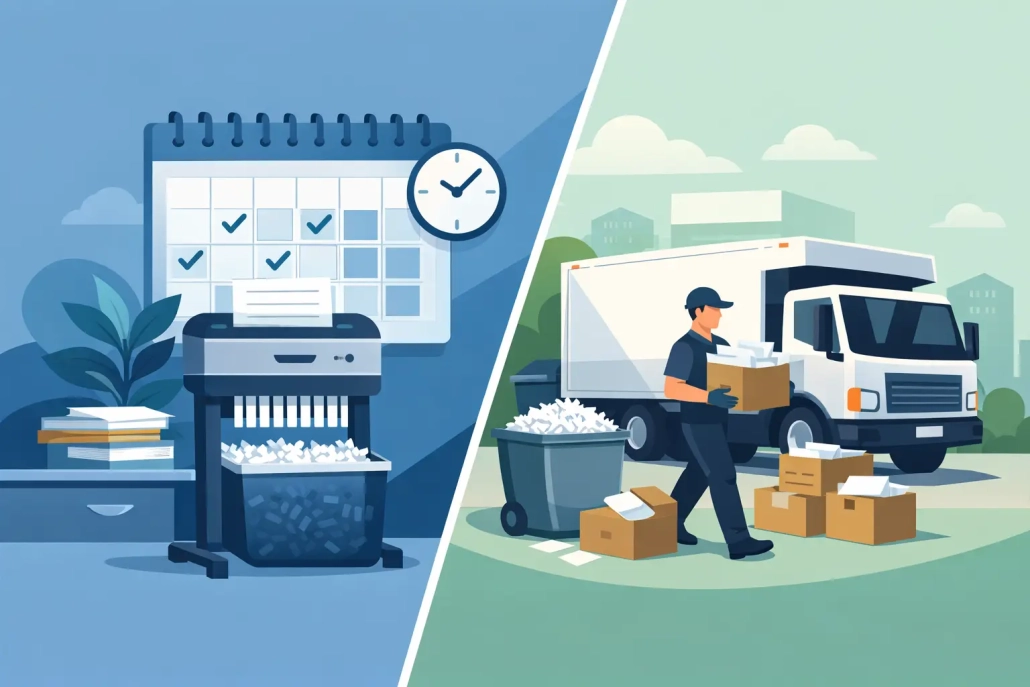
Scheduled shredding is an ongoing collection service. Your business receives secure containers, such as lockable 240-liter bins or security bags, and a collection team removes the contents on an agreed schedule. Pickups may be weekly, fortnightly, monthly, or set around the volume of confidential waste your workplace produces.
One-off shredding is designed for a defined cleanout. It is commonly used to destroy archive boxes, clear a records room, dispose of documents after a retention period ends, or remove a large volume of paperwork during an office relocation. The job is arranged when you need it, rather than as a recurring service.
Neither option is automatically better. A medical office producing patient paperwork every day has different needs from a law firm clearing ten years of closed files. The key is matching the service to the risk and volume of material on site.
When Scheduled Shredding Makes Sense
Scheduled shredding suits businesses that routinely handle information that should not enter normal recycling or trash. This can include customer forms, employee records, invoices, financial information, case notes, printed reports, internal correspondence, and documents containing personal or commercially sensitive details.
The biggest benefit is consistency. Instead of asking staff to decide where old papers should go, they can place them directly into a secure, lockable container. The documents remain protected until collection, reducing the chance of confidential information being left on desks, placed in general waste, or taken home for disposal.
A regular service also makes daily administration easier. Office managers do not need to book a separate job each time confidential paper builds up. Collection becomes part of the workplace routine, much like other essential facilities services.
Signs your business needs recurring collection
Scheduled service is often the practical choice if paperwork accumulates every week, multiple staff members handle private information, or your business has limited secure storage space. It is also a strong option where a clear chain of custody is needed for internal policies, client expectations, or privacy obligations.
For example, a school office may receive enrollment documents, health information, payment records, and staff paperwork throughout the year. Holding these papers until an annual cleanout creates unnecessary storage and security pressure. A scheduled collection process keeps disposal controlled as documents reach the end of their useful life.
Regular pickup can also be cost-efficient for businesses with predictable volumes. Rather than paying for repeated ad hoc collections, you can establish a service level that reflects your usual output and adjust it if your needs change.
When One-Off Shredding Is the Better Choice
One-off shredding is the right fit when the problem is concentrated in one place or tied to a specific project. You may have archive cartons in a storeroom, old files after a merger, records left behind by a previous tenant, or paperwork that is no longer required under your retention schedule.
This service is particularly useful when volume is high. Archive box destruction and pallet-scale archive removal allow businesses to clear large quantities of records without moving them through the office piece by piece. A secure collection team can remove the materials from your site and arrange destruction, saving staff from lifting, sorting, and transporting sensitive files themselves.
One-off jobs are also valuable after operational changes. An office move, digitization project, lease expiry, or department closure can uncover years of stored documents. The priority is to remove them securely and efficiently, not to let them sit exposed while staff work through a backlog.
One-off shredding is not a shortcut on security
A one-time collection should still provide the same standard of controlled handling as an ongoing service. Your confidential records need secure removal, documented destruction, and responsible recycling after destruction.
Ask whether a Certificate of Destruction is provided. This document gives your business evidence that the materials were destroyed and is useful for records management, audit trails, and internal compliance files. Metro Paper Destruction provides Certificates of Destruction free of charge, whether the job is a recurring collection or a major cleanout.
Compare the Cost Beyond the Pickup Price
It is reasonable to compare quotes, especially for large archive removal jobs. However, the lowest pickup price does not always represent the lowest business cost. Consider the staff time required to manage overflowing boxes, organize unsecured documents, book emergency collections, or prepare material for transport.
Scheduled shredding can reduce those hidden costs by preventing buildup. It gives staff a designated disposal point and avoids the scramble that often follows when storage space runs out. For steady document volumes, this predictable arrangement can make budgeting easier as well.
One-off shredding may be more economical when documents accumulate only occasionally. A business that completes a major file purge once a year does not necessarily need a bin sitting on site every month. In that case, paying for secure removal when the project occurs may be the more sensible choice.
The answer depends on frequency, volume, available storage, and risk. A good shredding provider should assess those details before recommending a collection format.
Security Questions to Ask Before You Book
Whether you choose scheduled pickup or a one-off cleanout, secure destruction should involve more than collecting paper in a truck. Your provider should be able to explain how materials are handled from collection through destruction and recycling.
Check that your workplace has suitable secure containers before collection day. Lockable bins prevent casual access in busy offices, while security bags can work well for smaller volumes or locations where a permanent bin is not required. For large archives, confirm that boxes and pallets can be collected directly from the storage area.
You should also confirm what can be included in the service. Paper files are the common requirement, but businesses may need to destroy CDs, branded uniforms, identification materials, or other items that could expose confidential information or be misused if discarded carelessly. Combining these materials into a planned destruction job can save time and simplify administration.
Finally, make sure the service includes clear proof of destruction. A certificate should not be an optional extra that appears later as an additional charge. It is part of the assurance that your organization has disposed of sensitive materials responsibly.
A Practical Way to Choose Your Service
Start by looking at the last three months of confidential waste. If staff are regularly filling boxes, holding documents in cabinets awaiting disposal, or using general recycling as a temporary solution, scheduled shredding is likely the safer and more convenient choice.
If your documents are mainly stored archives with a clear destruction date, estimate the number of boxes or pallets involved and arrange a one-off removal. Do not underestimate the space that old records consume or the risk they create while they remain accessible.
Some organizations need both. A business may use scheduled bins for everyday confidential waste, then book a separate one-off service to clear a backroom of old files. This combined approach keeps daily disposal under control while dealing decisively with historic records.
The best time to arrange secure destruction is before confidential material becomes a storage problem. Choose a collection format that staff can follow without hesitation, keep proof of destruction with your records, and request a free quote that reflects the actual volume and service level your business needs.


Leave a Reply
Want to join the discussion?Feel free to contribute!