
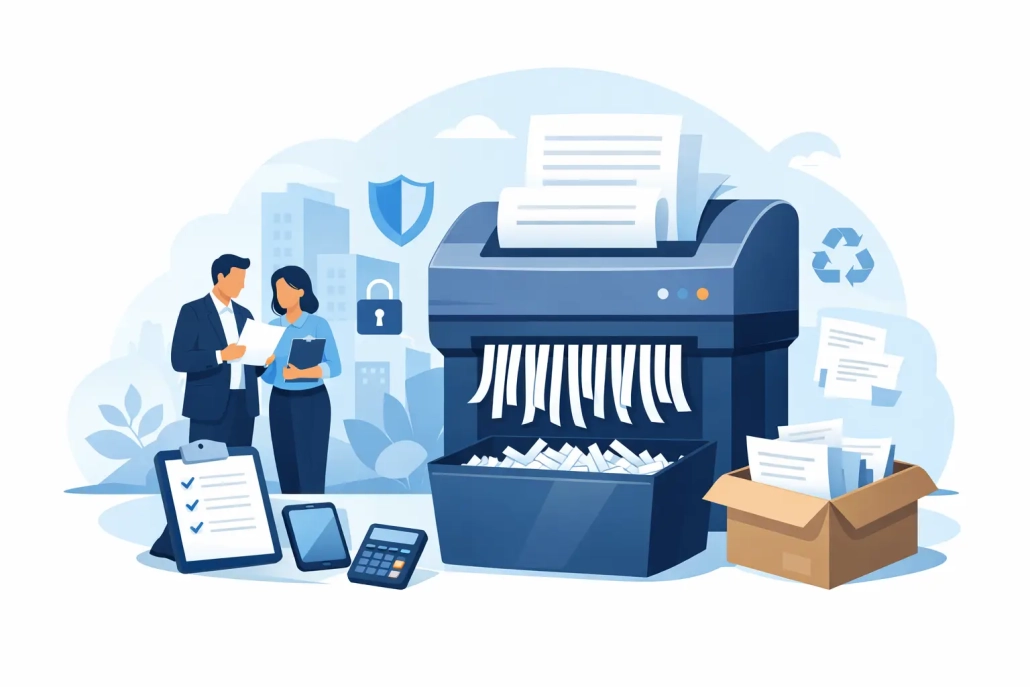
Get a Free Shredding Quote for Your Business
A free shredding quote should tell you more than a price. It should show exactly how your confidential records will be collected, secured, destroyed, and documented. For Melbourne businesses, that clarity matters when staff files, client records, financial paperwork, medical information, and archived documents are involved.
The lowest number is not always the lowest-risk option. A useful quote accounts for the volume of material, the pickup method, the level of service required, and the proof you receive after destruction. It lets you budget accurately while making sure sensitive information does not end up in an unsecured bin, storage room, or general recycling stream.
What a Free Shredding Quote Should Cover
A proper quote starts with the practical details of your job. Are you clearing a few archive boxes from a storeroom, setting up regular secure waste collection for an office, or arranging a large archive removal from multiple sites? Each job has different handling and logistics requirements, so a one-size-fits-all price is rarely useful.
Your quote should identify the materials to be destroyed. Paper records are the most common requirement, but many organizations also need secure destruction of archive boxes, CDs, uniforms, identification items, branded clothing, or other confidential materials. Stating this upfront prevents surprises on collection day and helps ensure the right service is scheduled.
It should also make clear whether you need a one-off clean-out, an on-call pickup, or a scheduled ongoing service. A law office with daily confidential waste has different needs from a school conducting an annual records purge. The right arrangement keeps secure disposal manageable without paying for a service level you do not need.
The Details That Affect Shredding Costs
Businesses often ask why shredding prices vary. The answer is simple: secure destruction involves collection, handling, transport, destruction, documentation, and recycling. The cost depends on how much material there is and how efficiently it can be collected.
Volume is usually the first factor. A small number of bags or boxes can be collected quickly, while pallet-scale archive removal requires more labor, vehicle capacity, and planning. If records are stored in labeled archive boxes, estimate the number of boxes. If documents are loose, a description of the cabinet, bin, or storage area helps provide a more accurate price.
Access matters as well. Ground-floor collection with parking nearby is generally faster than removing boxes from upper floors, basements, or a crowded records room. Let the provider know about stairs, elevators, loading docks, restricted access times, and site security procedures. These are normal operational details, not complications, and sharing them early helps avoid delays.
Frequency also affects value. Regular scheduled collection using lockable 240-liter bins or secure bags can be a cost-effective option for businesses that generate confidential waste each week or month. For older files taking up valuable space, a one-off archive clean-out may be the better choice. A dependable provider should help you choose based on your actual document flow, not push every customer into the same program.
Free Shredding Quote for Ongoing or One-Off Service
A free shredding quote should fit the way your business works. For ongoing service, secure containers are placed at your premises so employees have a designated place for confidential paper. Lockable bins reduce the chance of records being mixed with general waste, left beside printers, or carried around the office until someone has time to deal with them.
Scheduled pickups suit offices, medical practices, professional firms, schools, and organizations that need a regular routine. Your staff place material in the secure container, and collection is arranged at an agreed frequency. This reduces internal handling and gives managers a clear process for confidential waste.
On-call pickups offer flexibility for businesses with uneven volumes. You may have periods with very little confidential waste followed by a records cleanup, office move, audit preparation, or storage-room clear-out. In those cases, paying only when collection is needed can make more sense than maintaining a fixed schedule.
One-off destruction is designed for accumulated records. Archive boxes, old files, outdated reports, employee records beyond their retention period, and redundant paper storage can all be removed in one coordinated job. For larger projects, it is worth asking whether the provider can remove boxes directly from storage areas and manage pallet-scale loads. This saves your team from spending hours moving heavy records to a central location.
Security Is Part of the Price
When comparing quotes, do not separate price from security. A cheap collection is not good value if your documents sit in an unlocked container, pass through multiple unknown hands, or leave you with no evidence that destruction occurred.
Look for a clear chain of custody from the moment material is collected. Secure containers, trained collection staff, controlled transport, and documented destruction all reduce the risk of accidental exposure. This is particularly relevant for organizations handling personally identifiable information, health records, legal files, payroll documents, banking information, student data, or commercially sensitive plans.
A Certificate of Destruction should be included after the service. This document provides a record that your confidential materials were destroyed and is useful for internal files, compliance checks, and audit preparation. It also gives decision-makers confidence that the job was completed rather than simply removed from the premises.
Recycling should be part of the process after secure destruction. Businesses should not have to choose between protecting confidential information and managing waste responsibly. Properly destroyed paper can be recycled, helping reduce the burden of archived records while supporting environmental responsibilities.
How to Request an Accurate Quote Quickly
You do not need a perfect inventory to request a quote. A short description of the job is enough to get started. State whether you need regular collection or a one-time service, the approximate number of bags, bins, or archive boxes, and your Melbourne location. Mention any non-paper items such as CDs or uniforms, along with access details that may affect collection.
Photos can be useful for larger archive clean-outs, especially when records are stored on shelves, in cartons, or on pallets. They help the provider assess vehicle requirements, staff time, and whether boxes need to be removed from a particular floor or room. For sensitive locations, you can discuss the job without showing document contents.
Ask what is included in the quoted price. Confirm collection, secure destruction, recycling, and the Certificate of Destruction are covered. If you are comparing providers, make sure the quotes are based on the same volume and service scope. A lower price may exclude box removal, secure containers, documentation, or other essentials.
Metro Paper Destruction provides Melbourne businesses with secure collection options for recurring confidential waste and larger destruction projects. With flexible pickups, lockable bins, archive removal, and a free Certificate of Destruction, the service is built to reduce both risk and administrative work. If you already have a competing price, ask about the quote-beating guarantee before making a decision.
When It Is Time to Arrange Destruction
Do not wait until a storeroom is full or an office move is days away. Excess paper creates a security exposure, takes up usable space, and makes it harder to find the records you genuinely need. A planned collection gives your business a controlled way to clear outdated material without asking staff to sort, transport, or dispose of confidential documents themselves.
The most useful quote is one that matches your volume, access, and security requirements from the beginning. Provide the basics, ask what is included, and choose a collection plan your team can maintain. That turns confidential waste from a recurring concern into a straightforward part of running an organized business.


Leave a Reply
Want to join the discussion?Feel free to contribute!