
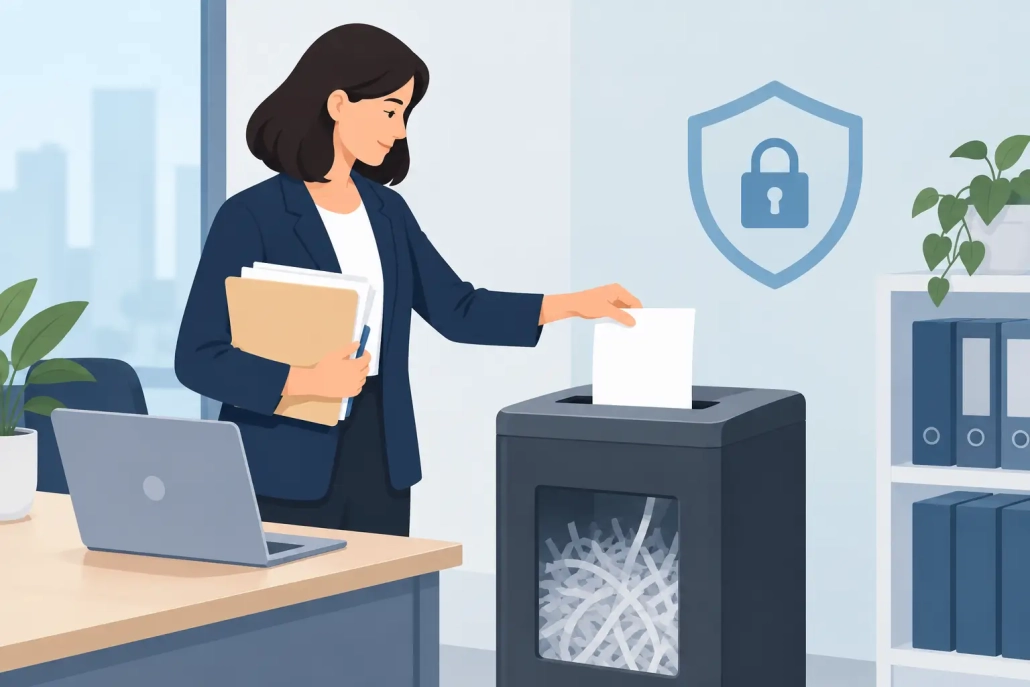
How to Dispose of Client Files Securely at Work
Client files do not become harmless when they are no longer needed. A file marked closed may still contain names, addresses, identification details, financial records, health information, signatures, correspondence, and internal notes. Knowing how to dispose client files properly is a basic part of protecting your customers, your staff, and your business reputation.
Throwing paperwork into office recycling, leaving archive boxes beside a dumpster, or relying on an employee to shred records a few pages at a time creates unnecessary exposure. A secure destruction process gives your business a controlled way to remove confidential material, document what happened to it, and clear valuable space at the same time.
Why client file disposal needs a secure process
Most businesses retain records for a defined period, then reach a point where those documents become a storage burden. The risk begins when retention ends but security does not. Client files often contain enough information for identity theft, fraud, unauthorized contact, or a privacy complaint, even when they are several years old.
The issue is not limited to paper files. Printed reports, intake forms, invoices, payroll records, case notes, scanned documents, old CDs, USB media, and branded uniforms can all reveal information that should not leave your control. A box labeled “old files” can be especially tempting to handle casually, but its contents may be the most sensitive records in the building.
A sound disposal process creates accountability. It identifies what can be destroyed, keeps it secure while it waits for collection, transfers it through a documented chain of custody, and provides confirmation once destruction is complete. This is far more dependable than hoping a general waste or recycling contractor handles confidential material correctly.
How to dispose client files without creating risk
Start by separating records that have reached the end of their required retention period from records that must still be kept. Your legal, regulatory, contractual, and internal obligations will determine the right timeframe. If there is a dispute, audit, investigation, or legal hold connected to a file, do not destroy it simply because it is old. Put it aside and confirm its status first.
Once files are approved for disposal, avoid sorting through every page unless there is a clear reason to do so. Excess handling increases the chance that papers are misplaced, viewed by unauthorized staff, or left on desks. Keep whole client files together where possible and place them directly into secure containers or archive boxes for destruction.
For routine office paperwork, lockable security bins are usually the most practical option. Staff can deposit confidential documents as they arise, rather than building stacks of papers near a printer or filing cabinet. A 240-liter lockable bin works well for offices that generate regular volumes of records and want a simple, repeatable collection process.
For smaller volumes, secure bags can be a better fit. They provide a controlled option for occasional document cleanouts, department moves, or staff who work across multiple locations. For archive rooms, closed practices, office relocations, or major retention cleanouts, archive box removal or pallet-scale collection may be the more efficient choice. The right method depends on volume, available space, and how often your business needs service.
Do not rely on an office shredder
An office shredder has a place for a few pages, but it is not a complete destruction system for client records. Staff need time to remove staples, feed small batches, empty bins, clean jams, and manage shredded waste afterward. That work adds up quickly, especially during a large archive purge.
There is also a security gap. Shredder waste is often stored in open bags or desk-side bins before it is removed. If the paper is transported by ordinary waste services, your business may have no clear record of where it went or whether it was securely destroyed.
Professional document destruction is designed to remove those gaps. Material is collected in secure containers, transferred for destruction under controlled procedures, and processed for recycling. Your team does not have to spend hours feeding paper into a machine, and confidential documents do not sit exposed while waiting for disposal.
Choose a service that proves destruction occurred
A provider should be able to explain exactly how collection and destruction are handled. Vague assurances are not enough when client privacy is involved. Look for a service that uses secure collection equipment, trained personnel, controlled handling, and a clear record of service.
A Certificate of Destruction is an important part of that record. It confirms that the material was collected and destroyed through the service provider’s secure process. Keep the certificate with your records, particularly if your organization is subject to privacy obligations, client audits, industry standards, or internal compliance reviews.
At Metro Paper Destruction, Certificates of Destruction are issued free of charge after secure destruction. This gives Melbourne businesses practical evidence that confidential files have been removed from their control and processed appropriately, without adding an extra administrative cost.
Collection flexibility matters as well. A scheduled pickup suits businesses with a steady flow of confidential waste. An on-call pickup may work better for firms that only generate records periodically. A one-off cleanout is often the right answer when clearing an archive room, preparing for a move, or disposing of records after a long retention period. There is no advantage in paying for a service model that does not match your actual workflow.
Build file destruction into everyday operations
The safest disposal program is one employees can follow without guesswork. Assign clear responsibility for records retention and secure waste collection, but make the daily process simple for everyone. Staff should know which documents belong in confidential waste and which can go into normal recycling.
This includes more than client folders. Put a process in place for printed emails, draft contracts, copies of identification, rejected applications, meeting notes, financial reports, staff records, and documents left behind after scanning. These papers are easy to overlook because they may not be stored in the formal filing system.
For higher-risk teams, place locked bins close to where records are created or handled. Reception areas, medical administration desks, legal teams, payroll departments, accounts offices, and records rooms are common examples. Convenience is a security measure: when a lockable bin is nearby, staff are less likely to leave sensitive documents in an open recycling container until later.
It also helps to set a regular review date for stored archives. Instead of waiting until every cabinet is full, review retention schedules annually or quarterly and arrange removal of approved files. Smaller, planned destruction jobs are easier to manage than a rushed cleanup after a move notice or storage overflow.
Include digital media and uniforms in your disposal plan
Paper is not the only material that can expose client information. CDs, DVDs, hard copies of digital backups, and other media may contain records that should not enter ordinary waste. Secure media destruction helps prevent outdated data from being recovered or accessed after disposal.
Uniforms, ID-bearing garments, and branded workwear deserve similar attention. A logo, name badge, department label, or company design can be misused if old uniforms are discarded without control. Secure uniform disposal protects your business identity while keeping unwanted textiles out of general waste where possible.
Treat all of these items as part of one confidential disposal policy. That makes training easier and reduces the chance that one category of sensitive material is handled carefully while another is forgotten.
Secure disposal also supports a cleaner workplace
Archive boxes take up room that could be used for productive work, and overflowing cabinets make it harder to find records that must be retained. Removing expired client files gives teams a more organized workplace while reducing the volume of sensitive material held on site.
Secure destruction does not have to mean waste. After confidential paper is destroyed, it can be directed into recycling streams rather than landfill. The key is using a process that protects information first, then manages the remaining material responsibly.
If old files are taking over your office, do not wait for a relocation, audit, or security incident to force a decision. Confirm what can be destroyed, place it in a secure container, and arrange a collection method that fits how your business operates.


Leave a Reply
Want to join the discussion?Feel free to contribute!