
Media Destruction Review for Secure Disposal
A media destruction review should begin before a box, disk, or bag leaves your workplace. Confidential information is not protected simply because it has been placed in recycling or cleared from a storage room. Your provider must collect it securely, maintain control through destruction, and give your business clear proof that the job was completed.
For office managers, records teams, and compliance staff, the right service removes a daily risk without creating extra work. The best choice depends on what you need destroyed, how often material accumulates, and whether you need recurring collection or a one-time cleanout.
What a Media Destruction Review Should Cover
A useful review is not just a comparison of prices. Low pricing matters, but a cheap service can create an expensive problem if confidential records are handled carelessly. Assess the entire process: containment at your site, collection, transport, destruction, recycling, and documentation.
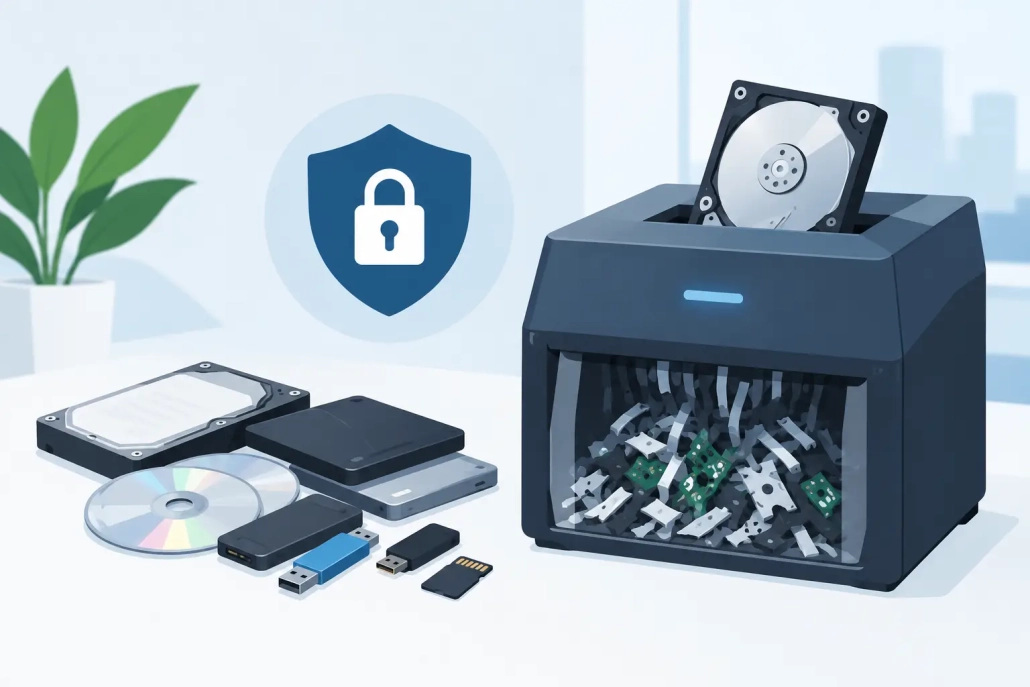
Start with the materials involved. Paper records may contain customer details, employee files, financial information, legal documents, medical data, internal reports, or old correspondence. Digital media can hold the same information in a smaller format. CDs, DVDs, backup disks, branded uniforms, identification items, and archived files all require a disposal process that prevents reuse or recovery.
A provider should be specific about what it accepts and how it manages each material type. “Secure disposal” is too broad on its own. Ask whether archive boxes can be removed in bulk, whether CDs are physically destroyed, and whether uniforms are handled in a way that prevents your company name or branding from being misused.
Security Starts at the Collection Point
The weakest part of a destruction process is often the point where waste waits to be collected. Open office recycling bins, unlocked cartons, and bags left near loading areas invite unauthorized access. A secure provider should offer practical containment suited to the volume of material your team generates.
For ongoing paper disposal, lockable 240-liter bins give staff one simple place to deposit confidential waste. The material stays contained until collection, reducing the number of people who handle it internally. Security bags can be a better fit for smaller offices, remote locations, or teams with lower volumes.
For archive cleanouts, the process should be just as controlled. Employees should not have to feed years of records through a small office shredder or leave full boxes in a hallway while deciding what to do next. A provider that can remove archive boxes, pallets, or large quantities of records directly from the site saves time and keeps the workplace organized.
Chain of Custody Is More Than a Promise
Chain of custody means knowing who is responsible for confidential material at every stage. Your business needs confidence that records are collected by authorized personnel, loaded securely, transported appropriately, and delivered for destruction without being diverted, misplaced, or exposed.
During a provider review, ask direct questions about collection procedures. How are bins or bags identified? Who collects them? Is there a documented handover? What happens to material after it leaves the site? A dependable answer should describe a clear operating process, not rely on vague assurances.
This matters most for businesses that manage sensitive information at scale. A law firm disposing of case files, a medical practice clearing patient records, or a school removing administrative archives cannot treat confidential waste as ordinary trash. The risk includes privacy breaches, reputational damage, and avoidable internal disruption.
Certificates of Destruction Provide Proof
A Certificate of Destruction is a practical record that your provider completed the service. It supports your internal disposal procedures and gives compliance, operations, or management teams evidence that confidential materials were securely destroyed.
Do not assume a certificate is included. Confirm whether it is issued for every service or project, whether it is provided at no extra charge, and what details it records. The document should be easy to file with your records-management paperwork, particularly when you are clearing a large archive or disposing of a defined set of materials.
A certificate does not replace sensible internal controls. Your team still needs a clear retention schedule, authorized staff, and secure storage before pickup. But it closes the loop once the material has been handed over. Without proof of destruction, a business may struggle to demonstrate that it followed its own secure disposal process.
Compare Pickup Options With Your Actual Workload
The right pickup frequency is a cost and security decision. Schedule collections too infrequently and secure bins can become overfilled, leading staff to create unsafe overflow piles. Schedule them too often and you may pay for capacity you do not use.
Regular scheduled service is usually best for offices with predictable confidential waste. It gives staff a consistent routine and prevents the gradual buildup of sensitive papers. On-call collection suits organizations whose volumes change from month to month, while one-time pickups are ideal for office moves, storage-room cleanouts, end-of-retention projects, and archived-record disposal.
Flexibility matters because confidential waste rarely follows a perfect schedule. A business may need routine bins for daily paperwork, then a separate archive removal after a retention review. Look for a provider that can handle both without forcing you into an unsuitable long-term arrangement.
Price should be clear before collection is booked. Ask whether pricing is based on bins, bags, boxes, volume, labor, or pickup frequency. For major cleanouts, request a quote that accounts for access conditions, quantity, and any special materials. A competitive quote is valuable only when the secure service scope is equally clear.
Recycling Should Follow Secure Destruction
Secure disposal and responsible recycling should work together. Once confidential paper has been destroyed, the resulting material can be directed into recycling rather than landfill. This allows your organization to protect information while reducing unnecessary waste.
The order is critical. Recycling is not a substitute for destruction. Documents should first be handled through a controlled confidential-waste process so names, account details, signatures, and internal information cannot be read or retrieved. Only then should the material enter the recycling stream.
The same practical mindset applies to obsolete physical media and uniforms. Your priority is preventing recovery, reuse, or unauthorized representation of your organization. Ask the provider how the material is destroyed and what happens afterward, rather than assuming all items can be processed in the same way as paper.
Questions to Ask Before You Book
A short conversation can reveal whether a provider is set up for your requirements. Ask about the types of material accepted, available secure containers, collection timing, archive-removal capacity, Certificates of Destruction, and pricing for the service you need.
You should also explain the practical details at your site. Are records stored upstairs? Is there elevator access? Are boxes already packed? Do collections need to occur at particular times? These details help avoid delays and allow the provider to plan an efficient removal.
For recurring service, ask how easily pickup frequency can change as your business grows or your paper use declines. For a one-time project, confirm what your staff must prepare and what the collection team will handle. Good service should reduce the burden on your employees, not transfer it to them.
A Practical Standard for Secure Disposal
The strongest provider is not necessarily the one with the longest sales pitch. It is the one that can explain exactly how confidential material is contained, collected, destroyed, documented, and recycled. It should offer a service format that fits your workplace and pricing that makes commercial sense.
Metro Paper Destruction provides Melbourne businesses with lockable bins, security bags, scheduled and on-call pickups, archive box removal, CD destruction, uniform disposal, and free Certificates of Destruction. That combination is designed for organizations that need secure disposal without turning records management into another full-time task.
Before your next cleanout or collection, walk through the path your confidential material takes from desk or storage room to final destruction. Any uncertainty in that path is a reason to ask better questions and put a secure service in place.


Leave a Reply
Want to join the discussion?Feel free to contribute!