
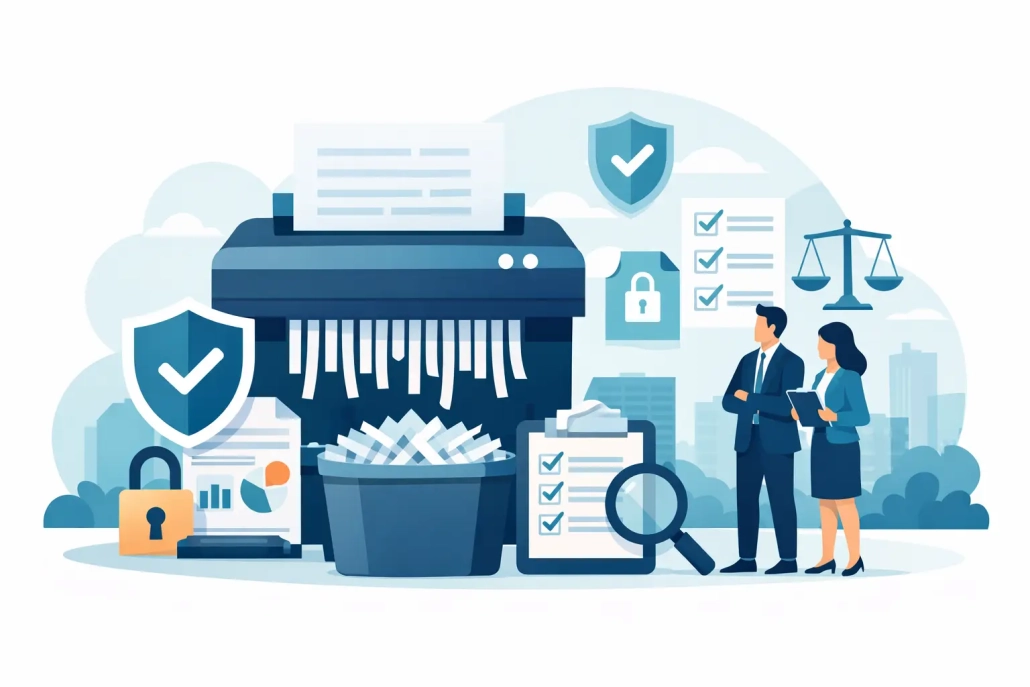
Business Shredding for Compliance That Stands Up
A locked filing cabinet is only secure until its contents leave the office. Business shredding for compliance gives sensitive paper records, archived files, uniforms, and media a controlled end point instead of leaving them exposed in recycling bins, storage rooms, or general trash. For Melbourne organizations handling customer, employee, financial, medical, legal, or internal business information, secure destruction is a practical part of managing risk.
Compliance is not simply about shredding paper once a year. It is about knowing what must be retained, what can be destroyed, who handled it, and whether you can demonstrate that destruction was completed properly. A dependable destruction process reduces the chance of a privacy breach while freeing up valuable office and archive space.
What Business Shredding for Compliance Actually Covers
Businesses often treat document disposal as a housekeeping task. It is more accurately a records management and privacy responsibility. Paper containing names, addresses, account details, signatures, health information, payroll data, client files, student records, or commercially sensitive material should not be placed in ordinary waste or unsecured recycling.
A compliant process starts before collection. Your organization needs a retention schedule that identifies which records must be kept and for how long. Retention obligations vary by industry, document type, contract, tax requirement, and internal policy. Destroying a file too early can create as much trouble as keeping it too long.
Once records have reached their approved destruction date, they should move into a secure disposal stream. That means employees do not take confidential material home to shred, leave archive boxes near loading docks, or rely on an office shredder for bulk disposal. Office shredders may suit the occasional page, but they are slow, inconsistent, and difficult to monitor when large volumes are involved.
The Risk of Ordinary Disposal
A document does not need to contain a full client file to cause a problem. A single printed report, old invoice, staff roster, damaged ID copy, or discarded letter can reveal enough information to support fraud, unauthorized contact, or a privacy complaint.
Unsecured disposal also creates an accountability gap. If a box of records is sent to general recycling, who can confirm where it went, whether it was accessed, or whether it was destroyed? In a review, audit, or incident investigation, “we put it in the recycling” is not a reliable answer.
The same principle applies beyond paper. Obsolete CDs, branded uniforms, identification cards, and other materials can expose confidential information or create reputational risk if they are discarded without control. Uniform destruction, for example, helps prevent old branded clothing from being reused inappropriately or representing your business after disposal.
A Secure Chain of Custody Matters
The strongest business shredding for compliance process is built around chain of custody. From the moment a document is set aside for destruction, access should be limited and each stage should be controlled.
For ongoing office waste, lockable 240-liter security bins provide a simple starting point. Staff place confidential paper directly into the bin rather than collecting piles at desks or using open recycling containers. The contents remain secured until an authorized collection takes place.
For smaller volumes or individual departments, security bags can provide the same controlled handoff. For archive clean-outs, boxed records can be collected directly from the site. The right format depends on your volume, available space, collection frequency, and the sensitivity of the material.
A professional provider should collect the material securely, transport it for destruction, and provide a Certificate of Destruction. That certificate is a useful record for your compliance file because it confirms the service was completed. It does not replace your retention policy or broader legal advice, but it provides evidence that approved material entered a documented destruction process.
Choose the Service Format That Fits Your Records
There is no need to overcomplicate secure destruction, but the service must match how your workplace operates. A busy medical practice, law office, school, warehouse, or corporate office will not have the same disposal needs.
Scheduled pickups work well when confidential paper is generated consistently. A lockable bin is placed on site and collected at an agreed frequency, helping staff follow one clear disposal routine. This approach is useful for organizations that want predictable costs and no buildup of sensitive paper.
On-call pickups suit businesses with irregular volumes. You may have occasional report runs, staff file clean-outs, project documents, or end-of-year records that do not justify a regular service. A one-off clean-out is often the better choice when an office is relocating, archive storage is being reduced, or old files have reached their destruction date.
For larger projects, pallet-scale archive removal avoids the wasted time and security concerns of moving boxes yourself. Instead of loading confidential files into private vehicles or leaving them in a common area, arrange for secure collection from your premises. This is particularly valuable when a records room, off-site storage area, or warehouse contains years of archived boxes.
Build Shredding Into Daily Compliance Procedures
The best system is the one employees can follow without guessing. If secure disposal relies on someone remembering a special process each time, confidential paper will eventually end up in the wrong bin.
Start by identifying every place sensitive material is created. That may include reception desks, printers, finance offices, HR areas, meeting rooms, clinical spaces, warehouse administration, and remote work locations. Place secure bins or security bags where employees naturally handle confidential material.
Then make the instructions clear. Employees should know that confidential records go into the secure disposal stream, not ordinary recycling. They should also understand what to do with misprints, duplicate reports, client notes, labels, media, and branded uniforms. A short induction reminder and occasional refresher are usually more effective than a lengthy policy no one reads.
Your records manager, office manager, or compliance lead should also keep a simple destruction register. Record the date, material category, approximate volume, retention authorization, provider details, and Certificate of Destruction reference. This does not need to become a burden. It simply gives your business a clear audit trail.
Questions to Ask a Shredding Provider
Price matters, especially for recurring services or large archive projects, but the cheapest option is not always the lowest-risk option. Before arranging a service, confirm how your material will be contained, collected, transported, destroyed, and documented.
Ask whether lockable bins and security bags are available, whether pickup can be scheduled or booked on demand, and whether archive boxes can be removed from your site. Confirm that Certificates of Destruction are supplied without added charges. If you have CDs, uniforms, or other non-paper materials, ask whether those items can be destroyed through the same provider.
It is also worth checking service responsiveness. A provider may be suitable for a routine monthly pickup but unable to assist when you need a fast office clean-out or a large archive removal. Flexible collection options matter when compliance deadlines, relocations, renovations, or storage costs force a quick decision.
Make Disposal a Controlled Business Process
Secure destruction works best when it is treated as part of your normal operating controls, alongside access management, records retention, and staff training. The goal is not to create more paperwork. The goal is to prevent confidential materials from becoming an uncontrolled liability once they are no longer needed.
Metro Paper Destruction provides secure collection across Melbourne, including lockable bins, security bags, scheduled and on-call pickups, archive box removal, CD destruction, uniform disposal, and free Certificates of Destruction. A free quote makes it easier to set up the right service level without paying for capacity you do not need.
If old files are taking over a storage room or confidential paper is still finding its way into ordinary recycling, address it before it becomes an incident. Put a secure collection process in place, keep the proof of destruction, and give your team one clear way to dispose of sensitive material properly.


Leave a Reply
Want to join the discussion?Feel free to contribute!