
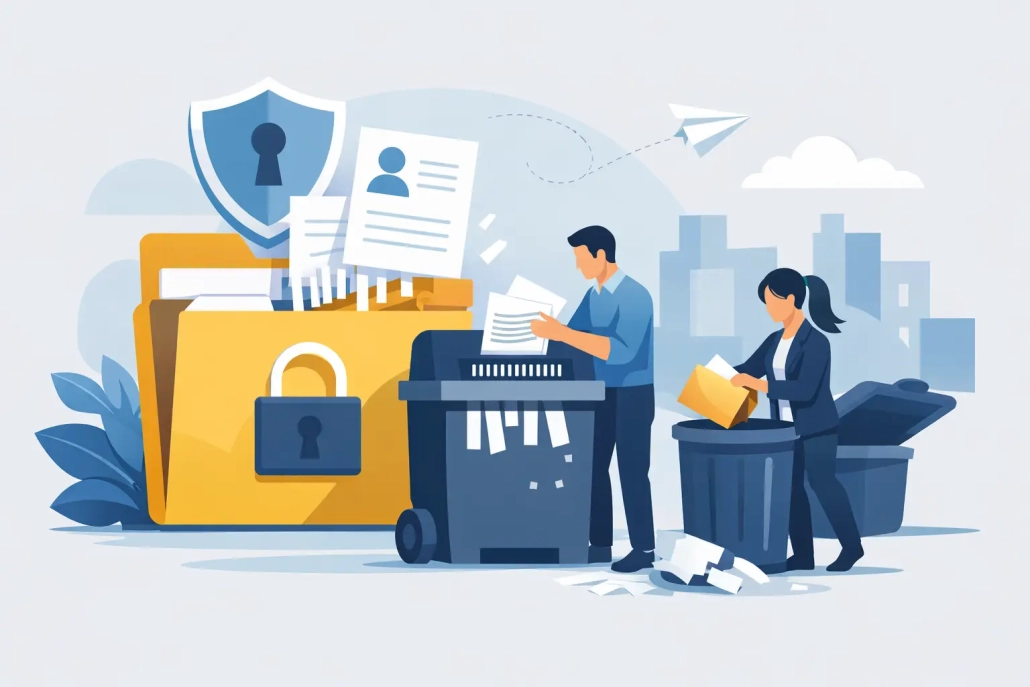
How to Dispose Confidential Files Safely
A file room cleanup can turn into a data breach risk faster than most offices expect. If you are figuring out how to dispose confidential files, the key is not just getting rid of paper. It is making sure sensitive information stays protected from the moment it leaves a desk until it is fully destroyed and recycled.
For businesses, that means thinking beyond the office shredder. Client records, HR files, financial paperwork, legal documents, medical information, internal reports, and archived boxes all need a secure chain of custody. If those files are mishandled at any point, the damage can be expensive, reputational, and in some cases regulatory.
How to dispose confidential files without creating risk
The safest approach is simple. Identify what qualifies as confidential, separate it from general recycling, secure it in locked containers or sealed bags, and have it collected for destruction by a professional document destruction provider. That process reduces staff handling, limits exposure, and gives your business proof that the material was destroyed properly.
A lot of companies leave file disposal too late. Boxes build up in storage rooms, old personnel records sit in cabinets, and outdated client files stay on site because no one wants to deal with them. That delay creates two problems. First, the information remains accessible for longer than necessary. Second, when it is finally time to clear it out, the volume is usually too large for an internal shredder to handle efficiently.
Professional destruction is often the more practical option because it is designed for real business volumes. Whether you have a few bags each month or pallets of archive boxes from a large cleanout, the process is faster, more secure, and easier to manage.
What counts as a confidential file
If a document contains personal, financial, legal, medical, operational, or proprietary information, it should be treated as confidential. That includes obvious records such as tax files, payroll reports, customer applications, contracts, and employee documents. It also includes less obvious material like printed emails, internal meeting notes, labels, draft reports, and copies left near shared printers.
In many offices, confidential waste gets mixed into ordinary paper because staff are making quick decisions during a busy day. That is where clear disposal systems matter. When locked bins or security bags are available, staff do not have to guess. Confidential paper goes in one place, and it stays protected until pickup.
Confidential disposal can also go beyond paper. Many businesses need secure destruction for CDs, archived media, branded uniforms, and boxed records that still contain identifying information. If the item exposes your business, your staff, or your customers when discarded, it should be securely destroyed rather than thrown out with standard waste.
Why office shredders are not always enough
A desktop shredder works for low volumes, but it has limits. It is slow, noisy, prone to jams, and it still depends on employees feeding documents through by hand. That means more staff time, more opportunity for documents to be left unattended, and more inconsistency in how disposal is handled.
There is also the issue of scale. Once you are dealing with archive rooms, end-of-year file purges, relocation cleanouts, or compliance-driven record destruction, in-house shredding usually stops being realistic. Staff should not spend hours tearing down boxes and feeding paperwork into a machine when a secure collection service can remove the material in one visit.
The other factor is evidence. Many organizations need a clear record that destruction took place. A professional provider can issue a Certificate of Destruction, which is useful for internal governance, audits, and peace of mind.
The right process for ongoing file disposal
If your business handles confidential paper every week, the best setup is a scheduled service. Locked consoles, secure bins, or security bags are placed on site so staff can dispose of documents immediately. On a set schedule, the material is collected and destroyed.
This works well for offices, medical practices, legal firms, schools, and any organization that produces steady volumes of sensitive waste. It keeps the workplace organized, reduces build-up, and removes the need for staff to manage destruction internally.
There is also a practical cost benefit. Regular service helps prevent large backlog cleanouts, which are harder to manage and easier to postpone. Instead of waiting until storage becomes a problem, your disposal process becomes part of normal operations.
How to handle one-time archive cleanouts
Not every business needs weekly or monthly pickups. Sometimes the issue is a storage room full of old files, a records retention review, or an office move that forces years of archived paperwork to be cleared out at once.
In that situation, one-time destruction is often the best fit. Archive boxes can be removed in bulk, loaded securely, and destroyed without your team having to sort through every page by hand. If the files are already packed, that makes the process even easier. If they are loose, a provider can usually recommend the most efficient collection method.
The main thing is not to let volume push you toward shortcuts. Dumpsters, open recycling bins, and general junk removal are not suitable for confidential records. If the material contains sensitive information, it needs a secure destruction process from pickup to final disposal.
How to choose a secure destruction provider
When comparing providers, security should be the first question, not the last. Ask how the files are stored before pickup, how they are collected, whether containers are locked, and whether a Certificate of Destruction is included. You also want to know whether they can handle the specific material you need destroyed, such as boxed archives, CDs, or uniforms.
Responsiveness matters too. Some businesses need ongoing scheduled collections, while others need an urgent pickup after an audit, office relocation, or end-of-lease cleanout. A provider should be able to offer both planned service and on-call support.
Price is important, but it should be considered alongside chain-of-custody controls and service reliability. Cheap disposal is not a bargain if it increases risk or creates extra work for your team. The best service is one that is secure, straightforward, and cost-effective at the same time.
How to dispose confidential files in a way that supports compliance
Different industries have different obligations, but the practical standard is the same. Sensitive records should be retained for the required period, then destroyed in a controlled manner once they are no longer needed. Holding files forever is not safer. It usually means more clutter, more unmanaged information, and more exposure if unauthorized access occurs.
A documented destruction process helps support compliance because it shows your business is not treating confidential disposal casually. Secure bins, scheduled pickups, controlled handling, and destruction certificates all help demonstrate that records are being managed responsibly.
It also helps standardize behavior across departments. Without a set process, one team may lock documents away while another drops them in regular recycling. That inconsistency is where avoidable risk starts.
Common mistakes businesses make
The biggest mistake is assuming old files are harmless. Age does not reduce sensitivity. Archived client records, old HR files, and previous financial statements can still expose names, addresses, account details, signatures, and internal business information.
Another common problem is storing material in unsecured areas while waiting for disposal. Boxes left near loading docks, in shared storage spaces, or beside regular trash are vulnerable long before they reach destruction.
Businesses also underestimate how much staff time internal disposal consumes. If managers, administrators, or compliance staff are spending hours organizing shredding, that is a process issue. Secure disposal should reduce workload, not add to it.
A better way to keep file disposal under control
For most organizations, the best answer is a simple one. Put secure collection points where confidential paper is generated, schedule pickups that match your volume, and use one-off removals when archives need to go. That keeps sensitive material moving out of the workplace safely instead of piling up in cabinets and back rooms.
If your business also needs destruction for media, boxed records, or branded uniforms, it makes sense to use a provider that can handle those items through the same secure service model. That simplifies procurement, reduces handling, and gives your team one clear process to follow.
Metro Paper Destruction works with businesses that want exactly that – secure removal, dependable service, and proof of destruction without unnecessary complexity. Whether you need locked bins for routine disposal or bulk archive removal for a major cleanout, the goal is the same: protect information, clear space, and get the job done properly.
Confidential files should never sit around waiting for the right time to deal with them. The right time is when you can remove the risk, tighten the process, and make secure destruction part of normal business operations.


Leave a Reply
Want to join the discussion?Feel free to contribute!