
Confidential Waste Melbourne for Business
A file room packed with old client records is not just a storage problem. It is a security risk, a compliance risk, and in many workplaces, a task nobody wants to own. That is why confidential waste Melbourne services matter for businesses that handle private information every day.
For office managers, practice managers, operations teams, and business owners, the real issue is simple. Sensitive paperwork, archived files, branded uniforms, and old media cannot just be thrown into general recycling. Once those materials leave your control without a secure chain of custody, your business is exposed.
What confidential waste Melbourne services actually cover
Confidential waste is broader than most businesses think. It includes everyday paperwork with names, addresses, account details, medical notes, legal records, HR files, and internal financial information. It also includes archive boxes full of old records, CDs and other media, and uniforms that still carry your brand or staff identity.
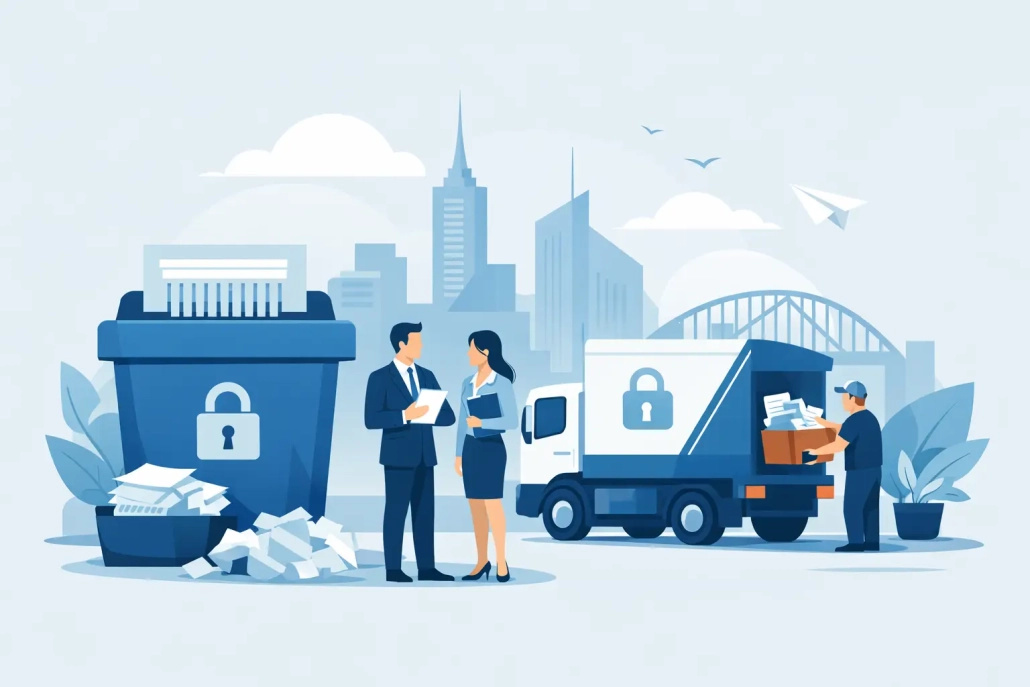
A proper confidential waste Melbourne service is designed to remove those materials securely and destroy them in a way that protects your business. That usually means lockable containers on site, controlled collection, secure transport, documented destruction, and responsible recycling where possible.
This is where many businesses draw the line between general waste handling and a true secure destruction service. If there is no locked containment, no documented pickup process, and no Certificate of Destruction, you are not getting much protection.
Why businesses outsource confidential waste
Most businesses do not have the time, staff, or internal systems to manage secure destruction properly. Even if someone in the office takes bags of paper to a shredder or a public recycling point, that process creates gaps. Materials can sit unattended. Boxes can be mislabeled. Files can be moved by the wrong person. The risk builds quietly.
Outsourcing fixes that by putting the job into a controlled process. It also saves staff time. Instead of asking employees to sort, carry, shred, and document disposal, you use a service built for volume, routine, and accountability.
There is also a cost angle. Keeping archived documents on site for too long takes up space that could be used better. Paying staff to deal with old records is rarely efficient. A secure service with scheduled pickups or a one-time purge is often the more practical option, especially when pricing is clear and competitive.
The right setup depends on how your business creates waste
Not every workplace needs the same collection model. A law firm or medical practice may generate steady volumes of sensitive paperwork every week. In that case, a scheduled service with lockable 240-liter bins makes sense. Staff can deposit documents as they work, and the bin stays secured until collection.
A school, head office, or finance department may need security bags for smaller quantities across different departments. That can work well when the waste is spread across locations or generated irregularly.
Then there are one-off projects. Archive rooms, off-site storage cleanouts, office moves, and retention-policy purges create a very different job. You may need archive box destruction, pallet-scale archive removal, or a rapid collection for a large backlog of confidential material. A provider should be able to handle both recurring service and ad hoc cleanouts without overcomplicating the process.
That flexibility matters. Some businesses want a permanent service structure. Others only need support a few times a year. A good provider should be able to do both without pushing you into the wrong arrangement.
Security is not just about shredding
Businesses often focus on the end result – destruction. That matters, but the bigger issue is what happens before destruction. The chain of custody starts the moment material is placed into a secure bin or bag. From there, every handoff should be controlled.
That is why lockable bins are more than a convenience item. They reduce the chance of casual access, accidental removal, and tampering inside the workplace. Secure pickup is the next step. Collections should be handled by trained staff who understand that these materials are not standard waste.
Documentation also matters. A free Certificate of Destruction gives your business proof that the material was destroyed. For many organizations, that record supports internal policy, audit preparation, and general peace of mind. It is a practical safeguard, not just a nice extra.
Common materials that need secure destruction
Paper is still the biggest category, but it is not the only one. Many Melbourne businesses need secure disposal for archive boxes that have reached the end of their retention period. Those boxes can contain years of client files, payroll records, contracts, and internal reporting.
CDs and other older media are another weak point. They may look obsolete, but they can still store sensitive data. Leaving them in drawers, storerooms, or unsecured disposal channels is unnecessary risk.
Uniform disposal is often overlooked too. Old uniforms with company logos, staff names, or role identifiers should not be handed out, resold, or dumped without thought. Secure destruction protects your brand and reduces the chance of misuse.
A service that can handle all of these streams through one provider is easier to manage than using separate vendors for paper, media, and textile-based branded items.
What to look for in a confidential waste Melbourne provider
The basics should be non-negotiable. You want secure collection methods, responsive service, and proof of destruction. Beyond that, there are practical differences that affect day-to-day value.
Local coverage across Melbourne matters because pickup speed and reliability matter. If bins are full or a cleanout is urgent, you do not want delays. Flexible service options matter for the same reason. Scheduled pickups are useful, but on-call pickups and one-off removals can be just as important when your volume changes suddenly.
Pricing should also be straightforward. Some providers are built for large contracts and make smaller or mid-sized jobs harder than they need to be. Others understand that businesses want secure service without inflated costs. A free quote and a quote-beating commitment can make a real difference, especially when you are comparing providers across multiple sites or service types.
At Metro Paper Destruction, that mix of security, responsiveness, and competitive pricing is the point. Businesses do not need a complicated disposal program. They need a provider that shows up, secures the material, destroys it properly, and documents the job.
Scheduled service or one-time purge?
It depends on how your records move through the business.
If your office produces confidential paper every week, scheduled service is usually the cleaner option. Staff know where to place documents, the waste does not accumulate in unsecured areas, and pickups become part of normal operations.
If your main issue is backlog, a one-time purge may be the better fit. This is common during office relocations, retention reviews, or end-of-year cleanups. The benefit is immediate risk reduction. The trade-off is that if confidential material continues to build afterward, the same problem can return.
Many businesses use a combination. They clear out old archive stock in one large project, then move onto a smaller recurring service to stay on top of daily output. That approach often gives the best balance of cost control and ongoing security.
Recycling matters, but only after security
Most businesses want confidential waste handled responsibly, and they should. Secure destruction does not need to mean landfill. Paper and other recoverable materials can be processed for recycling as part of the service.
Still, the order matters. Security comes first. The material must be collected and destroyed under proper controls before recycling becomes part of the value story. A provider that treats recycling as a security-led process is more useful than one that talks about sustainability without explaining how confidentiality is protected.
For many organizations, that balance is ideal. You reduce risk, clear space, and support responsible recycling in one service.
When it is time to act
If boxes are piling up in storage, bins are overflowing, or staff are making their own arrangements for old records, the process is already too loose. Confidential waste should not sit around waiting for someone to find time to deal with it.
The better move is to put a secure system in place now – whether that means lockable bins for routine collection, security bags for smaller volumes, or a one-time archive removal to reset the workspace. When the service is simple, documented, and cost-effective, there is no reason to leave sensitive material exposed longer than necessary.
A clean office is useful. A secure one is better. The right confidential waste setup gives your business both, without adding more work to your team.


Leave a Reply
Want to join the discussion?Feel free to contribute!