
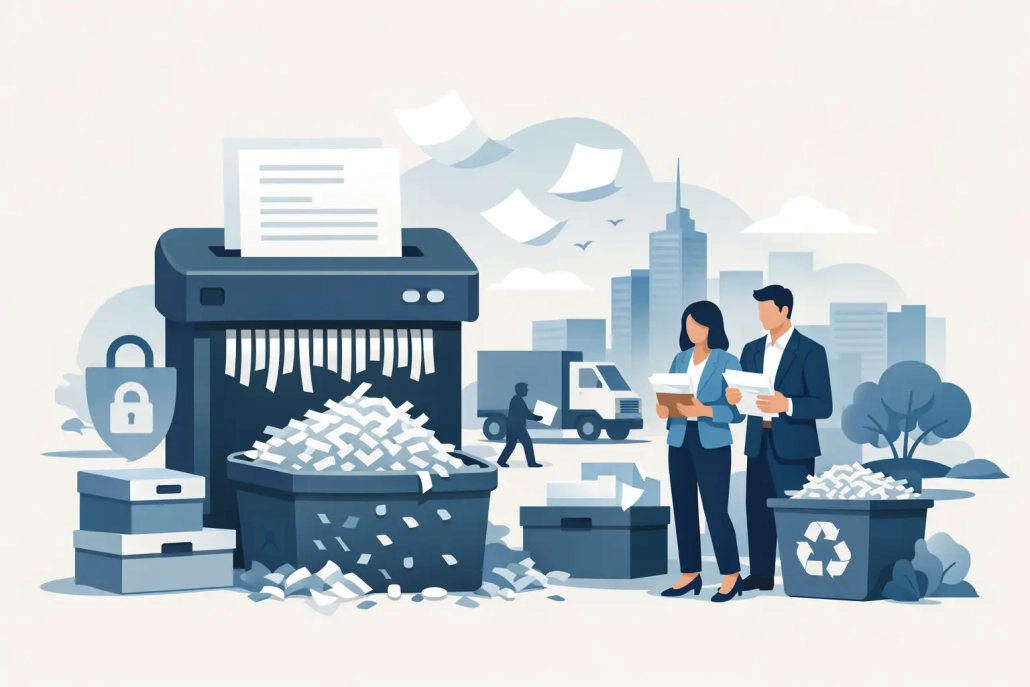
Paper Shredding Melbourne Businesses Trust
A file left in the wrong recycling bin can create a bigger problem than most businesses expect. Client records, payroll reports, medical notes, legal documents, and internal paperwork do not stop being sensitive just because they are no longer needed. That is why paper shredding Melbourne businesses use needs to be secure, consistent, and easy to manage.
For many organizations, the real issue is not whether confidential waste should be destroyed. It is how to do it without tying up staff time, creating chain-of-custody gaps, or letting archived material pile up in storage rooms and back offices. Secure destruction works best when the process is simple from pickup through final destruction, with proof that the job has been completed properly.
Why secure paper shredding matters
Most businesses generate confidential paper every week, even when operations are mostly digital. Printed invoices, HR records, patient forms, signed contracts, meeting notes, account statements, and internal reports all carry risk if they are thrown out carelessly. One box in general waste or standard recycling can expose private information, damage trust, and create compliance headaches that cost far more than proper destruction.
Secure paper shredding is not just about getting rid of paper. It is about controlling who can access it before destruction, how it is removed from your site, and whether you can prove the material was destroyed. That matters for professional firms, medical practices, schools, finance teams, and any business handling personal or commercially sensitive information.
There is also a practical workplace benefit. When confidential waste is managed properly, offices stay cleaner, archived records do not overrun storage areas, and staff are not asked to make judgment calls about what can or cannot go in a regular bin.
What businesses should expect from paper shredding Melbourne services
Not all destruction services are set up the same way. Some businesses need a scheduled bin service that quietly removes day-to-day confidential waste. Others need a one-time cleanout of archived boxes, old files, or excess records after a relocation, retention review, or office closure. The right service depends on volume, frequency, and how sensitive the material is.
A dependable provider should offer secure collection at your site, not leave you figuring out transport yourself. Lockable consoles or 240-liter bins help protect documents before pickup, while security bags can work well for smaller quantities or satellite teams. For larger jobs, archive box collection and pallet-scale removals are often the most efficient option.
The key is flexibility without losing control. Businesses should be able to arrange regular service, on-call pickups, or one-off removals based on actual need. That keeps costs aligned with usage and avoids paying for a system that is either too small or unnecessarily complicated.
Scheduled pickups vs one-time destruction
For offices producing confidential waste every day, scheduled servicing usually makes the most sense. It gives staff a designated place to dispose of sensitive paper, reduces internal handling, and creates a routine that is easy to maintain. This model suits law firms, accounting practices, clinics, schools, and corporate offices where steady document flow is part of normal operations.
One-time destruction is better for backlog situations. If your business has years of archived files in storage, old records after a retention cleanup, or confidential paperwork left over from a move, a cleanout service is often faster and more cost-effective than trying to fold everything into a regular bin schedule.
Some companies need both. A business might use locked bins for ongoing paper disposal and book occasional archive box destruction for annual record cleanouts. That combination is often the most practical because daily waste and long-term archive removal are different jobs.
Security is more than the shredder itself
When companies look for paper shredding Melbourne providers, they often focus on the act of shredding. The more important question is what happens before shredding begins. Security failures usually happen during storage, handling, or transport, not at the final stage of destruction.
A proper chain of custody starts on your premises. Lockable containers limit access and reduce the chance of documents being removed, viewed, or misplaced by staff, visitors, cleaners, or contractors. Secure collection by trained personnel matters just as much because confidential material should move directly from your site into a controlled destruction process.
Proof matters too. A Certificate of Destruction gives businesses a clear record that the material was securely destroyed. For many organizations, that certificate is not just a nice extra. It is part of internal compliance, audit preparation, and risk management.
More than paper: related items that should be destroyed securely
Confidential waste rarely exists as paper alone. Many workplaces also hold old CDs, archived media, branded uniforms, and bulk boxed records that should not be discarded through standard waste channels.
CD destruction is still relevant in businesses with older backup systems, legacy records, or stored client data. Uniform disposal is also worth attention, especially where branded clothing or ID-linked garments could be misused. Archive box destruction becomes essential when records rooms are full and off-site storage costs are creeping up.
Using one provider for these materials can simplify the process. It means fewer vendors, fewer handoffs, and a more consistent security standard across different waste streams.
Cost, convenience, and what value really looks like
Price matters, especially for businesses managing multiple locations or larger waste volumes. But the cheapest option on paper is not always the lowest-cost choice once risk, staff time, transport, and service reliability are factored in.
A secure provider saves time by collecting on site, supplying the right containers, and making pickups straightforward. That removes the need for employees to store boxes, transport records, or oversee disposal themselves. It also reduces the hidden cost of office space being consumed by outdated files waiting for someone to deal with them.
Convenience should not mean vague service. Good value comes from a provider that is responsive, clear about collection options, competitive on price, and able to issue Certificates of Destruction without extra hassle. For many Melbourne businesses, the best fit is a local operator that can respond quickly and handle both recurring service and larger project work without overcomplicating the job.
Choosing the right paper shredding Melbourne provider
If you are comparing providers, start with the basics. Ask how documents are stored before pickup, what collection options are available, whether the service can scale from small office volumes to archive clear-outs, and whether Certificates of Destruction are included.
Then look at practical fit. A medical office may need dependable scheduled pickups and strict handling expectations. A law firm may want secure bins in multiple departments. A school may need periodic cleanouts around term breaks. A growing business may begin with security bags and later move to locked bins as volume increases.
Responsiveness matters more than many buyers expect. Confidential waste issues tend to become urgent when storage fills up, an audit is pending, or a move is scheduled. The right provider should be able to quote quickly, collect promptly, and adapt to what your site actually needs.
Metro Paper Destruction is built around that practical model – secure collection, flexible service options, free Certificates of Destruction, and pricing that makes ongoing compliance easier to justify.
When to act
Most businesses put off secure destruction until paper starts stacking up in corners, cabinets, and storerooms. By then, the job is larger, less organized, and more disruptive than it needed to be.
A better approach is to set up the service before the problem grows. That might mean placing lockable bins in key areas, arranging a regular pickup schedule, or booking a one-time archive removal to clear old records now. Once the process is in place, confidential disposal becomes routine instead of a recurring task that keeps slipping down the list.
If your business handles private information, secure destruction is not an extra. It is part of operating responsibly. The right service should make that responsibility easier to manage, not harder.


Leave a Reply
Want to join the discussion?Feel free to contribute!