
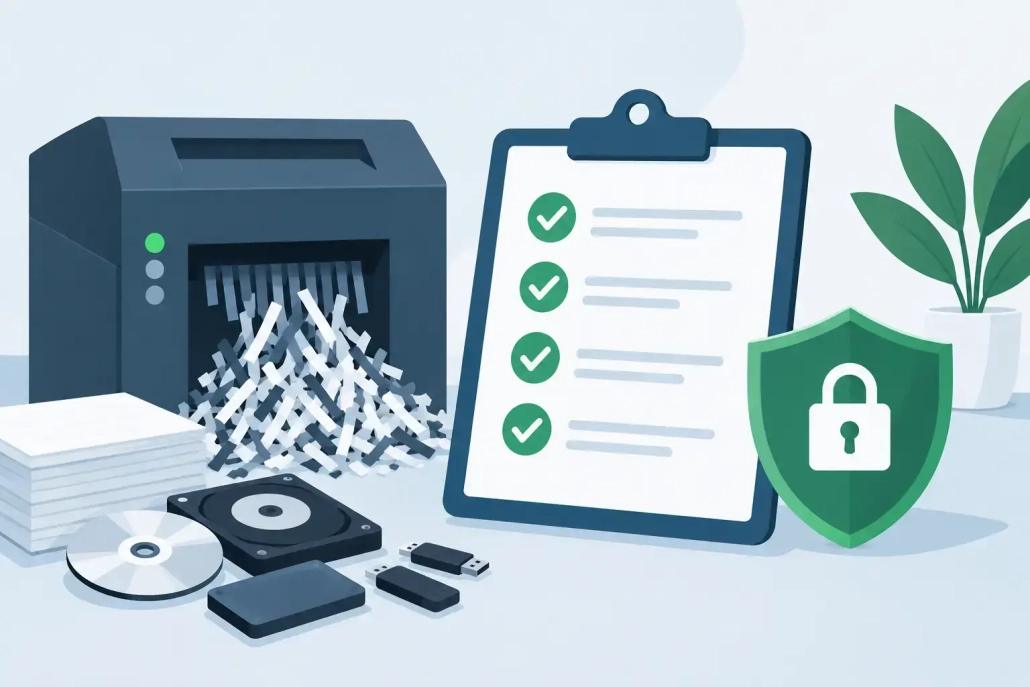
Media Destruction Provider Review Checklist
A media destruction provider review should not begin with the lowest quoted price. It should begin with a simple question: can this provider remove sensitive material from your workplace without creating a security gap? Old CDs, confidential paper records, archived files, branded uniforms, and other business materials can expose customer information, employee details, internal processes, or company identity if they are handled carelessly.
For office managers, records managers, and business owners, the right provider reduces that risk while keeping disposal practical. Collection should be straightforward, removal should be controlled, and proof of destruction should be available when you need it. Price matters, but it is only useful when the service scope is clear.
What a Media Destruction Provider Review Should Cover
A useful review looks beyond a provider’s service list. Many companies say they offer secure destruction, but the details determine whether the service suits your workplace, volume, and level of risk. Start by identifying what you need destroyed and how often it accumulates.
A one-time cleanout of archive boxes requires a different approach from ongoing confidential waste collection. A medical practice with regular patient paperwork may need lockable bins and scheduled pickups. A law firm clearing a storage room may need secure archive box removal and pallet-scale collection. If you have discs, uniforms, or other branded materials, confirm that these items are accepted and handled through an appropriate destruction process.
The provider should be able to explain the collection method in plain language. Vague assurances are not enough when confidential information is involved.
Security Before and During Collection
Your materials are most exposed before destruction, not after it. Review how the provider protects them from the moment they leave your control. For ongoing service, lockable 240-liter bins or secure collection bags can prevent staff, visitors, cleaners, and contractors from accessing discarded documents.
For one-off jobs, ask how boxes and loose records are collected, loaded, and accounted for. A professional provider should have a clear process for removing material from offices, storage areas, or loading docks without leaving confidential files unattended. If your building has access restrictions, limited parking, elevators, or a busy reception area, discuss these details before booking.
Chain of custody is not just a compliance phrase. It means knowing who handles your material, where it goes, and when responsibility changes hands. A provider that cannot clearly describe this process is not making your decision easier.
Destruction Methods Must Match the Material
Paper, digital media, and uniforms are not the same waste stream. They should not be treated as though they are. A provider may specialize in confidential paper shredding and archive destruction, while offering separate destruction arrangements for CDs or branded clothing. Confirm the method used for every category you intend to dispose of.
For paper records, ask whether the service includes secure shredding and recycling after destruction. For CDs and similar media, ask how the media is rendered unusable. For uniforms, badges, and branded apparel, the goal is usually to prevent reuse, impersonation, or misuse of your company identity.
Do not assume that a general recycling service provides confidential destruction. Recycling is a valuable final outcome, but it does not replace controlled collection and verified destruction.
Questions to Ask During a Media Destruction Provider Review
The best questions are specific enough to reveal how a provider operates. Ask whether they provide scheduled pickups, on-call service, and one-time cleanouts. Flexibility matters because your disposal needs can change after an office move, records retention review, seasonal workload increase, or storage consolidation.
Ask whether a Certificate of Destruction is issued after the work is completed and whether it is included in the quoted price. This document gives your business a record that confidential materials were collected and destroyed. Keep it with your internal records, particularly where your organization has privacy, audit, governance, or client obligations.
You should also ask what the quote includes. Some prices cover collection but not box removal, labor, secure containers, or certificates. Others may be based on estimated volume and change when the job is completed. There is nothing wrong with volume-based pricing, provided the provider explains how volume is measured and what may affect the final cost.
A reliable provider should answer these questions directly:
- What materials do you accept, and are any items excluded?
- How are documents, media, and uniforms secured during collection?
- Can you provide lockable bins or security bags for ongoing use?
- Is a Certificate of Destruction provided after each service?
- Does the quoted price include collection, handling, and destruction?
- What pickup options are available for recurring and one-off work?
Compare Convenience Without Sacrificing Control
Secure destruction should fit your operation rather than create more work for your team. If staff must sort material into multiple containers, carry heavy archive boxes across the building, or wait weeks for a pickup, confidential waste can begin to pile up in desks, cupboards, and unsecured storage rooms.
Look for collection options that reflect your actual workflow. Scheduled service is usually the simplest choice for businesses producing regular confidential paper waste. On-call pickups work well for offices with irregular volumes. One-off archive removal is often the right option when clearing long-held files, preparing for a move, or reclaiming storage space.
Mobile collection is particularly useful where loading and transporting sensitive records internally would add risk. The provider comes to your site, removes material under a controlled process, and lets your staff focus on their regular responsibilities.
Convenience has limits, however. The fastest provider is not automatically the best provider if they cannot provide clear handling procedures or proof of service. Choose a service that is responsive and organized, not merely available.
Look Closely at Certificates and Recordkeeping
A Certificate of Destruction is one of the clearest signs that a provider understands commercial requirements. It provides a formal record of the service and supports your internal disposal procedures. This is especially useful for professional firms, health services, schools, government-related organizations, and any business that handles personal or commercially sensitive information.
Before engaging a provider, confirm when the certificate is issued, what information it includes, and whether there is an added charge. A free certificate removes one more administrative cost and makes it easier to maintain a consistent disposal record.
Your own team should also keep a simple internal record of what was sent for destruction. For larger archive cleanouts, note the department, date, approximate number of boxes, and reason for disposal. This does not need to be complicated. It creates a practical trail that helps answer questions later.
Recycling Is Part of Responsible Destruction
Security and environmental responsibility can work together. Once confidential paper has been securely destroyed, recycling helps reduce the volume of material sent to landfill. For many businesses, that is an easy way to manage records responsibly without adding another supplier or process.
Still, recycling claims should be considered in the right order. First, confirm secure collection and destruction. Then ask what happens to the material afterward. A provider should be able to explain whether destroyed paper is directed into recycling and how other materials are handled.
This is also where a provider’s accepted-material list matters. CDs, plastics, textiles, and mixed office waste may require different processing routes. Clear answers prevent surprises on collection day.
Choosing a Provider on Price and Service
Competitive pricing is valuable, particularly for recurring commercial collection or large archive removal projects. But compare like with like. A low quote can lose its value if it excludes containers, collection labor, certificates, or removal from upper floors and storage areas.
Request a clear quote based on your expected volume and service type. Tell the provider whether you need ongoing bins, security bags, a one-time purge, archive box destruction, CD destruction, or uniform disposal. The more accurately the job is described, the more meaningful the price comparison will be.
Metro Paper Destruction offers Melbourne businesses secure collection options, flexible pickups, free Certificates of Destruction, and a quote-beating promise for eligible services. For any provider you consider, the standard should remain the same: clear scope, secure handling, dependable collection, and transparent pricing.
The right choice is the provider that makes confidential disposal routine rather than risky. Set up the service before archive boxes become a storage problem or confidential waste starts collecting in unsecured places.

Leave a Reply
Want to join the discussion?Feel free to contribute!