
Outsourced Records Destruction Benefits for Business
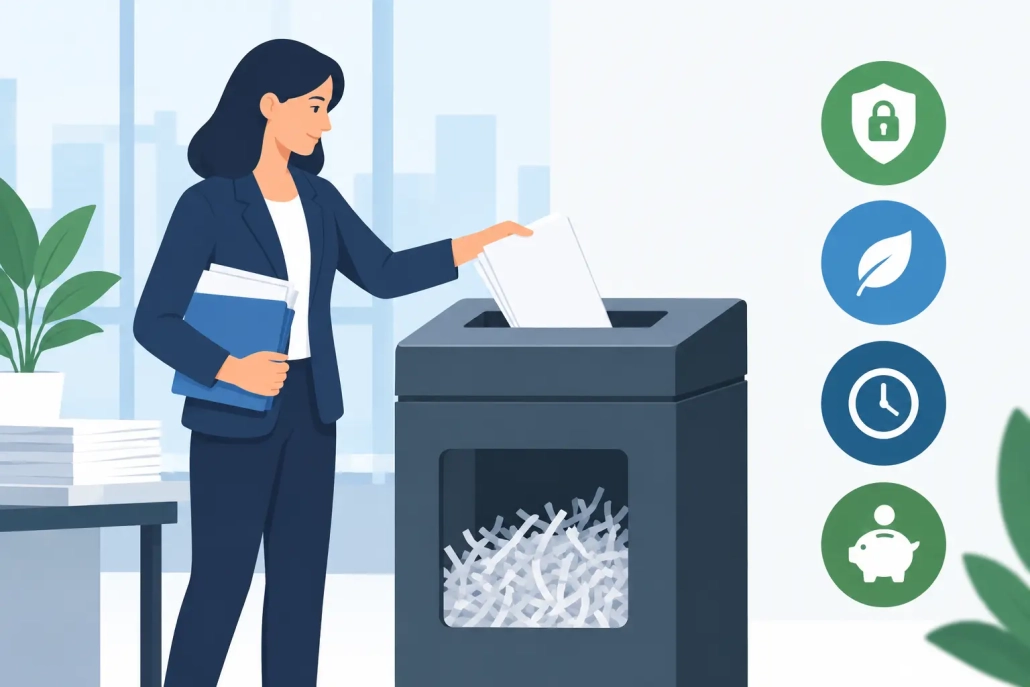
A locked filing cabinet is not a disposal plan. Once records have reached the end of their retention period, they can become a security risk, take up valuable space, and create unnecessary work for staff. The outsourced records destruction benefits are clear: your business can remove confidential material securely, prove it was destroyed, and keep everyday operations moving without asking employees to manage sensitive waste themselves.
For Melbourne businesses handling client details, employee records, financial information, medical files, legal documents, or internal reports, secure destruction is a practical part of risk management. A professional provider collects material through controlled processes, destroys it securely, and supplies confirmation that the job has been completed.
Why outsourced records destruction benefits matter
The biggest benefit is reducing the chance that confidential information ends up in the wrong hands. Throwing paperwork into regular recycling, leaving archive boxes near a dumpster, or relying on an office shredder all create avoidable weak points. Even documents that appear routine may contain names, addresses, account details, signatures, payroll information, health data, or commercially sensitive decisions.
Outsourcing gives your business a defined chain of custody. Records are placed into secure containers or prepared for a scheduled collection, removed by trained personnel, and taken for secure destruction and recycling. This is a far more controlled approach than asking a staff member to shred documents between calls, meetings, and other responsibilities.
It also provides accountability. A free Certificate of Destruction gives your business a clear record that confidential materials were securely destroyed. For office managers, compliance teams, and business owners, that document can be valuable evidence of responsible disposal if questions arise later.
Better protection than office shredders
Small office shredders have a role for the occasional page, but they are rarely a good answer for ongoing confidential waste. They jam, require staff time, need emptying, and often leave shredded material sitting in bags until someone can arrange disposal. That creates an internal handling risk many businesses overlook.
A secure destruction service is designed for volume and consistency. Lockable 240-liter bins can be placed where confidential paper is generated, allowing staff to dispose of documents without sorting, feeding, or supervising a shredder. For larger jobs, archive boxes, pallet-scale records, CDs, and old uniforms can be collected in one organized service.
The right setup depends on how your office works. A medical practice or legal firm may need regular secure-bin collections. A company clearing a storage room may only need a one-time archive removal. Both needs can be managed without turning document disposal into another internal project.
Free up space without exposing old files
Archived records have a way of staying longer than planned. Boxes accumulate in storage rooms, back offices, basements, and off-site facilities because no one has time to decide what to do with them. Eventually, that stored paper becomes more than clutter. It makes retrieval harder, consumes paid space, and increases the amount of sensitive information your business is responsible for protecting.
A professional clean-out makes it easier to act. Instead of moving boxes several times or having staff open, sort, and shred years of files, your business can arrange collection for the records approved for destruction. Archive box removal and pallet-scale pickups are particularly useful after a relocation, retention review, office closure, records digitization project, or storage consolidation.
There is a trade-off worth managing carefully: secure destruction should follow your retention requirements, not replace them. Some documents must be retained for legal, financial, contractual, or operational reasons. Before booking a large clean-out, identify what can be destroyed and obtain the appropriate internal approval. Once that decision is made, secure collection prevents old records from sitting around indefinitely.
Reduce staff time and internal risk
Businesses sometimes calculate destruction costs only by looking at a provider’s quote. That misses the cost of handling disposal internally. Consider the staff time needed to remove staples, feed pages into a small shredder, clear paper jams, bag shredded material, store it securely, and arrange recycling. Those minutes add up quickly, especially during an archive purge.
More importantly, internal shredding spreads responsibility across employees who may not have clear procedures for confidential waste. A document can be left on a desk, placed in the wrong bin, or stored in an unsecured bag while waiting for disposal. Good intentions do not create a secure process.
Outsourced service puts a simple routine in place. Staff place confidential paper into a locked bin or security bag. A scheduled or on-call collection removes the material. The provider manages destruction and provides a certificate. The process is straightforward, repeatable, and much easier to monitor than ad hoc shredding.
Flexible service prevents waste buildup
Not every business produces confidential waste at the same rate. Regular collections are a sensible choice for busy offices, schools, professional firms, and healthcare settings where paperwork is generated every week. On-call collection can suit smaller offices that need secure disposal but do not fill a bin often.
One-off services are equally useful when a business has a specific project. You may be clearing employee files after a system change, disposing of closed client matters, removing expired financial records, or emptying a storage area before a move. A provider should be able to match the collection method to the job rather than forcing every customer into the same schedule.
That flexibility matters because overflowing boxes and unsecured paper piles create risk. The best service frequency is the one that keeps confidential material contained from the moment it is no longer needed.
Support compliance and customer trust
Secure destruction does not guarantee compliance on its own, but it supports the policies that protect private and business information. Your organization still needs clear retention rules, staff training, access controls, and approval processes. Professional destruction strengthens the final step: making sure records are disposed of in a controlled, documented way.
For customer-facing organizations, that step also affects trust. Clients, patients, employees, and partners expect their information to be handled responsibly throughout its lifecycle, not only while it is actively being used. Secure disposal shows that your business treats confidentiality as an operational standard.
Certificates of Destruction are especially useful for maintaining disposal records. Keep them with your internal compliance documentation and align them with the type of materials removed, collection date, and approved retention schedule. This creates a cleaner audit trail than relying on verbal confirmation or an employee’s memory.
Responsible recycling is part of the process
Secure destruction and environmental responsibility can work together. Once confidential paper has been destroyed through the proper process, it can be recycled rather than sent to landfill. This gives businesses a practical way to reduce waste while protecting sensitive information.
The same principle applies to materials beyond paper. Old CDs may contain stored files, and retired uniforms can identify employees or represent your brand. These items should not be treated as ordinary trash when they contain data, logos, names, or other identifying details. A provider that handles multiple confidential material types can simplify disposal during office clean-outs and staff transitions.
What to look for in a destruction provider
Price matters, but the lowest quote is not the only consideration. Ask how materials are secured before collection, whether lockable bins and security bags are available, how collections are scheduled, and whether you receive a Certificate of Destruction. For large archive jobs, confirm that the provider can collect boxes or pallets safely and efficiently.
Local responsiveness matters as well. If your office is clearing a room for a lease handover or needs an urgent collection after a records review, waiting weeks can leave sensitive material exposed. Metro Paper Destruction provides mobile collection across Melbourne, with scheduled, on-call, and one-time options designed around the amount of confidential material you need removed.
A clear quote should match the service you actually need. A recurring bin collection may be the most cost-effective option for ongoing paper waste, while a one-time archive pickup is better for a defined clean-out. The right provider will explain the options directly and give you a practical plan rather than overselling a service that does not fit.
When confidential records are no longer needed, leaving them in storage is rarely the safer choice. Set a retention review date, separate approved records for destruction, and arrange secure collection before those boxes become another unmanaged risk in your workplace.

Leave a Reply
Want to join the discussion?Feel free to contribute!