
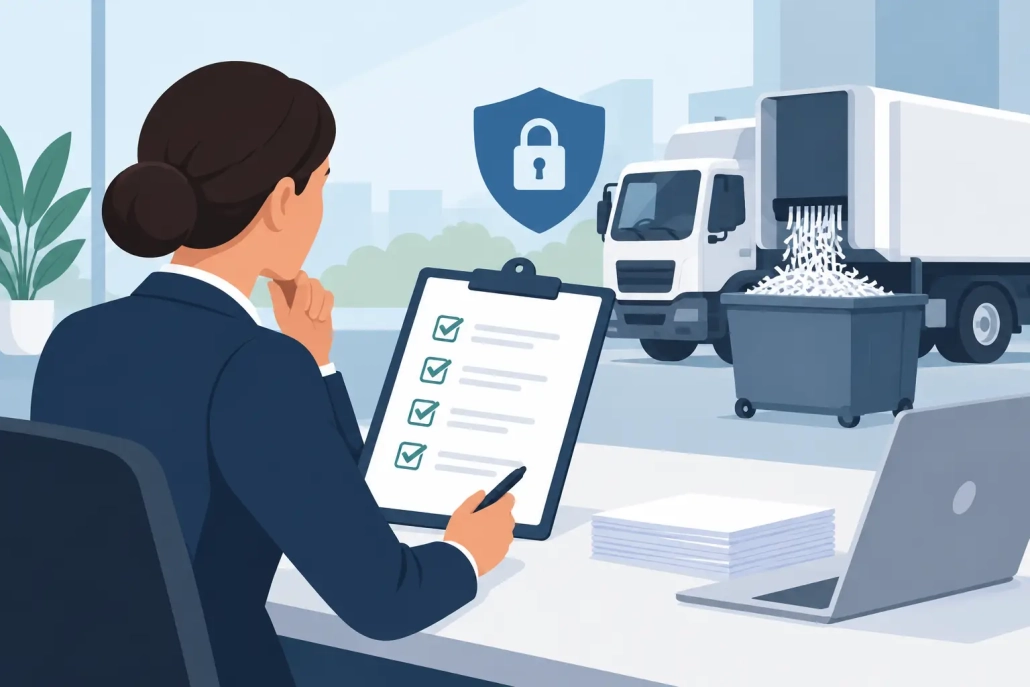
How to Audit Shredding Vendors Before You Sign
A shredding provider may collect your paper, but that does not automatically mean your confidential information is secure. Knowing how to audit shredding vendors gives your business a practical way to check who handles sensitive records, where materials go after pickup, and whether you receive credible proof of destruction.
For office managers, compliance teams, records managers, and business owners, the stakes are clear. A misplaced employee file, medical record, client document, financial statement, or archived legal file can create a serious privacy issue. The right vendor reduces that risk. The wrong one can leave gaps in security, paperwork, service reliability, and pricing.
Start With the Vendor’s Security Process
Ask a direct question: what happens from the moment confidential material leaves your office until it is destroyed? A dependable vendor should explain this process clearly, without vague promises about being “secure” or “compliant.”
The collection method matters. For ongoing office disposal, lockable consoles or secure bins should keep documents inaccessible to staff, visitors, cleaners, and contractors. For smaller volumes, tamper-resistant security bags may be appropriate. For archive clean-outs, the provider should have a clear process for collecting sealed boxes, loading them securely, and recording what was removed.
A good vendor can also tell you who collects material, how collection vehicles are secured, and whether staff are trained to handle confidential waste. You do not need a lengthy sales presentation. You need straightforward answers that show the company has controlled procedures in place.
Check the chain of custody
Chain of custody is the record showing that your confidential material remained under controlled handling from pickup through destruction. It is one of the most useful areas to examine when auditing a shredding company.
Ask whether the driver or collection team provides a service record at pickup. Confirm whether containers are swapped, emptied, or collected in a way that prevents mix-ups. For one-time archive removal, ask if boxes can be counted, labeled, or documented before they leave your premises.
The exact level of documentation depends on your organization and the type of records involved. A small office may need a simple pickup record and certificate. A legal firm, healthcare provider, school, or government-related organization may require more detailed internal tracking. Your vendor should be able to work with the process you already use rather than asking you to lower your standards.
Verify How and Where Destruction Happens
Collection is only half the job. Your audit should establish how the vendor destroys material and whether the destruction method suits the information you are discarding.
For paper records, ask whether documents are cross-cut shredded and whether paper is recycled after destruction. Recycling is a worthwhile outcome, but it should follow secure destruction, not replace it. Paper should not be treated as ordinary recycling while it still contains readable confidential information.
If you have old CDs, ID cards, branded uniforms, archive boxes, or other items that can expose company or client information, ask whether the vendor handles those materials separately. Uniforms may need destruction to prevent unauthorized use of branding. Digital media requires a method that makes stored data unrecoverable. Archive boxes may require secure removal at a larger scale than routine office bins.
Some businesses prefer a mobile service for collection at their site. Others are comfortable with secure off-site destruction after documented pickup. Neither approach is automatically right for every business. What matters is that the vendor can explain the controls used for your chosen service and provide evidence that the material was destroyed.
Require a Certificate of Destruction
A Certificate of Destruction is not a marketing extra. It is your written proof that the service was completed. It should identify your business, the date of service, and confirmation that confidential material was destroyed through the provider’s secure process.
Ask when certificates are issued and whether there is an added charge. A reliable vendor should make this simple. Certificates should be available for scheduled services, one-time clean-outs, and larger archive destruction projects.
Keep certificates with your records retention and privacy documentation. They can help demonstrate that your business followed a responsible disposal process if questions arise later from management, clients, auditors, or regulators.
Audit Service Reliability, Not Just Security Claims
A secure shredding program only works when it fits your operations. If a bin overflows, pickups are missed, or staff have no clear place to dispose of confidential paper, people may start using regular trash or recycling bins. That creates the very risk your service is meant to prevent.
Ask vendors how they manage scheduled pickups, missed-service requests, and changes in volume. A provider should offer practical options, such as regular service intervals, on-call pickups, and one-time purge services. Your needs may change during tax time, after a records retention review, during an office move, or when clearing storage rooms full of archive boxes.
Also check whether the vendor has the right containers for your workplace. A small professional office may need one or two lockable bins. A large organization with several departments may need multiple secure collection points. For occasional disposal, security bags may be more cost-effective than paying for a scheduled bin service you do not use.
The right setup is not always the largest service plan. It is the plan that keeps confidential material secure without creating unnecessary cost or clutter.
Review Pricing With the Full Scope in Mind
Price matters, but the lowest quoted number can be misleading if it excludes collection charges, container rental, fuel fees, certificate fees, or extra costs for archive boxes and special materials.
Request a written quote that states what is included. For ongoing service, confirm the container size, pickup frequency, minimum charges, and any charges for extra material. For a clean-out, ask whether pricing is based on boxes, bags, bins, pallets, weight, or labor. There is no single best pricing model. The right one depends on how predictable your volume is and how easily materials can be accessed.
Compare quotes on the same scope of work. A vendor offering a lower price for basic paper pickup may not be less expensive if you also need secure archive removal, certificates, uniform destruction, or flexible pickup dates.
Questions to Ask When You Audit Shredding Vendors
Use these questions during a vendor call or site review:
- What secure containers, bags, or collection methods do you provide?
- How is chain of custody documented from pickup through destruction?
- Who handles collection, and how are staff trained and screened?
- What destruction method is used for paper, digital media, uniforms, and archive materials?
- Do you issue a Certificate of Destruction for every completed service?
- Can you provide scheduled, on-call, and one-time services as our needs change?
- What fees are included in the quote, and what could create additional charges?
Pay attention to how the company responds. Clear, specific answers are a good sign. Evasive answers, unclear fees, or generic security statements deserve closer scrutiny.
Review Performance After the First Service
Vendor auditing should not stop once the agreement is signed. Review the first few pickups closely. Are containers delivered as promised? Does the collection team arrive within the agreed window? Are certificates issued promptly? Is your account contact responsive when you need a service adjustment?
For ongoing accounts, a short annual review is usually enough. Confirm that your pickup frequency still matches your volume, check that bins remain in secure locations, and make sure staff know what belongs in confidential waste. If your organization has expanded, moved offices, or added new record types, update the service before overflow becomes a problem.
Metro Paper Destruction works with businesses that need secure collection, flexible service options, and straightforward proof of destruction. Whether you need locked bins for routine office paper or a one-time archive clear-out, the goal is the same: keep confidential material controlled until it is destroyed.
Choose a shredding vendor that makes security easy to verify, not one that asks you to take it on faith. A clear process, dependable pickups, documented destruction, and transparent pricing give your team one less risk to manage.


Leave a Reply
Want to join the discussion?Feel free to contribute!