
How to Seal Confidential Waste Bags Securely
A bag of discarded paperwork can expose as much as a filing cabinet if it is left open, overfilled, or placed beside a regular trash bin. The way you seal confidential waste bags matters because the bag is part of your chain of custody from the moment records leave an employee’s desk until they are securely destroyed.
For businesses handling client files, employee records, financial paperwork, medical information, legal documents, or internal reports, secure disposal needs to be routine. A properly sealed bag helps prevent unauthorized access, keeps loose documents contained, and gives your team a clear process to follow. It is a practical control, not just an administrative task.
Why sealed confidential waste bags matter
Confidential records are often most vulnerable during disposal. A document may be locked away while it is active, then handled casually once it is no longer needed. That is where risk starts. Open bags, cardboard boxes in hallways, and desk-side trash cans create opportunities for documents to be misplaced, viewed, or removed before destruction.
Sealed confidential waste bags reduce that exposure. They keep paperwork together during internal handling and collection, while making it easier to identify when a bag has been accessed or tampered with. For one-time cleanouts, archive projects, and offices without space for a large secure bin, bags can be a straightforward collection option.
The bag itself is not the entire security system. It works best as part of a managed process that includes secure storage, controlled access, documented collection, secure transport, and certified destruction.
How to seal confidential waste bags correctly
Use bags designed for confidential materials rather than ordinary garbage bags. A purpose-made security bag should be durable enough for paper records, difficult to reopen without showing signs of interference, and suitable for secure transport. If your provider supplies numbered or tamper-evident bags, record the number when the bag is issued or collected.
Before sealing the bag, check that the contents are appropriate for the service. Paper records, folders, envelopes, printed reports, and loose files are usually suitable. Keep materials such as batteries, food waste, liquids, sharp objects, and general office trash out of confidential waste bags. These items can create handling risks and may complicate secure processing.
Do not fill the bag beyond its intended capacity. An overfilled bag is harder to close properly, more likely to tear, and more difficult for collection staff to handle safely. Leave enough room at the top to close the seal fully. If you are clearing archive boxes or undertaking a large office cleanup, multiple bags or a dedicated archive removal service will usually be safer and more efficient than forcing everything into a few bags.
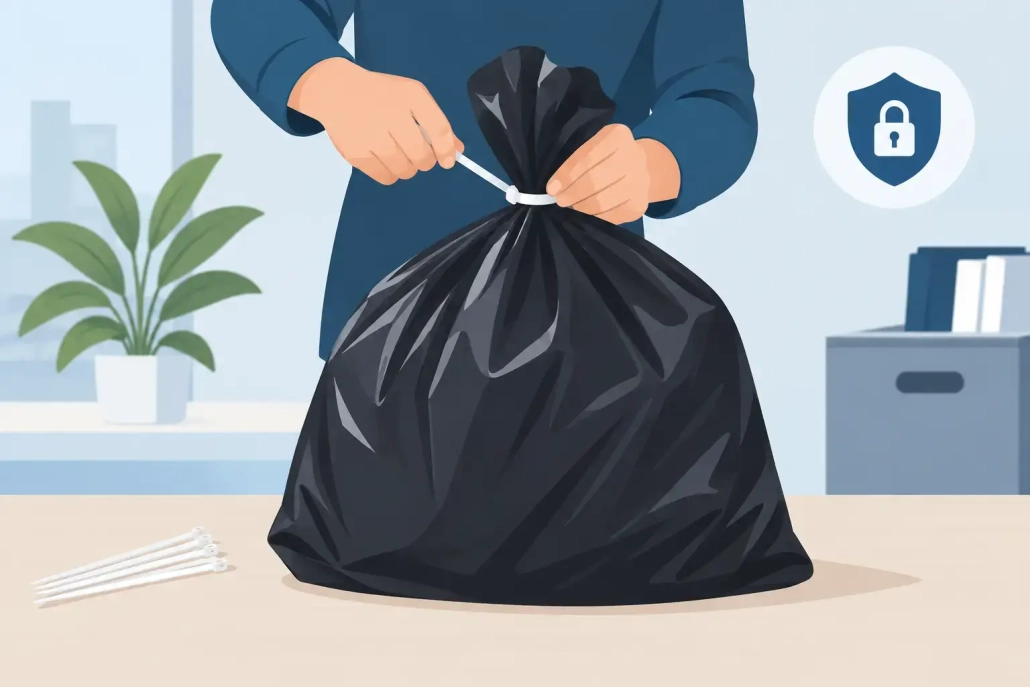
Once filled, close the bag using its built-in security seal or the approved closure method provided. Press the seal firmly along its full length. Do not knot the bag, use masking tape, or improvise a closure if a tamper-evident seal is available. A proper seal should make it obvious if someone attempts to reopen the bag.
After sealing, move the bag promptly to the designated secure holding area. It should not sit under a desk, in a public reception area, or next to a regular waste station. Restrict access to staff who are authorized to manage confidential materials and arrange collection as soon as practical.
Labeling without exposing information
A sealed bag may need an internal reference number, department code, or pickup identifier. Keep labels simple. Do not write client names, employee names, case details, account numbers, or other sensitive information on the outside of the bag.
If your organization needs to track disposal by department, use a job number or internal reference that can be matched to a separate record. This provides accountability without putting confidential details on display during storage or transport.
Choose bags, bins, or archive box removal based on volume
Security bags are useful, but they are not always the right collection format. The best option depends on how much material your business generates and how often it needs to be removed.
For small quantities or occasional disposal, sealed security bags and an on-call collection can be a practical choice. They work well for a records purge, a move, a staff changeover, or the final cleanup of closed files. A one-off collection also suits businesses that do not produce confidential paper waste every week.
For regular office disposal, a lockable 240-liter confidential waste bin is often the better control. Staff can deposit documents directly into the locked bin throughout the day, reducing the need to store filled bags in cupboards or back rooms. Scheduled service keeps the process consistent and prevents waste from building up.
For archive rooms, long-term file storage, or large cleanouts, archive box destruction or pallet-scale removal can save considerable time. Staff do not need to open every box, sort individual folders, or transfer records into bags unless there is a specific retention or review requirement. The key is to maintain controlled access until the material is collected.
Keep chain of custody clear from office to destruction
A sealed bag is only as secure as the handling process around it. Assign clear responsibility for who can issue bags, seal them, place them in secure storage, and release them to the collection team. In a small business, this may be an office manager. In a larger organization, it may sit with facilities, records management, compliance, or a designated department coordinator.
Train employees not to place confidential records in ordinary recycling or trash. This includes printed emails, draft contracts, payroll reports, customer forms, handwritten notes, and documents with identifying information. A simple rule is effective: if a document would cause concern if read by someone outside the business, it belongs in confidential destruction.
Collection should be performed by a trusted provider with a clear secure handling process. Ask how materials are removed from the site, how they are transported, and what proof is issued after destruction. A free Certificate of Destruction gives your business a record that the material was securely processed. Keep that certificate with your disposal records, particularly where internal policy, contractual obligations, or industry requirements call for evidence of destruction.
Common mistakes that weaken bag security
The most common problem is treating sealed bags as regular trash. Once a bag is left in an unsecured area, its seal alone cannot prevent unauthorized handling. Store it in a locked cabinet, secure room, or controlled collection point until pickup.
Another mistake is mixing confidential paper with materials that should be handled differently. Old uniforms, CDs, hard drives, branded items, and electronic media may require a separate destruction service. Destroying these items securely protects more than paper records. It can also prevent old credentials, logos, or stored digital information from being reused.
Businesses also sometimes delay collection until bags accumulate in hallways, storage rooms, or loading areas. This can create both a security issue and an operational problem. If confidential waste is growing faster than expected, increase pickup frequency, add a lockable bin, or schedule a dedicated cleanout rather than allowing material to pile up.
Finally, avoid relying on staff to make inconsistent judgment calls. A written disposal procedure should state what goes into confidential waste, where bags are stored, who can seal them, and how collections are requested. The process does not need to be complicated. It needs to be followed every time.
When a secure collection service is the better option
Internal shredders may seem convenient for a few pages, but they can be slow, noisy, and difficult to manage when disposal volumes increase. They also place responsibility for feeding, emptying, storing, and ultimately disposing of shredded material on your staff. For busy offices, that is often an unnecessary burden.
A professional confidential waste provider can supply the right service format, collect sealed bags or locked bins from your site, remove archive boxes in volume, and provide proof of destruction. Metro Paper Destruction supports scheduled pickups, on-call collections, and one-off cleanouts for businesses that need a practical, secure disposal process.
The right arrangement depends on your volume, available space, and how regularly confidential waste is generated. What should not vary is the standard: records must remain protected until destruction is complete. If bags are becoming a temporary storage solution rather than a controlled handoff point, it is time to arrange a secure collection before the risk grows.


Leave a Reply
Want to join the discussion?Feel free to contribute!