
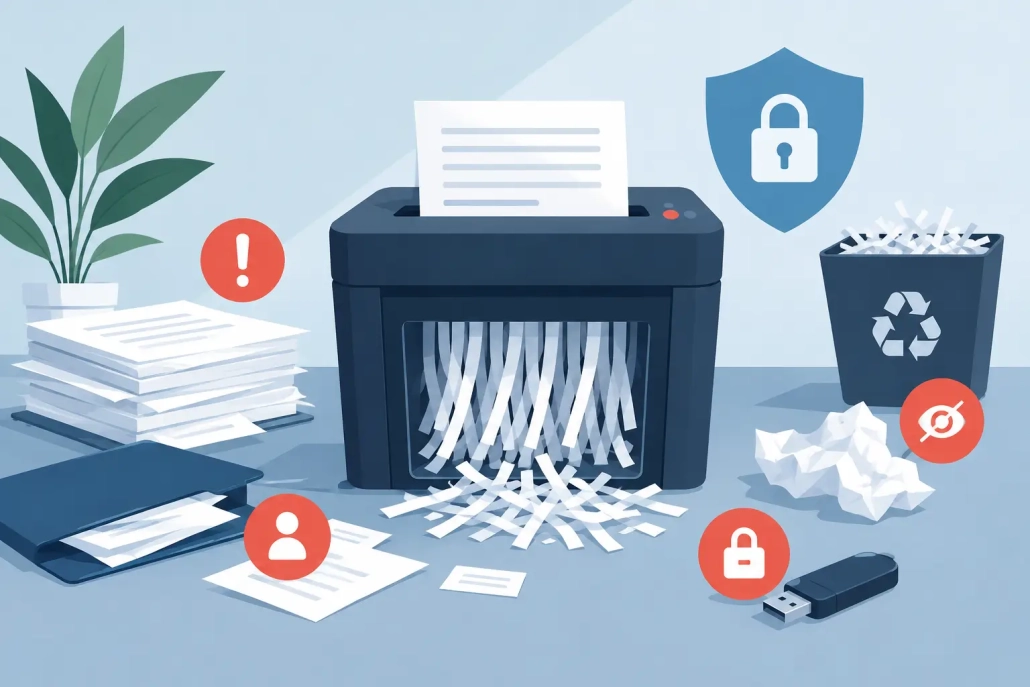
8 Document Shredding Errors That Put Data at Risk
A file does not become harmless just because it is old. A client intake form, payroll report, employee review, medical record, invoice, or internal memo can create a serious privacy problem if it reaches a regular trash bin or recycling container. Most document shredding errors happen before destruction even begins: during storage, sorting, clean-outs, and handoff to a disposal provider.
For Melbourne businesses, secure disposal should be a controlled operational process, not an occasional office task. The right approach protects confidential information, keeps work areas clear, and gives your organization proof that records have been destroyed properly.
The document shredding errors businesses make most often
1. Putting confidential papers in regular recycling
Office recycling is designed to recover paper, not protect information. Once documents are placed in an open recycling bin, staff, contractors, visitors, cleaners, and other third parties may be able to see them. The material can also sit unsecured until collection day.
This is especially risky for documents containing names, addresses, account details, signatures, health information, personnel records, pricing, or commercially sensitive plans. Even papers that appear routine can reveal more than intended when combined with other discarded records.
A secure process separates confidential waste at the point it is discarded. Lockable collection bins or security bags give staff a clear place to put sensitive material and reduce the chance that it ends up in the wrong waste stream.
2. Relying on a small office shredder
Desktop shredders have a place for occasional low-volume use, but they are not an effective disposal system for most businesses. They jam, overheat, require staff time, and often leave shredded paper sitting in open bags beside the machine. That creates another handling point and another opportunity for documents to be accessed or misplaced.
There is also a volume issue. A busy office, medical practice, law firm, school, or accounting business can produce far more confidential paper than a small machine can handle efficiently. Staff may delay shredding until a pile becomes unmanageable, then take shortcuts.
Professional document destruction removes that burden. Records can be placed directly into locked containers, collected on a schedule or on demand, and securely destroyed without asking employees to manage paper waste one handful at a time.
3. Letting archive boxes build up unchecked
Archive storage can quietly become a security issue. Boxes moved into a back room, storage cage, warehouse, or off-site facility are often forgotten until a lease change, office move, or clean-out forces action. By then, no one may know exactly what is in them, how long they have been retained, or who has been able to access them.
Keeping records beyond their required retention period increases storage costs and expands the amount of information that could be exposed in a break-in, flood, fire, or disposal mistake. On the other hand, destroying records too early can create legal, contractual, or operational problems. The correct retention period depends on the document type and your organization’s obligations.
Create a records schedule that identifies what should be retained, for how long, and when it should be securely destroyed. When boxes reach their disposal date, arrange a dedicated archive box collection or pallet-scale archive removal rather than moving them from one storage location to another.
4. Leaving documents unsecured before pickup
Even when a business has booked a destruction service, the job is not secure if boxes and bags are left in a hallway, loading dock, reception area, or unlocked storeroom. Collection day should not become a window of unnecessary exposure.
Confidential waste needs secure containment from the moment it leaves a desk or filing cabinet until it is collected. Lockable 240-liter bins work well for ongoing paper disposal because they keep material contained while allowing staff to deposit documents easily. Security bags may suit smaller quantities, remote teams, or one-off clean-outs.
Before collection, nominate a secure holding area, limit access to authorized staff, and make sure the collection team can identify the correct materials. This is simple operational discipline, but it closes a common gap in the chain of custody.
5. Treating a major clean-out like ordinary trash removal
Office relocations, mergers, staff changes, renovations, and end-of-year clean-outs often produce large volumes of confidential records. These projects move quickly, and that is when sensitive files can be mixed with general waste, donated furniture, or recycling.
A rushed clean-out can also lead to incomplete destruction. One department may clear its cabinets while another leaves boxes behind. Files can be taken home for sorting, placed in personal vehicles, or moved between sites without a clear record of who is responsible.
Plan larger clean-outs as secure destruction projects. Estimate the number of boxes, identify sensitive areas, separate records from general rubbish, and arrange collection capacity that matches the volume. A one-off removal may be the right option for a defined project, while regular scheduled pickups are better for organizations with continuing confidential waste.
6. Forgetting that other media and uniforms can hold sensitive information
Paper is not the only confidential material in an office. CDs, DVDs, backup disks, branded uniforms, ID-bearing clothing, labeled folders, and old media can all expose information or create reputational risk if discarded carelessly.
A disk may contain exported reports, historical databases, customer information, or old backups. A uniform with a company logo, staff name, department label, or security identifier can be misused if it ends up in the wrong hands. These items should not be sent to general waste simply because they are no longer useful.
Use a provider that can handle the material you need destroyed. Keeping paper, archive boxes, CDs, and uniforms within one coordinated collection process makes accountability easier and prevents staff from improvising disposal methods.
7. Failing to verify destruction
A verbal assurance that materials were collected is not the same as documented proof of destruction. If your business is audited, asked to investigate a privacy concern, or needs to show that obsolete records were handled responsibly, collection alone may not be enough.
A Certificate of Destruction provides a clear record that confidential materials have been securely destroyed. It supports internal compliance files and gives decision-makers confidence that the disposal process has been completed. Keep certificates with your retention and disposal records, along with relevant pickup dates and service details.
The level of documentation you need may vary by industry and the sensitivity of the records. Healthcare, legal, financial, education, and government-related organizations often have stricter internal procedures. Still, any business handling private client or employee information benefits from a documented trail.
8. Choosing disposal based on price alone
Cost matters, particularly when archived records take up space or a clean-out involves a large volume of material. But the lowest quoted price is not always the lowest business cost. An unreliable process can result in missed pickups, unsecured handling, staff downtime, and far greater expense if confidential information is exposed.
Ask practical questions before selecting a document destruction service. Find out how materials are contained, how collections are managed, whether one-off and scheduled services are available, and whether a Certificate of Destruction is included. Make sure the provider can collect at your site and handle the volume you actually have.
Competitive pricing and security are not opposites. Metro Paper Destruction provides secure Melbourne collection options for ongoing confidential waste, archive box removals, and one-off destruction jobs, with free Certificates of Destruction and a quote-beating guarantee.
Build a process staff can follow
The best secure disposal process is one employees do not have to overthink. Give them a designated locked bin or security bag, explain what belongs in it, and set a collection frequency that prevents overflow. Review the process when teams move offices, take on new record types, or begin storing more archived material.
For a large backlog, do not wait until storage space runs out. Arrange a secure assessment and collection plan while boxes can still be sorted calmly and handled under control. A clear process today is far easier than trying to explain where a confidential file went tomorrow.


Leave a Reply
Want to join the discussion?Feel free to contribute!