
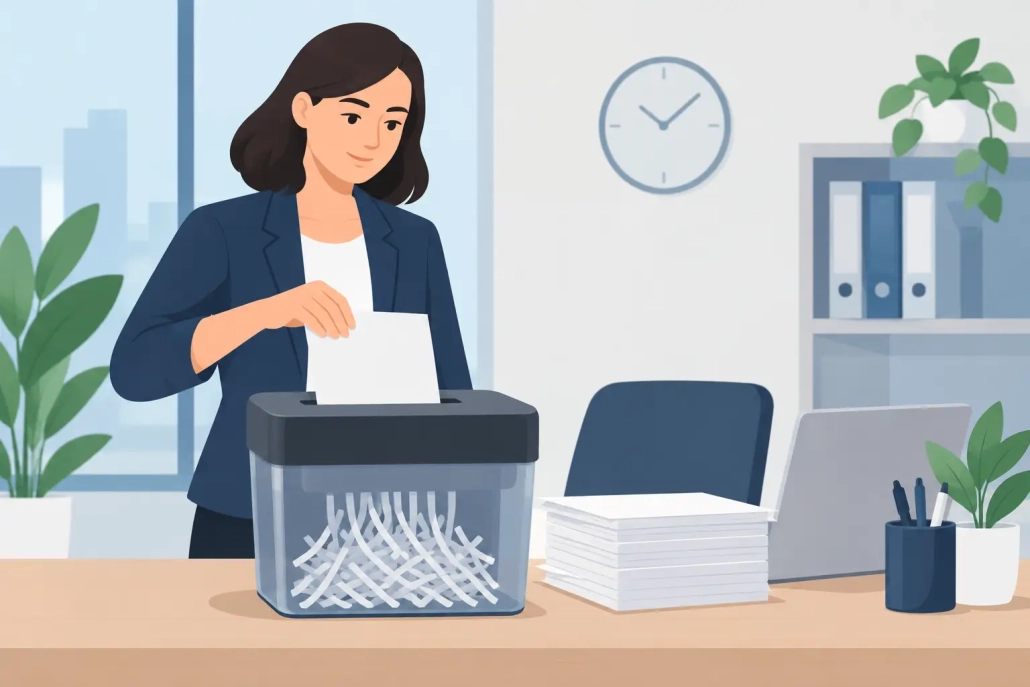
When to Securely Shred Employee Records at Work
An old personnel file is not harmless simply because the employee left years ago. It can still contain names, addresses, bank details, tax information, medical notes, performance reviews, and signed agreements. When you shred employee records at the right time and through a controlled process, you reduce the chance that private information ends up in a dumpster, storage closet, or the wrong hands.
For office managers, HR teams, business owners, and records managers, the challenge is rarely knowing that confidential files need protection. The challenge is deciding what can be destroyed, separating it from records that must be retained, and arranging a process staff can follow without creating new risks.
When to shred employee records
Employee records should be destroyed once their required retention period has ended and there is no legal, tax, employment, insurance, audit, or dispute-related reason to keep them. That sounds simple, but a file often contains documents with different retention requirements. A single personnel folder may include hiring paperwork, payroll documents, training records, disciplinary notes, benefit information, and medical information.
Do not base destruction decisions on whether a file looks old or whether the employee has left the business. Use a documented records retention schedule that identifies record types, retention periods, responsible departments, and the approved destruction method. Requirements vary by jurisdiction, industry, contract, and the nature of the information involved. If a claim, investigation, audit, or legal hold is active or reasonably anticipated, pause routine destruction for relevant records.
A practical rule is to review records by category rather than emptying an entire archive room at once. HR, payroll, legal, finance, and compliance staff should agree on what has reached the end of its retention period. That approval creates a clear decision trail and helps prevent the accidental destruction of documents that still need to be available.
Why employee files require secure destruction
Personnel records are a concentrated source of personal and commercial information. A breach involving one archive box can affect many current and former employees at once. The consequences may include identity fraud, complaints, reputational damage, costly investigation time, and loss of trust among staff.
Putting files into standard recycling or general waste is not a secure disposal method. Bags split, bins are accessed by multiple parties, and paperwork can be removed before it reaches a recycling facility. Even office shredders have limits. They can be slow, they leave staff handling sensitive paper, and they often create unsecured bags of shredded material waiting for collection.
Secure destruction is about more than the final shred. It is about maintaining control from the moment records leave a filing cabinet until they are destroyed and recycled. That chain of custody matters whether you have a few folders after an HR cleanup or pallets of archived boxes from years of storage.
Records that commonly need secure disposal
Employee-related materials that should be assessed for confidential destruction include personnel files, resumes, job applications, payroll reports, timesheets, tax forms, direct deposit details, benefit enrollment forms, copies of identification, background checks, medical or leave documentation, disciplinary records, training records, and exit paperwork.
The same approach applies to supporting documents that may not be stored in the main HR file. Printed email chains, interview notes, manager notebooks, old organizational charts, password reset forms, and reports exported from HR systems can all contain personal information. If they are no longer required, they should enter the same secure disposal process.
Build a controlled destruction process
A reliable process does not need to be complicated, but it does need defined ownership. Start by appointing the person or team authorized to approve record destruction. That may be HR in a small business, or a combination of records management, legal, compliance, and department leaders in a larger organization.
Next, create a destruction log. Record the document category, date range, quantity or number of boxes, approving person, destruction date, and certificate reference. The log does not need to list every individual employee name. Its purpose is to show that records were disposed of according to an approved schedule, not discarded casually.
Keep records awaiting destruction separate from general office waste. A lockable, clearly labeled collection bin gives staff a simple place to deposit approved confidential paper. It also removes the temptation to place a stack of employee files beside a printer or in an open recycling container while waiting for someone to deal with it.
For large cleanouts, archive boxes should remain closed and identifiable until secure collection. Avoid sorting through every file again at the loading point unless there is a specific reason to do so. Excess handling increases the opportunity for files to be misplaced, viewed, or mixed with records that must be retained.
Choose the right collection option
The right shredding arrangement depends on how often confidential records are generated and how much material you have stored. Ongoing HR and administrative work is often best managed with scheduled pickups and lockable 240-liter bins. Staff can use the bin as part of normal operations, and the business does not need to organize a disposal project every time paperwork accumulates.
An on-call pickup can suit businesses with occasional destruction needs, such as a quarterly personnel-file review or an office relocation. A one-time archive cleanout is more appropriate when storage rooms, off-site archives, or filing cabinets contain years of approved records. In that situation, secure removal of archive boxes or pallet-scale loads is usually more efficient than asking staff to feed documents through a small office shredder.
The trade-off is straightforward. Scheduled service provides consistency and reduces day-to-day handling, while one-time collection is useful when the need is project-based. Many organizations use both: lockable bins for current confidential waste and a separate cleanout for expired archives.
What to expect from a professional destruction provider
A professional provider should collect confidential records through a controlled process, transport them securely, destroy them, and provide evidence that destruction occurred. Ask direct questions about collection procedures, locked containers, staff handling, document tracking, destruction methods, and certificates.
A Certificate of Destruction is particularly useful for internal compliance records. It provides formal confirmation that the material was destroyed, supporting your destruction log and giving management a clear record of the completed service. It is also worth confirming how paper is handled after destruction. Secure recycling helps keep materials out of landfill while ensuring records cannot be reconstructed or reused.
Price matters, especially for large archive projects, but the cheapest informal option can be expensive if it creates a privacy incident. Compare quotes based on the full service: secure containers where needed, collection, removal labor, transport, destruction, recycling, and documentation. A clear quote makes budgeting easier and avoids surprises on collection day.
Prepare your workplace for collection day
Before collection, confirm that only approved records are included. Remove items that must be retained and set aside nonpaper media if it requires a separate destruction service. CDs, storage devices, uniforms, and branded items should not automatically be placed in paper bins, even when they contain confidential or sensitive material.
Tell relevant staff what is being collected and when. This is especially useful during a large archive purge, when employees may see boxes being removed and worry that active files are leaving the office. Keep the access path clear, identify the boxes or cabinets involved, and designate a staff contact to answer questions during pickup.
There is no advantage in letting expired employee records occupy valuable storage space for another year. Once retention requirements are satisfied and the appropriate approval is in place, arrange secure collection, retain your Certificate of Destruction, and give your team a cleaner, safer place to work. Metro Paper Destruction can provide a free quote for scheduled service, on-call collection, or an archive cleanout across Melbourne.


Leave a Reply
Want to join the discussion?Feel free to contribute!